
How Much Do Cash Home Buyers Pay? Here's the Actual Math
By Eric Roebuck · Updated August 21, 2026 · 3 min read
I buy houses for a living, so let me answer the question everyone dances around: cash buyers typically pay 70–85% of a home's after-repair value, minus repair costs. Here's exactly how that works, with real numbers.

The Formula Every Professional Buyer Uses
Strip away the branding and every serious cash buyer, local flipper, national company, or wholesaler, prices houses roughly the same way:
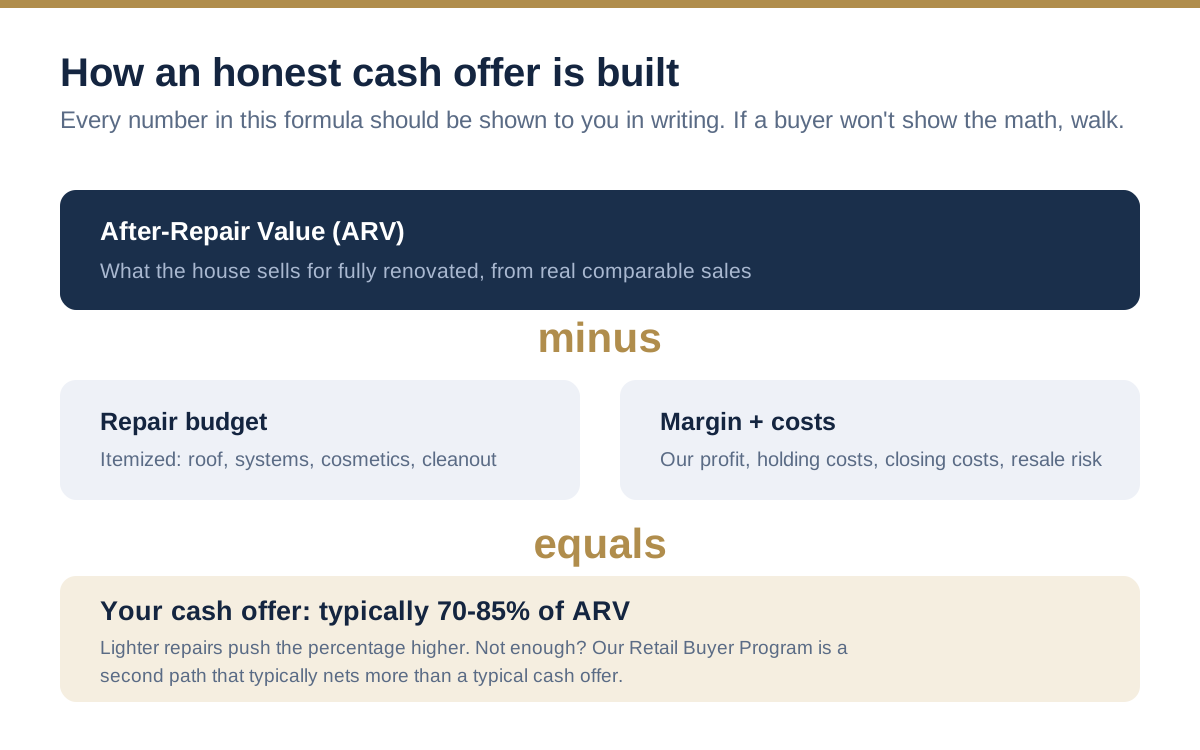
Offer = After-Repair Value (ARV) × Percentage − Repair Costs
Three inputs decide everything:
- ARV is what the house would sell for fully renovated, based on recent sales of comparable updated homes nearby. Not the Zillow estimate of your house today, the value of the finished product.
- The percentage covers the buyer's costs of getting there: financing or opportunity cost of capital, property taxes and insurance during the renovation, utilities, resale closing costs and commissions when they sell, plus profit for the risk. The classic "70% rule" was the flipper's standard for years; in today's more competitive markets, lighter-rehab houses often trade at 78–85%.
- Repair costs are estimated at contractor pricing for whatever it takes to reach that ARV: roof, mechanicals, kitchen, baths, flooring, paint, landscaping.
Three Worked Examples
The cosmetic house
ARV $250,000, needs $20,000 (carpet, paint, kitchen refresh). At 82%: $250,000 × 0.82 − $20,000 = $185,000. A listed as-is sale might fetch $205–215K, but subtract 6% commission ($12,600), seller closing costs, a buyer inspection credit, and three months of carrying costs, and the listed net lands around $185–195K. The gap is real but small, which is why we tell owners of houses like this to seriously consider listing.
The heavy project
ARV $250,000, needs $70,000 (roof, furnace, full kitchen and baths, electrical). At 74%: $250,000 × 0.74 − $70,000 = $115,000. Sounds brutal against a $250K ARV, but the honest comparison is against what a financed buyer would pay for a house their lender won't approve. This house's real as-is market is other investors, all running the same math.
The higher-priced market
ARV $500,000, needs $60,000. At 80%: $500,000 × 0.80 − $60,000 = $340,000. Percentage margins scale with price, which is why cash offers in expensive markets can feel further from ARV in absolute dollars while being identical in structure. It's also why sellers in high-cost metros should always collect multiple offers, the dollar spread between buyers' assumptions is largest exactly where the prices are.
Why Offers Vary $20,000+ Between Buyers
Same formula, different inputs. Buyers disagree about ARV (which comps count?), repair scope (does the kitchen need $8K or $25K?), and their own percentage (a local flipper funding with hard money at 12% needs more margin than a buyer with cheap capital). This is exactly why you should get two or three offers and why we show our inputs: when you can see each buyer's ARV and repair estimate, you can spot who's being straight.
Spotting a Lowball vs. a Fair Offer
A fair offer survives questions. Ask any buyer:
- What ARV did you use, and which comparable sales support it?
- What's your repair estimate, itemized?
- What percentage are you applying, and why?
A buyer who answers specifically is showing you a real underwrite, even if the number disappoints, it's honest. A buyer who deflects ("that's just what we can do") either didn't underwrite the house or doesn't want you comparing. Walk toward the first kind of buyer, whoever they are.
Want to run your own numbers first? Use our cash offer calculator, it applies this exact formula and compares the result against your likely net from listing. Then, if the range looks workable, get the real version with an actual walkthrough behind it.
From the buyers
How EZ Time Home Buyers Can Help
Everything this guide tells you to demand from a cash buyer is our standard practice: written offers with the math shown line by line, proof of funds in writing on request, and closings through a licensed title company. One form gets you both of our paths: an as-is cash offer, and the Retail Buyer Program for sellers who want more than a typical cash offer without commissions, fees, or the work of a listing.
Frequently Asked Questions
Do cash buyers ever pay full market value?
For a house needing zero work in a hot market, a cash offer can approach the as-is market price, but no professional buyer pays full retail ARV, because their costs and margin have to come from somewhere. Anyone promising 'full market value, cash, no fees' is redefining one of those words. Usually 'market value' quietly means their internal number, not yours.
Is the first offer a lowball I should negotiate up?
Depends on the buyer. Some build in haggling theater; we don't, our first number is the underwrite. The productive negotiation is about inputs: if you have contractor bids showing the repair estimate is too high, or comps supporting a higher ARV, present them. Evidence moves honest offers; theatrics don't.
Why is my offer so far below my Zillow estimate?
Zestimates approximate your house's value in its current condition based on tax records and nearby sales, they don't walk your property, and they're notoriously wide on houses that need work. A cash offer starts from renovated value and subtracts real renovation costs. If your house is genuinely move-in ready and the offer is far below the estimate, that's precisely when you should get a listing agent's opinion too.
Related Guides
Ready to see both of your numbers?
Tell us about your property once and get a written cash offer, plus what our Retail Buyer Program could net you instead. No repairs, no fees, no pressure to accept.