
Are "We Buy Houses" Companies Legit? An Honest Answer From Inside the Industry
By Carson Whaley · Updated August 21, 2026 · 3 min read
I run one of these companies, so discount my bias however you like, but that also means I know exactly how the bad actors operate. Here's the unvarnished picture, and the checklist that protects you from every scheme I've seen.

The Model Is Legal. The Behavior Isn't Always.
Buying houses below retail, renovating, and reselling is a legitimate, centuries-old business. Nothing about a cash offer is inherently predatory: the seller trades some price for speed, certainty, and zero repairs or fees. Millions of these transactions close cleanly every decade.
But the industry earned its reputation problem honestly. Investigative reporting has documented national franchises whose operators targeted elderly and confused homeowners. The FTC and state attorneys general regularly act against equity-skimming and foreclosure-rescue schemes. And the barrier to entry is a bandit sign and a burner phone. So the real question isn't "is this legit?", it's "is this specific company legit?" That, you can test.
The Scam Patterns, Specifically
The contract flip with no intent to close. A "buyer" locks you into a purchase contract, then shops it around for weeks. If nobody bites, they cancel on a technicality and you've lost a month. (Assignment itself can be legitimate, see the FAQ, the scam is the non-disclosure and the fake certainty.)
The closing-week price drop. You're packed, the movers are booked, and suddenly "the inspection found issues" and the offer falls $20,000. Engineered dependency, then renegotiation. A fair buyer prices condition before contract, not after you're committed.
The equity-skimming deed transfer. In foreclosure-rescue variants, someone convinces a distressed owner to "temporarily" deed the house over. Never sign a deed outside a formal closing at a title company or attorney's office. Ever.
Upfront fees. Application fees, processing fees, "offer preparation" fees. A real buyer pays you, not the reverse.
The fake-buyer lead harvest. Some slick national websites don't buy anything, they auction your contact info to investor lists. Your reward for one form is forty phone calls from strangers you never contacted, for months. Ask any site directly: "Are you the buyer, or do you sell my information?" A real buyer answers in one sentence; a lead broker answers with a paragraph about their 'network of local partners' that never quite says who is purchasing your house.
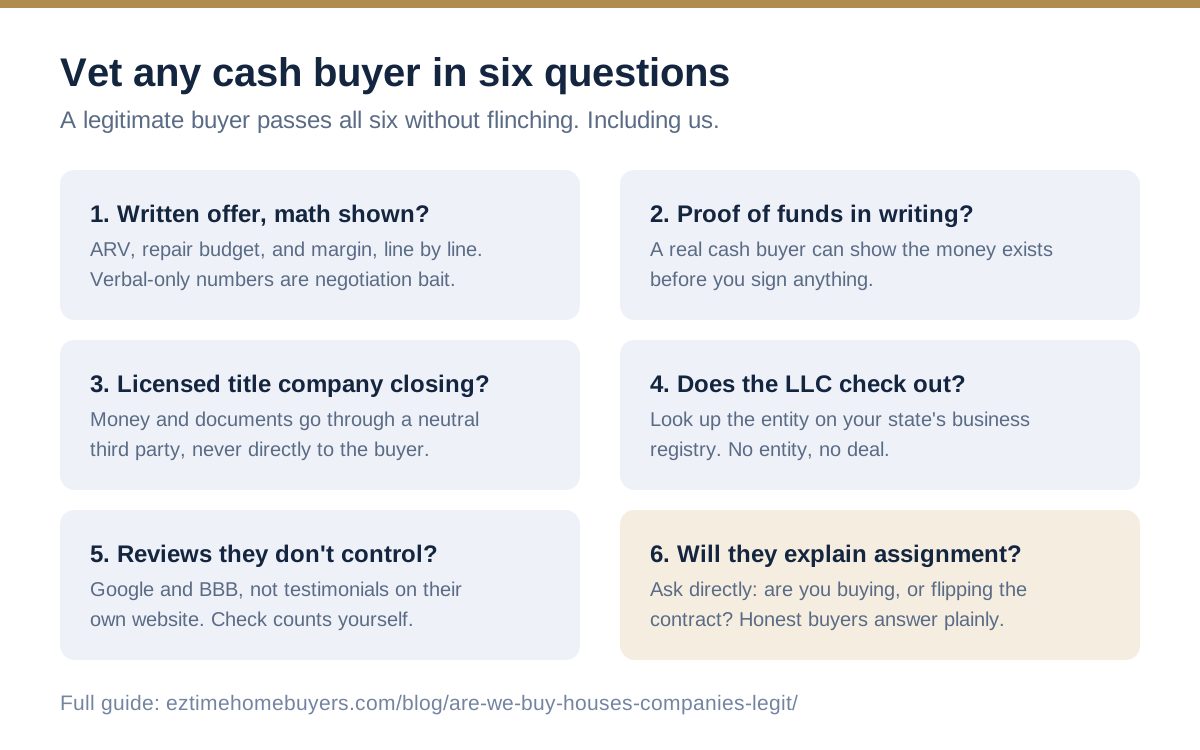
The 7-Point Vetting Checklist
- Verify the closing agent. Ask which title company or closing attorney they use, then call it and confirm they've closed there.
- Search the entity. Look up the LLC on your state's business registry. No registered entity, no deal.
- Read reviews on platforms they don't control: Google, BBB, and pay attention to how they handle the bad ones.
- Demand the offer in writing, with the price, timeline, earnest money amount, and contingencies stated.
- Ask the assignment question: "Will you close on this yourself, or assign the contract?" Legitimacy lives in the disclosure, not the answer.
- Ask what could change the price between contract and closing. The right answer is a short, specific list, or "nothing."
- Take your time. Any offer that expires in 24 hours is priced for people who can't think it over. Real offers survive a weekend and an attorney's review. (Ours are built to.)
Green Flags Worth Trusting
The inverse of every scam pattern: named humans with faces and a verifiable history, written offers with the math shown, earnest money deposited in escrow, encouragement (not just tolerance) of attorney review, and a straight answer when you ask who's actually buying. Companies that behave this way exist in every market, we're building one, and the checklist above finds them regardless of whose logo is on the sign. (Selling in Michigan, a state we don't buy in? We applied this exact checklist to build our directory of Michigan's top cash buyers, with the evidence shown for every company ranked.)
From the buyers
How EZ Time Home Buyers Can Help
Everything this guide tells you to demand from a cash buyer is our standard practice: written offers with the math shown line by line, proof of funds in writing on request, and closings through a licensed title company. One form gets you both of our paths: an as-is cash offer, and the Retail Buyer Program for sellers who want more than a typical cash offer without commissions, fees, or the work of a listing.
Frequently Asked Questions
Is wholesaling (contract assignment) a scam?
Not inherently, assignment is legal in most states and often invisible to the seller: same price, same closing date, different name on the deed at closing. It becomes predatory when it's concealed, when the 'buyer' has no ability to close if assignment fails, or when your contract is shopped publicly without your knowledge. The test is disclosure: a legitimate operator tells you their role before you sign. We do, unprompted.
Why do these companies all say 'no fees', where's the profit?
The profit is inside the price: buy at 70–85% of after-repair value minus repairs, renovate, resell. 'No fees' is true and still worth verifying on your settlement statement, the legitimate model doesn't need junk fees, so their presence is a red flag about everything else.
What should I do if I think I've been targeted by a scam?
Don't sign anything else, and if you've signed something, have a real estate attorney review it immediately, many contract traps have exits if caught early. Report the operator to your state attorney general and the FTC (reportfraud.ftc.gov). If foreclosure is involved, also call a HUD-approved housing counselor (1-800-569-4287, free), scammers specifically hunt foreclosure timelines.
Related Guides
Ready to see both of your numbers?
Tell us about your property once and get a written cash offer, plus what our Retail Buyer Program could net you instead. No repairs, no fees, no pressure to accept.