
Selling a House in Indianapolis: Local Rules, Real Costs, and What to Expect
By Eric Roebuck · Updated August 26, 2026 · 8 min read
Indianapolis is one of the easier big cities in America to sell a house in: no city point-of-sale inspection, no transfer tax, and about $55 in total government fees to record the whole deal. The friction lives elsewhere, in a housing stock that runs old and a buyer pool that knows exactly what to poke at. Here's the local playbook, with real numbers.
What's Actually Different About Selling in Indianapolis
Start with the good news, because there's a lot of it. Indianapolis has no point-of-sale inspection ordinance. No city inspector walks your house before you sell, no occupancy certificate is required for a standard resale of an existing home, and no repair escrow gets held hostage at closing. Sellers relocating from Ohio cities that do run point-of-sale programs are often braced for a city sign-off that simply doesn't exist here. The only inspection in an Indianapolis sale is the one your buyer orders, and if you sell to us, we skip even that: our walkthrough replaces it.
The paperwork layer is a county affair, and Marion County keeps it cheap. Every sale gets reported to the assessor on Indiana's Sales Disclosure Form (State Form 46021), which the title company prepares and files for a $20 fee. The deed then picks up a $10 per-parcel transfer fee at the assessor's real estate window and a $25 recording fee at the Marion County Recorder. That's the entire government take on a typical Indianapolis home sale: roughly $55. Indiana charges no transfer tax at all, a point the state selling guide covers statute by statute.
One genuinely local quirk: Marion County voters abolished the county's nine township assessor offices in a 2008 referendum, so since 2009 a single county assessor values every parcel from Center Township out to the county line. But the townships didn't disappear from your tax bill. Your property tax rate still depends on which township taxing district the house sits in, which is why two similar houses a mile apart in Wayne and Decatur townships can carry noticeably different bills. Buyers' lenders notice; know your district before you price.
The Indianapolis Market Right Now
Indy is running quick and modestly up. The median sale price sits around $258,859, up 2.3% year over year, and homes average about 21 days on market, a pace Redfin rates "very competitive" (Redfin, June 2026). Demand has a real engine behind it: the metro added over 22,000 people last year, double the national growth rate, per Census estimates.
There's a second story running underneath, though. Indiana posted one of the three highest state foreclosure filing rates in the country in the first half of 2026, and early this year roughly one in every 1,250 Indianapolis housing units caught a filing in a single month (per ATTOM). Growth and distress are sharing the same streets. The useful part for a seller under pressure: Indiana forecloses only through the courts, and the realistic path from filing to sheriff's sale runs 8 to 10 months. That runway is long enough to sell well instead of selling desperate, and we lay out every option here.
What 21 days actually describes is retail-ready houses that pass inspection and appraise cleanly. Houses that can't do both live in a slower, choppier market, and that's the market most of our Indianapolis sellers are standing in.
What Selling Costs in Indianapolis
The government's cut is nearly nothing here. The rest of the cost stack is where Indianapolis sellers get surprised, because it hides in the process rather than on a fee schedule.
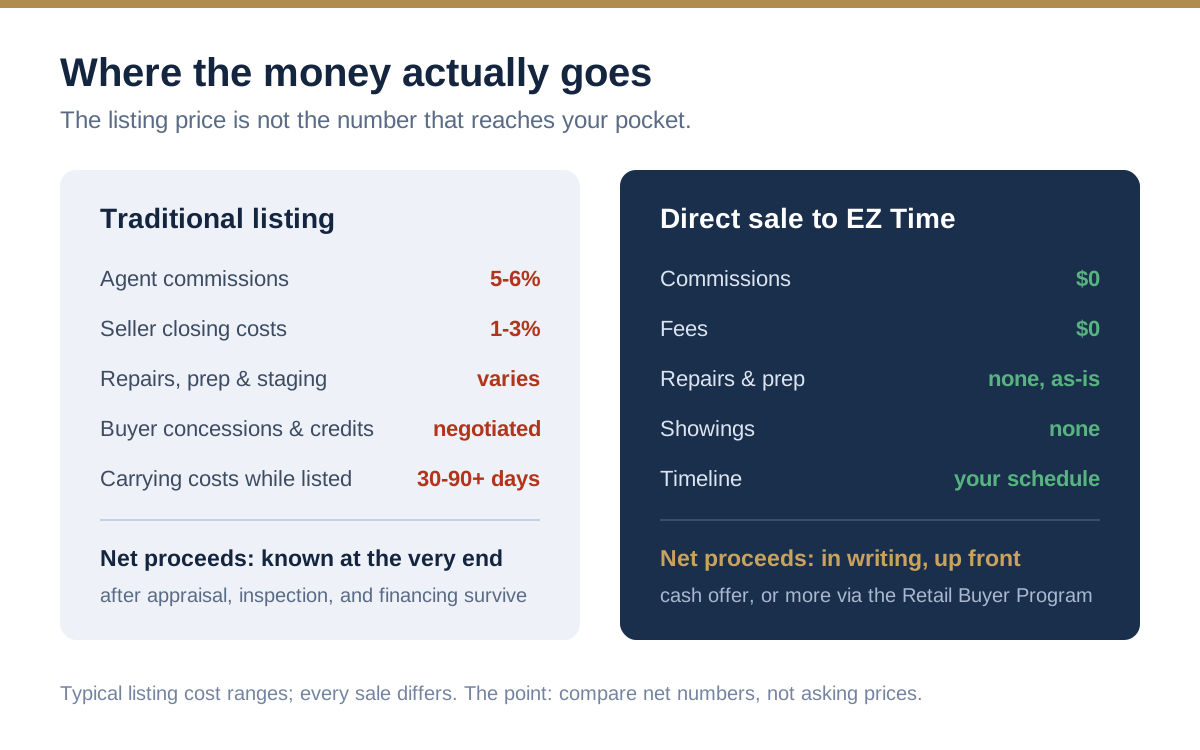
On a listed Indianapolis sale, expect:
| Cost | Typical range |
|---|---|
| Agent commissions | 5-6% of sale price |
| Owner's title insurance and closing fees | Roughly $1,000-$2,000 combined, price-dependent |
| Recording package (deed $25, sales disclosure $20, transfer fee $10/parcel) | About $55 |
| Property tax proration | Varies; Indiana bills in arrears |
| Inspection repairs and buyer concessions | The wildcard: often thousands on older stock |
Two local notes on that table. First, the tax proration: Indiana property taxes are paid in arrears, due May 10 and November 10, so at closing you credit the buyer for taxes accrued during your ownership that haven't been billed yet. It looks like a new charge; it's your own taxes catching up. Second, on a $259,000 median-priced house, the commission line alone runs $13,000 to $15,500, which is around 250 times what the county charges to record the entire transaction. The government isn't your expensive party in Indianapolis. The process is.
A direct sale rewrites that table. When we buy, there's no commission and no repair credits, because our written cash offer already priced the repairs, with the math shown. For houses that could earn more with some prep, our Retail Buyer Program brings you more than a typical cash offer with the same easy process, and we'll show you both numbers side by side.
The Housing Stock: What Indianapolis Buyers Flag
Indy's near-in neighborhoods are old, and their problems come in eras. Irvington was platted in 1870; Fountain Square, Garfield Park, and the Near Eastside filled in from the late 1800s through the 1920s. The postwar ring, Speedway through Lawrence and the rest of the Marion County donut, added waves of ranches and Cape Cods in the 1950s and 60s. Each era hands today's seller a predictable inspection list:
- Knob-and-tube and early wiring in pre-1930 houses across Fountain Square, Irvington, and the Old Northside. Even partial remnants can spook insurers and kill financed deals; rewiring an old two-story commonly runs five figures.
- Crawlspace and basement moisture. Much of central Indiana sits on flat, clay-heavy ground, and older Indy foundations show it: damp crawlspaces, seepy Michigan basements, sump pumps working overtime. Waterproofing quotes of $5,000 to $10,000-plus end a lot of listing plans.
- Lead paint disclosure. Any house built before 1978 triggers the federal lead-based paint disclosure, and that covers a huge share of Marion County's stock. It's a form, not an inspection, but renovation-minded buyers price it in.
- Aging sewer laterals made of clay tile under the older grid, where root intrusion and bellies turn up on the sewer scopes Indy buyers increasingly order.
None of this means your house won't sell. It means the retail path prices these items during inspection response, after you're under contract, when your leverage is lowest. We price them before you commit, in writing, line by line, and buy as-is. Disclose what you know either way: Indiana's disclosure form (State Form 46234) is required before you accept an offer on most sales, and honest answers on it protect you.
The Selling Situations We See Most in Indianapolis

The foreclosure runway call
With Indiana ranked among the top three states for filing rates, this is our most common Indianapolis conversation. The judicial timeline is your asset: a mandatory pre-suit notice, a settlement conference you can request that freezes judgment, and a statutory three-month floor before any sale order can execute. Callers in month two of that runway keep dramatically more equity than callers in month eight, because interest, attorney fees, and court costs compound the whole way down.
The estate house on the east side
Marion County probate runs through the Marion Superior Court, Probate Division, with filings handled by the Clerk at the Community Justice Campus (675 Justice Way). For uncontested estates, unsupervised administration is the norm, letting the personal representative sell without a hearing on the sale, and estate transfers are exempt from the seller disclosure form. A typical unsupervised Marion County estate wraps in roughly six to nine months, but the house sale usually closes well before the estate does. We buy inherited houses contents-included and can hold a firm written offer while the appointment finalizes.
The tired rental with tenants in place
Marion County requires rental registration through the Department of Business and Neighborhood Services, famously cheap at $5 per year. Registration isn't what pushes landlords out; rough tenants, rising insurance, and 1920s mechanicals are. Leases survive a sale under Indiana law, which locks out most retail buyers but not us: we buy Indianapolis rentals with tenants in place, deposits transferred at closing, no showings through your tenant's living room.
How an Indianapolis Closing Actually Runs
Indiana is a title-company state, no attorney required at the table, and Indianapolis closings are as streamlined as they come. The sequence on a typical Marion County sale:
- Disclosure before acceptance. Form 46234 goes to your buyer before you sign their offer, unless you're in an exempt category like an estate or foreclosure-related transfer.
- Title work. The title company searches the chain and clears liens. Clean Indy titles clear in days; estates, old mortgages, and tax-sale histories take longer.
- The county circuit. At closing, the title company routes the sales disclosure form and deed through the Marion County Assessor's real estate window for the stamp and transfer fee, then records the deed with the Recorder. You never stand in either line; it's baked into your closing fee plus that $55 in county charges.
- Funding. Payoffs and the tax proration come out, and proceeds wire the same day or next.
A financed retail deal runs 30 to 45 days from contract when nothing breaks, and the 21-day market stat doesn't include that escrow period. A cash sale to us runs the same official track minus the appraisal, loan underwriting, and inspection volley, which is how two to three weeks becomes a normal closing, start to finish, anywhere in Marion County or the metro. And whether your house is in Fountain Square or out past the county line, the same state rulebook applies everywhere we buy in Indiana.
Selling a house in Indianapolis comes down to a cheap, fast county process wrapped around housing stock that demands honest pricing. Get the repair math in writing before you pick a path, ours included. One caveat: probate and foreclosure specifics here are general information, not legal advice; for your particular estate or case, a licensed Indiana attorney is the authority.
From the buyers
How EZ Time Home Buyers Can Help in Indianapolis
We buy houses in Indianapolis as-is, in any condition, on your timeline. You'll get a written cash offer with the math shown line by line, and if that number doesn't fit your situation, the Retail Buyer Program is a second path that typically nets more than a typical cash offer while we do the work. No commissions, no fees, no repairs, either way.
Frequently Asked Questions
Do I need a city inspection or certificate to sell my house in Indianapolis?
No. Indianapolis has no point-of-sale inspection ordinance and no occupancy certificate requirement for a standard resale of an existing home. The only inspection in a typical sale is the one your buyer orders. Your legal paperwork duty is Indiana's seller disclosure form (State Form 46234), delivered before you accept an offer, and even that is waived for estate, court-ordered, and foreclosure-related transfers.
What does it cost to record a home sale in Marion County?
About $55 total: a $25 deed recording fee at the Marion County Recorder, a $20 filing fee for the Sales Disclosure Form (State Form 46021) that reports the sale price to the assessor, and a $10 per-parcel transfer fee at the assessor's real estate window. Indiana charges no transfer tax, and the title company handles the whole circuit at closing. The real costs of a listed sale are commissions and repairs, not government fees.
Which court handles probate if I'm selling an inherited house in Indianapolis?
The Marion Superior Court, Probate Division, with filings processed through the Marion County Clerk at the Community Justice Campus (675 Justice Way). Unsupervised administration is the norm for uncontested estates, meaning the personal representative can sell the house without a court hearing on the sale once appointed. A typical unsupervised Marion County estate runs six to nine months, but the house sale itself usually closes much earlier.
I'm selling a tenant-occupied rental in Indianapolis. Anything special to know?
Two things. Marion County requires rental registration with the Department of Business and Neighborhood Services, $5 per year covering all your properties, and any registration obligation ends at closing. And under Indiana law your tenant's lease survives the sale, so a buyer who wants to move in generally can't close around it. Investors can: we buy Indianapolis rentals with tenants in place, deposits transferred properly, no showings required.
Related Guides
Ready to see both of your numbers?
Tell us about your property once and get a written cash offer, plus what our Retail Buyer Program could net you instead. No repairs, no fees, no pressure to accept.