
Selling a House in Indiana: Laws, Taxes, and How the Process Actually Works
By Eric Roebuck · Updated August 26, 2026 · 10 min read
Indiana is one of the cheapest, simplest states in America to sell a house: no state transfer tax, title-company closings, and exactly one mandatory disclosure form (State Form 46234, due before you accept an offer). Here's the whole rulebook, statute by statute, plus where the process gets slow and how to route around it.
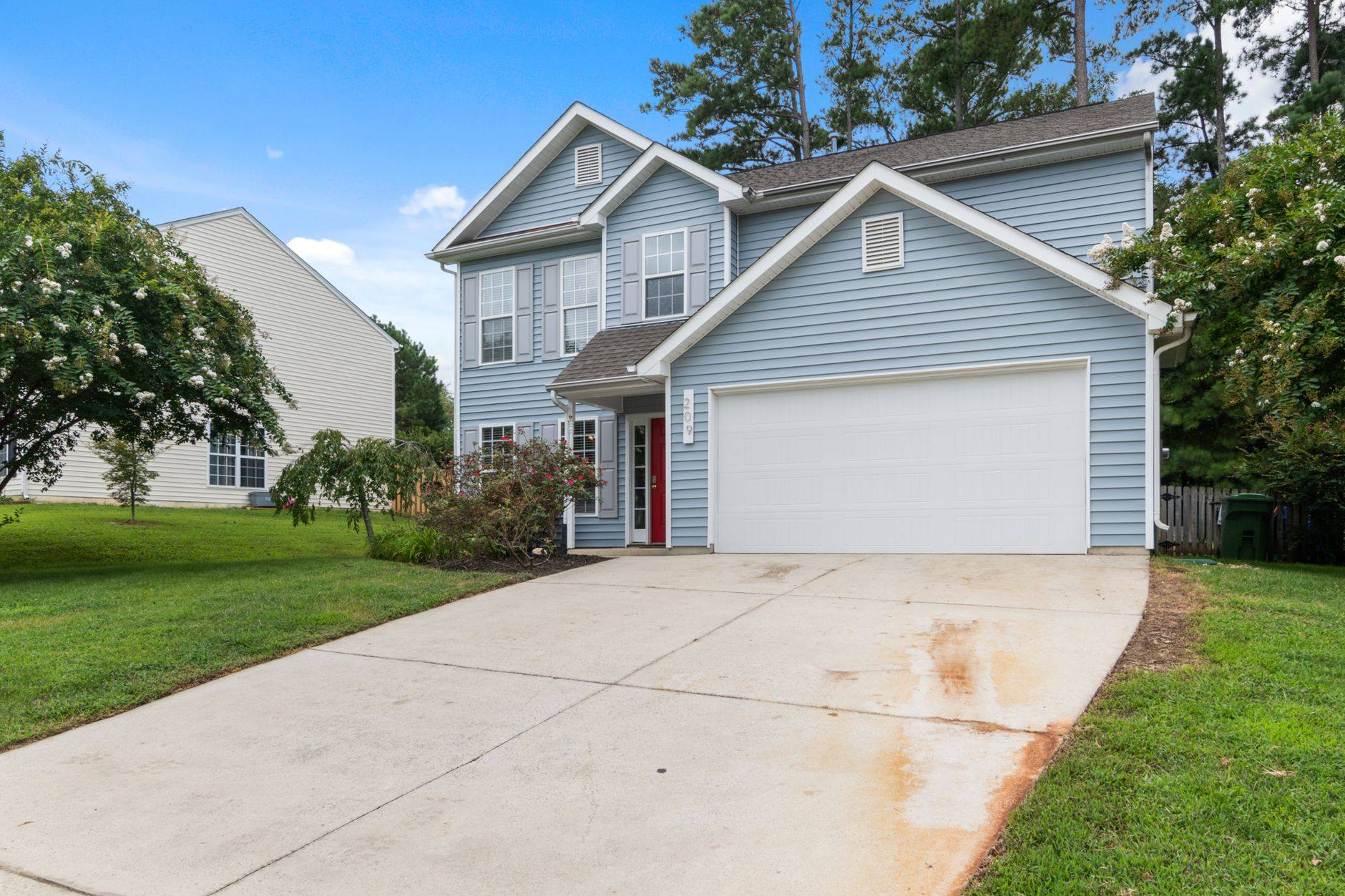
The Disclosure Form Indiana Actually Requires
Indiana keeps seller paperwork short. For most sales of one-to-four-unit residential property, state law requires exactly one thing from you before money changes hands: the Seller's Residential Real Estate Sales Disclosure, State Form 46234. You complete it, sign it, and deliver it to the buyer before you accept their offer, not at closing (Ind. Code 32-21-5-10). An accepted offer isn't enforceable against the buyer until both sides have signed the form.
The form asks what you actually know about the foundation, roof, mechanical systems, water and sewer, appliances included in the sale, and hazardous conditions. Two things sellers consistently get wrong about it:
- It's a known-defects form, not an inspection. Indiana doesn't require you to test, investigate, or hire anyone. You disclose what you know. A wet basement you've pumped out twice goes on the form; a crack you've never seen does not.
- Guessing "no defect" to be safe is the opposite of safe. Buyers who discover a concealed problem after closing sue on the form. Honest, specific answers protect you. Vague optimism doesn't.
Now the part that surprises people: a lot of Indiana sellers are exempt. The disclosure chapter doesn't apply to court-ordered transfers, transfers in the administration of an estate, foreclosure sales, deeds in lieu of foreclosure, transfers between co-owners, or transfers arising from divorce decrees and property settlements (Ind. Code 32-21-5-1). If you're an executor selling your mother's house or a homeowner handing a deed in lieu to the bank, the form generally isn't required at all. The title company confirms which category you're in.
When you sell to us, the form changes character anyway. We buy as-is, so your disclosure answers feed our repair estimate instead of becoming renegotiation ammunition after an inspection. Tell us about the bad sewer line up front and it's a line item, not a landmine.
The Standard Indiana Sale, Start to Finish
Indiana is a title-company state. No attorney requirement at closing, no escrow theatrics, some of the lowest settlement costs in the country. A conventional sale runs like this:
- Prep and pricing. If you're listing, this is where the money and weeks go: repairs, cleanouts, photos, and an agent agreement that will cost 5-6% of the sale price in commission at the end.
- Disclosure before acceptance. Form 46234 goes to the buyer before you sign their offer (Ind. Code 32-21-5-10).
- Purchase agreement. Indiana uses standard state association forms for listed sales; cash buyers use shorter contracts. Either way, earnest money goes to the title company.
- Inspection and appraisal period. The failure point for financed deals. Inspection response negotiations reopen the price, and the lender's appraisal has to support it.
- Title work. The title company searches the chain, clears liens, and issues the commitment. Clean titles clear in days; estates, old mortgages, and tax sales take longer.
- Closing. You sign the deed and a vendor's affidavit, the title company files the Sales Disclosure Form (State Form 46021) with the county assessor as required for most transfers (Ind. Code 6-1.1-5.5), records the deed for a small flat fee, and wires your proceeds. That 46021 filing is a price-reporting document for the assessor, not a tax; it costs a small flat fee, and the title company handles it as a matter of routine.
Financed retail deals typically run 30 to 45 days from contract to closing when nothing breaks. A cash sale to us runs the same track minus the appraisal, the loan underwriting, and the inspection-response volley, which is how two to three weeks becomes a normal closing timeline, and faster when title is clean. Same title companies, same deed, shorter list.
Selling an Inherited House in Indiana
Indiana probate is friendlier than most states, but the sequence still matters. Who can sign the deed depends on how the house was titled:
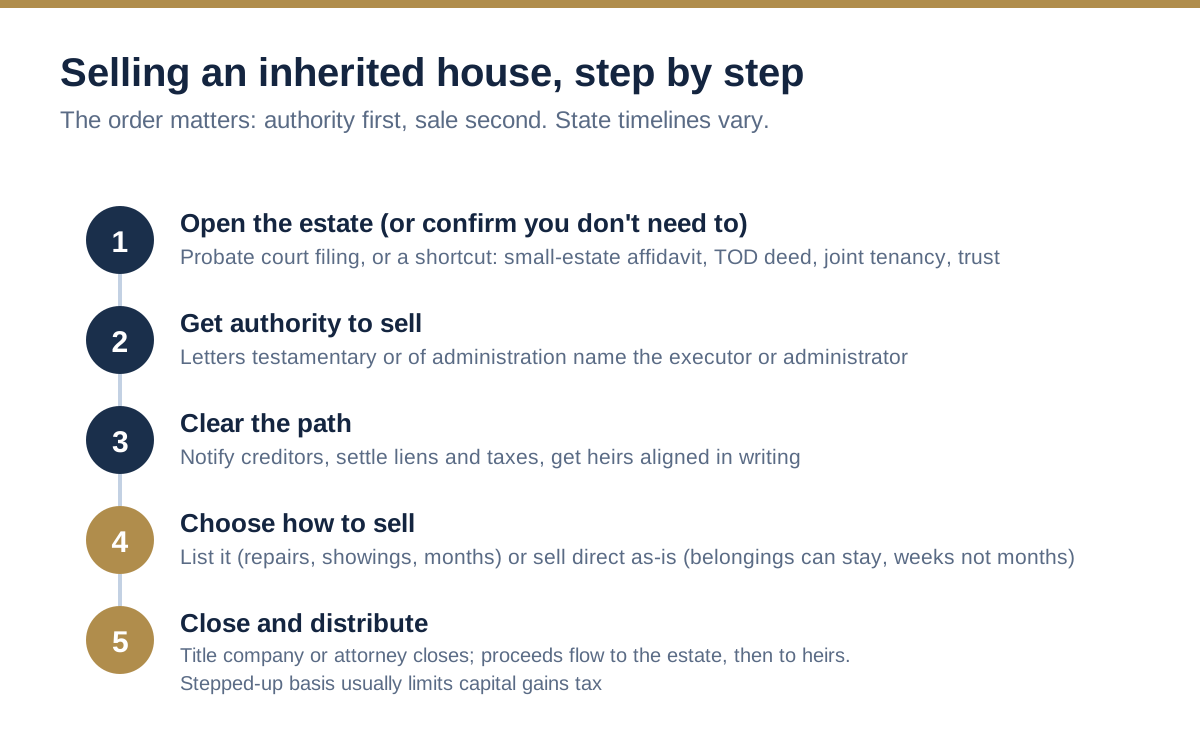
- Held in a trust, owned jointly with survivorship, or covered by a transfer-on-death deed (Indiana authorizes TOD deeds under Ind. Code 32-17-14): the house skips probate. The survivor or named beneficiary records the death certificate and can sell.
- Titled solely in the deceased's name: the house goes through probate, will or no will. The court appoints a personal representative, and that appointment is what gives anyone authority to sell.
Two Indiana specifics worth knowing before you call an attorney:
Unsupervised administration is the norm. For uncontested estates, Indiana's unsupervised administration (Ind. Code 29-1-7.5) lets the personal representative sell the house without a court hearing on the sale, no accounting filed for each move, no judge approving your buyer. It runs close to a normal sale once the appointment letters issue.
The small estate affidavit won't transfer the house. Indiana's affidavit procedure covers estates of $100,000 or less for deaths after June 30, 2022, after a 45-day wait (Ind. Code 29-1-8-1), but it reaches personal property only: bank accounts, vehicles, contents. Real estate needs an actual probate proceeding or one of the title workarounds above. Plenty of Indiana families burn months discovering this the hard way.
Remember the exemption from the last section: estate and fiduciary transfers generally skip the seller disclosure form entirely (Ind. Code 32-21-5-1). Executors aren't expected to know the roof's history, and the law doesn't pretend they do.
We buy inherited houses across Indiana contents-included, coordinate directly with the estate's attorney, and can hold a firm written offer while your appointment finalizes, so the estate can act the day the letters issue. The inherited house guide covers the tax side (the stepped-up basis usually makes these sales nearly tax-free), and the probate walkthrough covers the court sequence step by step.
Facing Foreclosure? Indiana's Judicial Timeline Is Your Runway
Indiana forecloses only through the courts. No trustee sales, no 21-day notice-and-auction sprint like some western states. Every foreclosure is a lawsuit, and lawsuits take time you can use.
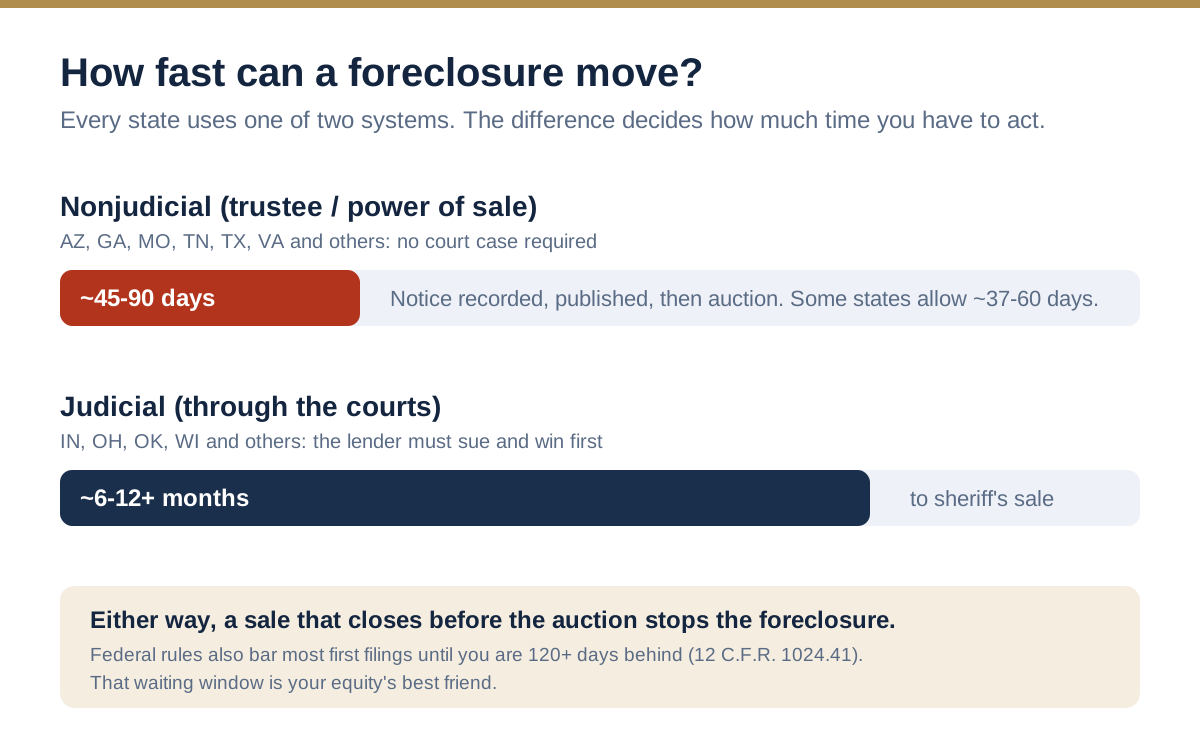
The statutory floor is generous by national standards:
- 30 days before filing suit, the lender must send you a pre-suit notice by certified mail (Ind. Code 32-30-10.5-8).
- Once served, you have 30 days to request a settlement conference on your primary residence, and if you request one, the court cannot enter a foreclosure judgment until that process finishes (Ind. Code 32-30-10.5-10). The lender's representative must show up with actual authority to negotiate.
- Even after judgment, no order of sale can be executed until at least three months after the complaint was filed (Ind. Code 32-29-7-3).
Stack those together with normal court scheduling and the realistic path from filing to sheriff's sale runs roughly 150 days on the fast end and often 8 to 10 months in practice. That's not a loophole. It's the design: Indiana built a process that gives homeowners time to fix the problem or exit with their equity.
Here's the asymmetry that matters, though. Indiana lets you redeem, meaning pay off the judgment and keep the house, any time before the sheriff's sale. After the hammer falls, there is no post-sale redemption period. The runway is long and the ending is abrupt.
So treat the timeline as a seller's asset. Eight months is enough to sell a house two or three times over, at market, on your terms, with the arrears paid from proceeds and the foreclosure dismissed. It is not enough time to ignore certified mail while interest, attorney fees, and court costs compound against your equity. Request the settlement conference (it costs nothing and freezes the judgment), then run your options in parallel. Our foreclosure options guide lays out every path, and this guide answers the specific question most people are really asking: yes, you can sell right up until the sale date, and the earlier you start, the more of your equity survives.
One more Indiana note: if the house does go all the way to a foreclosure sale or a deed in lieu, those transfers are disclosure-exempt (Ind. Code 32-21-5-1). But by then the equity conversation is over. The point of the runway is to never need that exemption.
What Selling Costs in Indiana
Indiana is regularly ranked among the lowest closing-cost states in America, and the reason is structural: there is no state real estate transfer tax. Zero. Compare that to neighbors and coastal states that skim 0.1% to 2%+ off every deed, and Indiana's cost list looks almost suspiciously short.
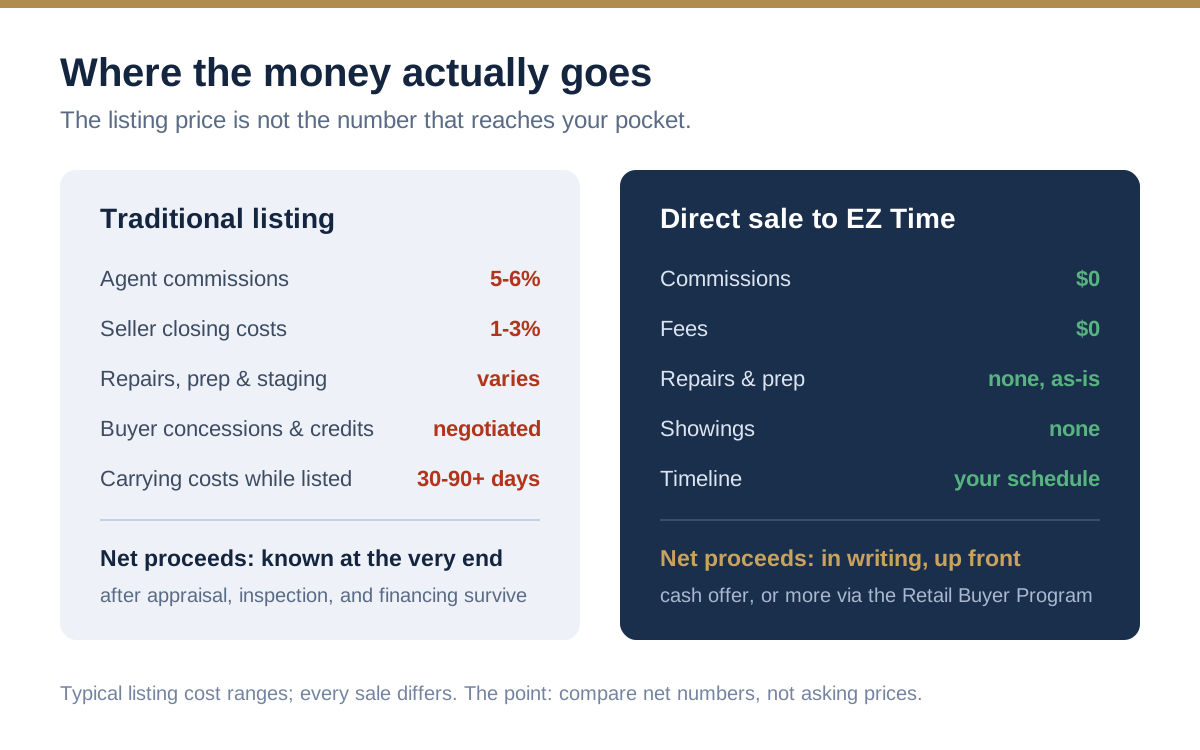
A listed sale still stacks up costs from other directions:
| Cost | Typical range on a listed Indiana sale |
|---|---|
| Agent commissions | 5-6% of sale price |
| Owner's title insurance policy | A few hundred to ~$1,500, price-dependent |
| Title/closing fees | $400-$900 |
| Deed recording + sales disclosure filing | Small flat fees, usually under $100 combined |
| Property tax proration | Varies (see below) |
| Repairs, concessions, carrying costs | The real wildcard: often thousands |
The property tax proration trips people up. Indiana property taxes are paid in arrears, in installments due May 10 and November 10, meaning this year's bills pay last year's taxes. At closing you'll credit the buyer for the taxes that have accrued during your ownership but aren't billed yet. It reads like a new charge on the settlement statement; it's actually just your own taxes catching up with you, and the title company calculates it to the day.
A direct sale rewrites the list. When we buy, there's no commission, we pay standard closing costs, and there are no repair credits because the offer already priced the repairs, in writing, with the after-repair value and our margin shown. Your settlement statement shrinks to payoffs, the tax proration, and the wire. For houses that would need work to list, our Retail Buyer Program is worth asking about: we prep and market the house to retail buyers and you collect more than a typical cash offer, in exchange for a longer timeline. More dollars than the cash number, and we'll show you both side by side. The cash offer calculator shows how the math is built before you ever talk to us.
Indiana Situations With Their Own Rules
The Indianapolis house that won't pass inspection
Marion County's older stock runs on crawlspace moisture, knob-and-tube remnants, and sewer laterals from the Eisenhower administration. In a market where clean Indianapolis houses sell in about three weeks, an inspection-killed listing can sit for months and resurface with a stigma. Disclose what you know on Form 46234, then decide whether the repair bill belongs to you or to a buyer who prices it up front.
The Fort Wayne rental you're done with
Tenants' leases survive a sale, and retail buyers who want to occupy can't close around them. Investors can. We buy Fort Wayne rentals with tenants in place, deposits transferred at closing, no showings marching through your tenant's living room.
The Evansville estate with heirs in three states
Unsupervised administration plus the estate disclosure exemption makes Indiana one of the easier states for a remote estate sale: one personal representative signs, documents move by overnight mail and mobile notary, and heirs never have to fly in. We close Evansville estates this way routinely, and the same applies across everywhere we buy in Indiana.
The house behind on taxes
Indiana counties sell tax liens, and the county tax sale calendar doesn't negotiate. Unlike mortgage foreclosure, the tax sale process comes with its own redemption clock after the sale, but waiting on it is expensive. If there's equity, selling before the tax sale converts it to cash; after, you're buying your own house back with penalties.
This guide is general information about Indiana law, not legal advice. Statutes get amended and facts differ; for a specific estate, foreclosure, or title question, a licensed Indiana attorney is the authority.
Selling a house in Indiana comes down to one form, one no-tax deed, and a court system that gives you time when you need it most. Use the time. Get every number in writing, ours included, and pick the path that leaves the most in your pocket.
From the buyers
How EZ Time Home Buyers Can Help in Indiana
We buy houses across Indiana, and everything above is the world we work in every week. If the timelines or repair math in this guide are pushing you toward a direct sale, we'll give you a written cash offer with the math shown line by line: after-repair value, repair budget, our margin. And if the cash number doesn't work for you, our Retail Buyer Program is a second path that typically nets more than a typical cash offer while we handle the work, with no commissions or fees on either path.
Frequently Asked Questions
Do I have to fill out a disclosure form to sell my house in Indiana?
For most sales of one-to-four-unit residential property, yes: the Seller's Residential Real Estate Sales Disclosure (State Form 46234) must go to the buyer before you accept their offer (Ind. Code 32-21-5-10). It covers only defects you actually know about; you're not required to inspect or test anything. Estate transfers, court-ordered sales, foreclosure-related transfers, and co-owner deals are exempt (Ind. Code 32-21-5-1).
Does Indiana have a real estate transfer tax when you sell?
No. Indiana charges no state transfer tax on deeds, which is a big reason it ranks among the cheapest closing-cost states in the country. You'll pay small flat county recording fees and a modest filing fee for the Sales Disclosure Form (State Form 46021) the title company files with the assessor under Ind. Code 6-1.1-5.5, typically under $100 combined.
How long do I have to sell if my Indiana lender files foreclosure?
Usually many months. Indiana foreclosures are judicial only: the lender must send a pre-suit notice 30 days before filing (Ind. Code 32-30-10.5-8), you can request a settlement conference within 30 days of the summons that blocks judgment until it's completed (Ind. Code 32-30-10.5-10), and no order of sale can execute until at least three months after the complaint was filed (Ind. Code 32-29-7-3). In practice the path to a sheriff's sale runs 150 days to 10 months, and you can sell or redeem right up until the sale itself. There's no redemption after.
Can I use Indiana's small estate affidavit to sell an inherited house?
No. The affidavit under Ind. Code 29-1-8-1 covers estates of $100,000 or less after a 45-day wait, but it transfers personal property only, never real estate. To sell an inherited Indiana house you need probate authority (unsupervised administration under Ind. Code 29-1-7.5 is the usual route), unless the house skipped probate via a trust, joint survivorship title, or a transfer-on-death deed under Ind. Code 32-17-14.
Related Guides
Ready to see both of your numbers?
Tell us about your property once and get a written cash offer, plus what our Retail Buyer Program could net you instead. No repairs, no fees, no pressure to accept.