
The Indiana Foreclosure Process: Timeline, Your Rights, and Ways Out
By Carson Whaley · Updated August 27, 2026 · 9 min read
Indiana forecloses only through the courts, and the statutory floor is long: no lawsuit until you're roughly 120 days behind plus a 30-day pre-suit notice, no sale order until at least 3 months after filing, and in practice 150 days to 10 months from complaint to sheriff's sale. You can catch up, settle, or sell at almost any point on that clock. After the sale, there is no redemption. Here is every stage and every exit.

Indiana Is a Judicial-Only Foreclosure State
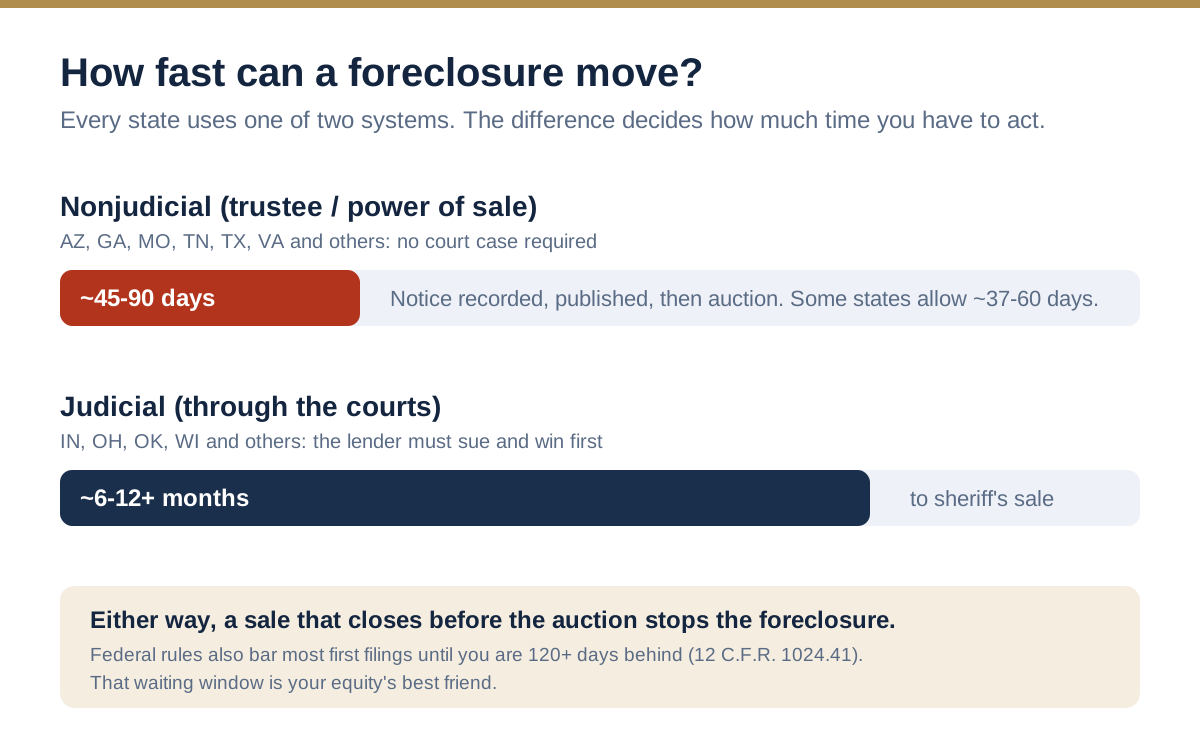
There is no trustee sale in Indiana, no 21-day notice-and-auction sprint like some western states run. Every Indiana foreclosure is a lawsuit: the lender files a complaint in the county court, serves you, proves its case, wins a judgment, and only then can a sheriff's sale happen.
Courts move at court speed, and the legislature added mandatory waiting periods on top. That combination is the single most important fact about foreclosure here. The process is slow by design, and the design exists to give you time to fix the default or leave with your equity.
We buy houses from Indiana homeowners at every stage of this process, so what follows is the timeline as it actually runs, not as the scare letters describe it.
The Timeline, Stage by Stage
Here is the full sequence from first missed payment to sheriff's deed, with the rules that control each step.
Months 1 Through 4: Default Before Any Lawsuit
Federal law bars the servicer from even filing foreclosure until you are more than 120 days delinquent (12 C.F.R. 1024.41). During this window you'll get late notices and calls, and you have the absolute right to submit a loss mitigation application the servicer must review.
The 30-Day Pre-Suit Notice
Before filing suit on your primary residence, the lender must send you a notice by certified mail at least 30 days ahead, telling you the debt is in default and that a foreclosure action is coming (Ind. Code 32-30-10.5-8). This letter is your formal starting gun, and it arrives while you still have every option open.
Filing, Service, and the Settlement Conference
The lender files the complaint and a lis pendens in the county where the house sits, and you get served with a summons. You typically have about 20 to 23 days to answer. Not answering hands the lender a default judgment on the fastest possible track; answering, even simply, keeps you in the case.
The settlement conference: use it. Along with the summons comes notice of your right to a settlement conference on your primary residence. Request it within 30 days of the summons and the court cannot enter a foreclosure judgment until the conference process finishes (Ind. Code 32-30-10.5-10). The lender must send a representative with actual authority to negotiate a modification, repayment plan, or other resolution. It costs nothing and freezes the judgment while it runs.
Judgment and the Mandatory 3-Month Pause
If no defense or workout stops the case, the court enters a foreclosure judgment for the full debt plus interest, fees, and costs. But no process to sell the house can issue until at least 3 months after the complaint was filed (Ind. Code 32-29-7-3). The lender then files a praecipe directing the sheriff to schedule the sale.
The Sheriff's Sale and What Comes After
The sheriff must advertise the sale once a week for three successive weeks in a local newspaper, with the first notice at least 30 days before the sale date, and must serve notice on each owner (Ind. Code 32-29-7-3). At the auction the lender usually opens with a credit bid up to the amount of its judgment. The winning bidder gets a sheriff's deed, and in Indiana that deed is final.
After the sale: no redemption. Indiana lets you redeem before the sale, not after. Once the hammer falls, ownership is gone, and the new owner can pursue possession. This is the asymmetry that defines the whole process: a long runway, then an abrupt ending.
Stack the stages together and the realistic path from complaint to sheriff's sale runs roughly 150 days on the fast end and 8 to 10 months in ordinary practice, on top of the 4-plus months of delinquency before filing. That is your working window.
Your Rights at Each Stage
Reinstatement: catch up and the case dies. If only some installments are due and you pay the overdue principal, interest, and costs before final judgment, the foreclosure complaint must be dismissed (Ind. Code 32-30-10-11). Pay after judgment and the proceedings are stayed instead, springing back only if you default again. Most mortgages also contractually allow reinstatement; the statute gives it teeth.
Redemption: pay it all off any time before the sale. Up to the moment of the sheriff's sale, you can redeem by paying the judgment amount with interest and costs, which satisfies the judgment and vacates the sale (Ind. Code 32-29-7-7). In practice, redemption money usually comes from one place: selling the house. A closing the week before the sale date beats the auction every time.
Deficiency exposure, and a trade worth knowing about. Indiana allows deficiency judgments: if the sale brings less than the judgment, the lender can pursue you personally for the gap. But the statute builds in a deal. If you waive the 3-month waiting period so the sale can proceed immediately, the price of that waiver is the lender's release of any deficiency against you (Ind. Code 32-29-7-5). Homeowners with no equity and no path to keep the house sometimes use this to end things faster and walk away clean; that is a conversation for a HUD-approved counselor or an attorney, not a decision to make from a mailer.
The right to be dealt with honestly. Servicers must review complete loss mitigation applications and cannot "dual track" you to a sale while a timely, complete application is pending (12 C.F.R. 1024.41). Keep every submission and confirmation; the paper trail is your enforcement tool.
Every Real Way Out
Honest list, in roughly the order to try them:
- Reinstate. Family help, a 401(k) loan, or a tax refund covering the arrears ends the case before judgment (Ind. Code 32-30-10-11). Cheapest fix if the underlying income problem is solved.
- Loan modification. The servicer reroutes the arrears and recasts the loan. Realistic when your income has recovered; slow and paperwork-heavy when it has not. The settlement conference is the forum where these actually get decided in Indiana.
- Forbearance or repayment plan. Temporary payment reduction or arrears spread over 6 to 12 months. A bridge for a temporary problem, a trap for a permanent one.
- Bankruptcy. Filing triggers an automatic stay that halts the foreclosure immediately, and a Chapter 13 plan can cure arrears over three to five years; talk to a bankruptcy attorney before the sale date, not after.
- Deed in lieu. You hand the lender the deed, ideally with a written deficiency waiver, and walk away. Only sensible when there is no equity; if there is equity, a deed in lieu donates it to the bank.
- Sell before the sale. The exit that preserves equity. You can sell right up until the sheriff's sale, pay the judgment from proceeds at closing, and keep every dollar above it.
What does not work: ignoring certified mail. Interest at the judgment rate, attorney fees, and court costs compound against your equity every month, and default judgments run the fastest track to the sale.
The Equity Math of Selling vs. Letting It Go
An auction is not a market. The lender opens with a credit bid, third-party bidders want deep discounts for buying sight-unseen with cash, and any surplus over the judgment goes to you only after the machinery grinds through. Meanwhile the judgment itself has been growing: fees, costs, and interest are all secured by your house.

Run the two columns for a house worth $200,000 with a $130,000 judgment. Let it go to auction and the likely outcomes are the lender taking it on a credit bid or an investor winning it at a steep discount, with your surplus, if any, shrunk by months of accrued interest and costs.
Sell it yourself for even $180,000 as-is and the payoff clears at closing, the case is dismissed, and roughly $50,000 lands with you instead of evaporating. The credit damage stops at "late payments" instead of "foreclosure," which follows you into every rental application and loan for the next seven years.
We have seen sellers walk away from five figures of equity because the process felt unstoppable in month two. It was not, and eight months of runway remained.
If the numbers run the other way, with the judgment above the value, the sale conversation becomes a short-sale conversation, and lenders negotiate those with sellers routinely. Either way, know your number before the auction sets it for you.
What a Fast Sale Looks Like Against This Clock
A financed retail sale runs 30 to 45 days after you find the buyer, plus listing time, plus the risk of an appraisal or loan falling through with your sale date looming. It can work early in the process; it gets dicey late.
A direct sale to us compresses the whole path. We see Indianapolis, Fort Wayne, and Anderson houses in default every month, so the sequence is familiar: we get the payoff figure from the lender's attorney, price the house as-is in writing with the numbers shown, and close in two to three weeks through a title company that pays the judgment directly out of proceeds.
The foreclosure is dismissed, and the remaining equity wires to you. No repairs, no showings while you are living through the hardest season of homeownership, and a closing date picked to beat the sheriff's calendar with room to spare.
If the house has enough equity and enough time, our Retail Buyer Program is worth asking about: we prepare and market the house to retail buyers, you collect more than a typical cash offer, with the same easy process.
We will show you both numbers side by side, and everything above applies everywhere we buy in Indiana.
Whether you would sell to us or anyone else, this guide answers the question most people are quietly asking: yes, selling before the sale is legal, common, and usually the equity-preserving move. Our foreclosure options guide compares every path in one place, and the Indiana selling guide covers the state's rules for any sale.
How to Use the Time You Have
Do four things this week, regardless of which exit you eventually choose. Open every piece of certified mail and calendar the deadlines it contains. Request the settlement conference within 30 days of the summons; it is free and it blocks judgment while it runs (Ind. Code 32-30-10.5-10).
Call a HUD-approved housing counselor (free) and ask about modification realistically. And get a real number for what the house would sell for as-is, so every other decision is made against facts instead of fear. The homeowners who come through an Indiana foreclosure with money in their pocket are not the ones with the best lawyers.
They are the ones who acted in month two instead of month eight.
This article is general information about Indiana foreclosure law, not legal advice. Deadlines in your own case control; for specifics, talk to an Indiana attorney or a HUD-approved housing counselor.
From the buyers
How EZ Time Home Buyers Can Help Before Foreclosure
A sale that closes before the auction pays off the loan, stops the foreclosure, and puts your remaining equity in your pocket instead of losing it at the courthouse. We close in as little as 2-3 weeks, coordinate payoff directly with your lender through a licensed title company, and show you the math in writing before you commit to anything. No fees, and no pressure: if keeping the house is possible, we'll say so.
Frequently Asked Questions
How long does foreclosure take in Indiana?
Longer than most states. The lender cannot file until you are more than 120 days delinquent (12 C.F.R. 1024.41) and must send a pre-suit notice 30 days before filing (Ind. Code 32-30-10.5-8). After filing, no order of sale can issue until at least 3 months later (Ind. Code 32-29-7-3), and the sheriff must advertise for three successive weeks starting at least 30 days before the sale. In practice, the path from complaint to sheriff's sale runs about 150 days at minimum and commonly 8 to 10 months.
Can I stop an Indiana foreclosure after the lender files?
Yes, several ways. Paying the overdue installments plus costs before final judgment forces dismissal of the complaint (Ind. Code 32-30-10-11). Requesting a settlement conference within 30 days of the summons blocks judgment until the conference process ends (Ind. Code 32-30-10.5-10). You can redeem by paying the full judgment any time before the sheriff's sale (Ind. Code 32-29-7-7), often funded by selling the house. Bankruptcy's automatic stay also halts the case immediately. After the sale itself, Indiana offers no redemption.
Can my lender come after me for money after an Indiana foreclosure sale?
Possibly. Indiana allows deficiency judgments when the sale price does not cover the judgment amount. There is a statutory trade worth knowing: if you waive the 3-month waiting period so the sale can happen sooner, the lender must in exchange release any deficiency claim against you (Ind. Code 32-29-7-5). Deficiency exposure is also a reason short sales and pre-sale closings often beat letting the auction happen, since a negotiated payoff can resolve the whole debt.
Can I sell my house before the sheriff's sale in Indiana?
Yes, right up until the sale date. Paying off the judgment with interest and costs before the sale satisfies it and vacates the sale (Ind. Code 32-29-7-7), and a closing does exactly that: the title company pays the lender's attorney from proceeds, the case is dismissed, and you keep the equity above the payoff. The practical limit is logistics, since a title search and closing need a couple of weeks. Cash buyers can close inside that window; financed buyers get risky in the final month.
Related Guides
Ready to see both of your numbers?
Tell us about your property once and get a written cash offer, plus what our Retail Buyer Program could net you instead. No repairs, no fees, no pressure to accept.