
Selling an Inherited House in Indiana: Probate, Taxes, and Your Options
By Eric Roebuck · Updated August 26, 2026 · 9 min read
Indiana repealed its inheritance tax back in 2013, charges no transfer tax on the deed, and lets most estates sell a house through unsupervised administration with no court hearing on the sale. The catch: the popular $100,000 small estate affidavit cannot transfer real estate, so most inherited Indiana houses still need a probate appointment before anyone can sign the deed. Here is the whole sequence.

What Happens to the House the Moment the Owner Dies
Indiana answers the ownership question immediately, even though the paperwork takes months to catch up. Under Ind. Code 29-1-7-23, real estate passes at death to the people named in the will, or to the heirs under intestacy if there is no will. Title vests right away, but it vests subject to administration: the personal representative gets possession, and the house remains chargeable with the estate's debts and expenses until those are handled. So yes, you "own" your mother's house the day she passes. No, you cannot sell it yet.
Whether you ever need a courtroom depends on how the deed reads:
- Living trust: the successor trustee sells under the trust's terms. No probate.
- Joint ownership with survivorship: the surviving owner records a death certificate and holds full title. No probate.
- Transfer-on-death deed: Indiana authorizes TOD deeds under Ind. Code 32-17-14. The named beneficiary records the death certificate and an affidavit, and can sell. No probate.
- Titled solely in the deceased's name, or as tenants in common: probate, will or no will. A will names who inherits and who runs the estate; it does not skip the process.
Pull the deed first. County recorder offices across Indiana can produce it in minutes, and it settles which path you are on before you spend a dollar on attorneys.
The Probate Paths (and the Shortcut That Won't Move a House)
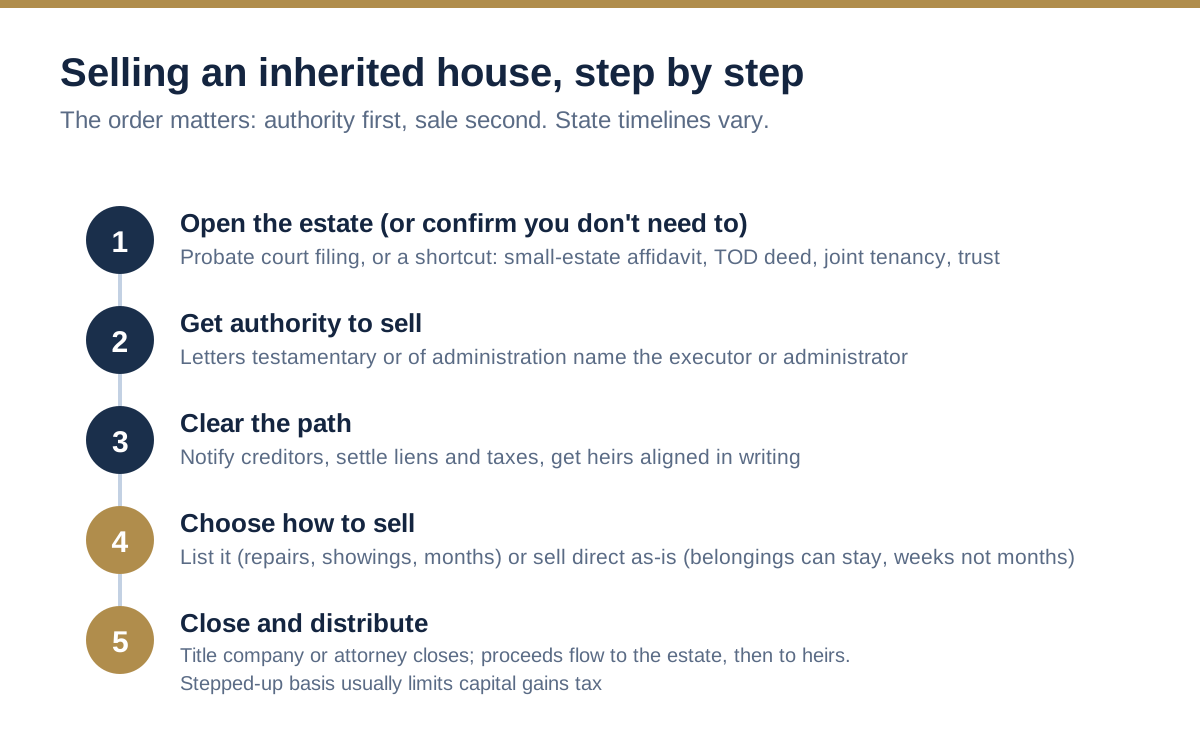
If the house was titled solely in the deceased's name, someone has to be appointed by the court before a title company will insure a sale. You file in the county where the deceased lived, the court appoints a personal representative (executor with a will, administrator without), and the letters that appointment produces are the document every closing agent in Indiana will ask to see.
Unsupervised Administration: Indiana's Default
Indiana's good news is that unsupervised administration is the norm, not the exception. For uncontested estates, Ind. Code 29-1-7.5 lets the personal representative sell the house essentially like a normal owner: no hearing on the sale, no judge approving your buyer, no court confirmation of price. Once the letters issue, the sale runs on an ordinary closing calendar. Appointment itself typically takes a few weeks to a couple of months depending on the county docket, and creditor claims must be filed within 3 months of the first published notice, with an absolute bar 9 months after death (Ind. Code 29-1-14-1). The sale usually closes long before the estate itself does; proceeds sit in the estate account until distribution.
The $100,000 Affidavit Trap
Here is the trap we see Indiana families fall into every year. The small estate affidavit (Ind. Code 29-1-8-1) sounds like it should cover a modest house: it applies to estates of $100,000 or less for deaths after June 30, 2022, after a 45-day wait. But it reaches personal property only. Bank accounts, vehicles, the contents of the garage: yes. The house: never. Families burn months presenting affidavits to title companies that cannot accept them, and then start probate later than they should have. If the house did not pass by trust, survivorship, or a TOD deed, plan on opening an estate.
The Distributee Affidavit for Title Cleanup
One more Indiana-specific note: the same statute that vests title at death also lets distributees record an affidavit as prima facie evidence that the real estate passed to them (Ind. Code 29-1-7-23). It is a title-cleanup tool your attorney may use years after the fact, not a substitute for administration when debts and multiple heirs are in play.
Taxes: Mostly Better News Than People Expect
Heirs walk in braced for a tax bill that usually is not there. Three layers, from Washington down to the county:
Federal estate tax: irrelevant for almost everyone. The federal exemption is roughly $15 million per person in 2026. Unless the estate is far into eight figures, it owes nothing.
Indiana estate and inheritance tax: none. Indiana repealed its inheritance tax in 2013, retroactive to deaths on or after January 1, 2013, and it has no estate tax. If the person died in 2013 or later, there is no Indiana death tax of any kind. There is also no state transfer tax when the house sells, which is part of why Indiana closings rank among the cheapest in the country.
Capital gains: usually small, because of the stepped-up basis. Heirs inherit the house at its fair market value on the date of death, not what the deceased paid decades ago. Sell for close to that value, as most estates do within a year or so, and the taxable gain is minimal or zero. The house your dad bought in Muncie for $28,000 in 1979 and left at a $210,000 value produces a taxable gain only on appreciation above $210,000. Get a date-of-death appraisal or a broker's valuation and keep it; that piece of paper is what makes the sale nearly tax-free.
Two carrying costs sneak up while the estate is open. First, Indiana property tax bills keep coming due each May 10 and November 10, and once the house is no longer anyone's primary residence it can lose the homestead deduction, moving it from the 1% cap toward the 2% cap on assessed value. The bill can jump noticeably in the second year. Second, every month of utilities, insurance, and lawn care comes out of the estate before heirs see a dime. Time is a real expense here, which is worth remembering when you choose how to sell.
When Several Heirs Own One House
One house, three siblings, three opinions. This is the normal case, not the exception, and Indiana gives you a clean menu:
- Sell from the estate and split the proceeds. One signer (the personal representative), one transaction, and nobody has to agree on paint colors. This is what most estates that intend to sell actually do.
- One heir buys the others out. Fair market value minus selling costs is the honest framework. Put the buyout in writing through the estate attorney; handshake buyouts between siblings age badly.
- Keep it as a rental. Only works when every heir genuinely wants to be in the landlord business together. One reluctant co-owner turns this into a slow-motion dispute.
- Partition, the last resort. Any co-owner can force a sale through a partition action (Ind. Code 32-17-4), and Indiana now requires the court to send partition cases to mediation within 45 days of acquiring jurisdiction over the parties (Ind. Code 32-17-4-2.5). It works, but attorney fees come off the top of everyone's share, and the relationships rarely recover. We have bought houses mid-partition; every heir would have netted more a year earlier.
Most standoffs are information problems, not valuation problems. Share every offer, every payoff figure, and every repair estimate with every heir at the same time. When we make an offer on an estate house, we present it on a group call with all the heirs for exactly this reason.
The House Itself: Contents, Insurance, and Keeping It Safe
While the legal machinery runs, the physical house needs three decisions fast.

The contents. Decades of belongings are the part families underestimate most. Distribute the personal items that matter, then resist the urge to spend six weekends hauling the rest. Estate sale companies take a cut but empty the house; buyers like us take houses contents-included, and you carry out only the photo albums.
The insurance. Homeowner's policies can limit or void coverage once the owner dies or the house sits vacant, sometimes after just 30 to 60 days. Call the insurer early, tell them it is an estate property, and ask for a vacant or estate endorsement. An uninsured vacant house is the single biggest risk the estate holds.
The security. Rekey the doors (more people have keys than anyone admits), stop the mail, put lamps on timers, and have someone check weekly. In Indianapolis and South Bend, vacant houses draw attention within weeks, and a break-in or frozen pipe becomes the estate's bill.
Your Options for Selling, Compared Honestly
Start with a rule that surprises most executors: Indiana's seller disclosure form is generally not required for estate sales. Transfers made in the administration of an estate are exempt from the disclosure chapter (Ind. Code 32-21-5-1). The law does not pretend an executor knows the roof's history. You still cannot hide a defect you actually know about, but the State Form 46234 exercise usually is not yours to do.
From there, the choice is the honest math of condition and time.
Listing With a Real Estate Agent
Listing with an agent makes sense when the house is in retail-ready shape or close to it, and the estate can float the carrying costs. Expect 5-6% commission, buyer inspection negotiations, an appraisal that has to cooperate, and, statewide, a few months from listing to closed. For an updated house in a strong pocket of Fort Wayne or the Indianapolis suburbs, that premium is real and worth pursuing.
Selling As-Is to a Direct Buyer
A direct as-is sale trades some of that top-end price for certainty and speed. We buy inherited houses across Indiana as-is, contents included, coordinate directly with the estate's attorney, and can hold a firm written offer while the appointment finalizes, so the estate can act the day the letters issue. Cash closings run two to three weeks once title is clear, with no repair credits because the offer already priced the repairs in writing. For the dated house, the full house, or the estate with heirs in three states, this is usually the path that nets the most after honest accounting of repairs and months of carrying costs.
The Middle Path: Our Retail Buyer Program
In between the two, ask us about our Retail Buyer Program: we prepare and market the house to retail buyers and the estate collects more than a typical cash offer, with the same easy process, in exchange for a longer timeline. We will show you that number next to the cash number and let the estate pick.
Whichever way you go, run the comparison on paper: likely sale price, minus commissions or fees, minus repairs, minus every month of taxes, insurance, and utilities. The biggest number at the top of the page is not always the biggest number at the bottom.
Before You Sign Anything
Get the deed, so you know which legal path applies. Get the letters, because no Indiana title company closes without them. Get a date-of-death value on paper, because it sets the tax basis for every heir. Get the insurance sorted this week, not after something happens. And get every option, including ours, as a written net number the whole family can look at side by side. Our inherited house guide covers the national picture, the probate walkthrough goes deeper on the court sequence, and the Indiana selling guide covers the state's rules for any sale.
This article is general information about Indiana law, not legal advice. Estates differ and statutes get amended; for your specific situation, the estate's Indiana attorney is the authority.
From the buyers
How EZ Time Home Buyers Can Help With an Inherited House
We work with executors, heirs, and families in probate all the time, including houses full of belongings and houses three states away from everyone who inherited them. We buy as-is, work around court timelines, and put every offer in writing with the math shown. If the family wants more than a cash number, the Retail Buyer Program handles the work while typically netting more than a typical cash offer, with no commissions or fees.
Frequently Asked Questions
Do I have to go through probate to sell an inherited house in Indiana?
Usually yes, if the house was titled solely in the deceased's name. The court must appoint a personal representative before anyone can sign a valid deed, though Indiana's unsupervised administration (Ind. Code 29-1-7.5) lets that representative sell without a hearing on the sale. Probate is skipped only when the house passed outside the estate: a living trust, joint ownership with survivorship, or a transfer-on-death deed under Ind. Code 32-17-14. The $100,000 small estate affidavit (Ind. Code 29-1-8-1) transfers personal property only, never real estate.
Does Indiana charge an inheritance tax on a house I inherit?
No. Indiana repealed its inheritance tax retroactive to deaths on or after January 1, 2013, and it has no estate tax either. The federal estate tax only touches estates worth roughly $15 million per person in 2026. Your practical tax exposure is capital gains on any appreciation after the date of death, and the stepped-up basis usually makes that minimal if you sell within a year or so of inheriting.
Do I have to fill out Indiana's seller disclosure form when selling an inherited house?
Generally no. Transfers made in the administration of an estate are exempt from Indiana's disclosure chapter (Ind. Code 32-21-5-1), so the executor or administrator typically does not complete State Form 46234. You still may not conceal defects you actually know about, but the law does not expect a personal representative to know the house's history the way an occupant would.
What if one heir wants to sell the inherited house and the others don't?
While the estate is open, the personal representative under unsupervised administration typically has authority to sell without unanimous heir consent, though objecting heirs can petition the court. Once the house has been distributed to multiple heirs, any co-owner can force the issue with a partition action (Ind. Code 32-17-4), and Indiana courts must refer partition cases to mediation within 45 days (Ind. Code 32-17-4-2.5). Partition works but is expensive; a negotiated buyout or an agreed sale nearly always nets everyone more.
Related Guides
Ready to see both of your numbers?
Tell us about your property once and get a written cash offer, plus what our Retail Buyer Program could net you instead. No repairs, no fees, no pressure to accept.