
The North Carolina Foreclosure Process: Timeline, Your Rights, and Ways Out
By Carson Whaley · Updated August 26, 2026 · 8 min read
A North Carolina foreclosure can't legally begin until you're more than 120 days behind (12 C.F.R. 1024.41), and once the trustee files, the clerk-hearing process typically takes another two to four months before a sale becomes final. Add the required 45-day warning letter and the 10-day upset-bid window, and you have more usable time than the letters make it feel like.
The North Carolina Timeline, Stage by Stage
North Carolina gets labeled a non-judicial state, and that's only half true. Nearly every NC foreclosure proceeds under the power of sale in the deed of trust, but none of them can happen without a hearing in front of the Clerk of Superior Court. Lawyers call it quasi-judicial. For you, it means the process has real, countable stages, and each one is time you can use.
Stage 1: Missed Payments, Months One Through Four
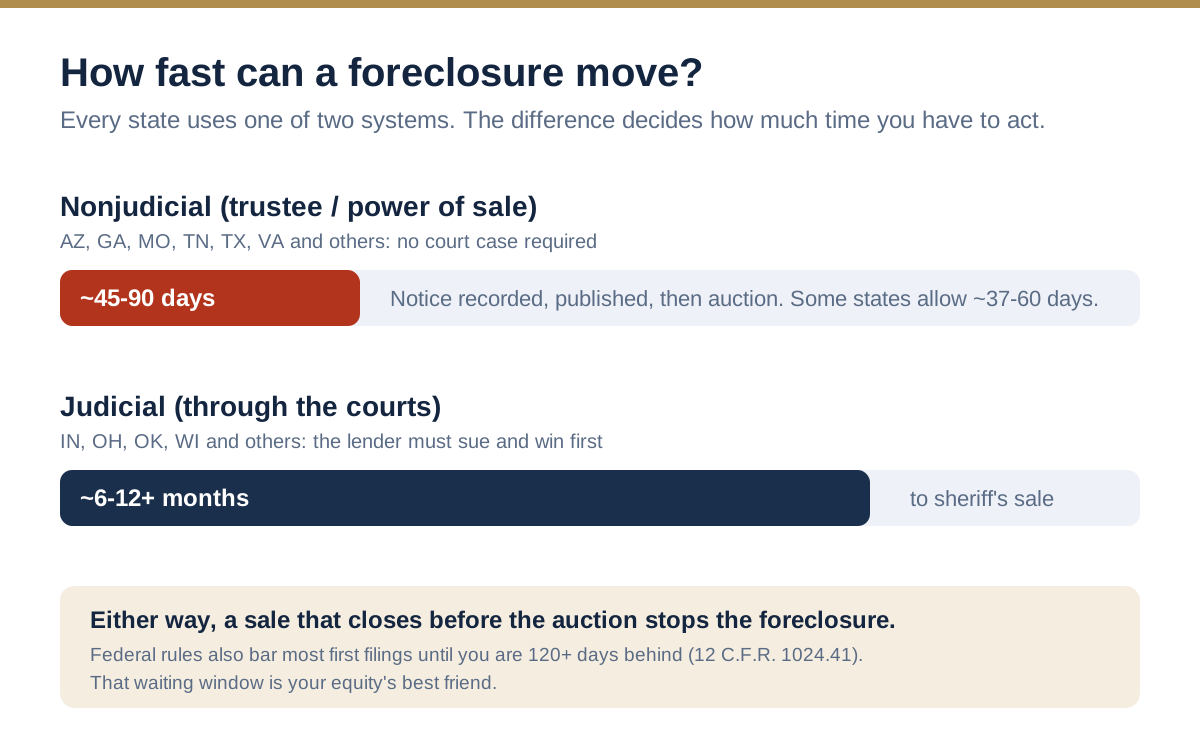
Late fees and collection calls start, but federal law bars the servicer from making the first foreclosure filing until you're more than 120 days delinquent (12 C.F.R. 1024.41). That's a floor no lender can shortcut, and it's the cheapest window you'll ever have to fix this.
Stage 2: The 45-Day Letter
For home loans, the servicer must mail a written notice at least 45 days before starting foreclosure, itemizing the debt and listing loss-mitigation resources and housing counseling contacts (N.C.G.S. 45-102).
Stages 3 and 4: Notice of Hearing and the Clerk's Hearing
The trustee files with the Clerk of Superior Court in your county and must serve you at least 10 days before the hearing date (N.C.G.S. 45-21.16). In practice the hearing usually lands a month or more out, depending on the county calendar.
At the hearing itself, the clerk can authorize the sale only after finding four things: a valid debt, a default, a right to foreclose under the deed of trust, and proper notice (N.C.G.S. 45-21.16). For home loans, compliance with the 45-day pre-foreclosure notice gets checked too. You can appear, contest the evidence, and appeal an adverse order to a superior court judge within 10 days.
Stages 5 and 6: Notice of Sale, Auction, and Upset Bids
The sale must be advertised: posted at the courthouse at least 20 days before the sale date, published in a qualifying newspaper once a week for two successive weeks (the last run no more than 10 days before the sale), and mailed to the record owners at least 20 days out (N.C.G.S. 45-21.17).
Once notice runs, the trustee auctions the property, usually at the courthouse. The sale is not final that day. Anyone can raise the bid by filing an upset bid with the clerk within 10 days, at least 5% higher (minimum $750), and every upset bid restarts a fresh 10-day window (N.C.G.S. 45-21.27). Only when a full 10-day window passes with no new bid does the sale become final.
Stage 7: Deed and Possession
The trustee delivers the deed, and if anyone still lives there, the new owner must go back through the clerk for an order for possession (N.C.G.S. 45-21.29). Removal is a court process, never a padlock on day one.
Stacked together, the filing-to-final stretch typically runs two to four months, and the full arc from first missed payment is usually seven months or more. Fast by New York standards, but nothing like the overnight seizure people fear.
Your Rights at Each Stage
The right to be heard. The hearing is not a formality. Servicers must prove the four findings with real evidence, and note-holder paperwork problems have sunk NC foreclosures. If you have a defense, raise it there, and remember the 10-day appeal window after the clerk's order.
The right to reinstate. North Carolina statutes don't hand every borrower a reinstatement right, but nearly all standard deeds of trust (the Fannie Mae/Freddie Mac uniform instrument behind most NC home loans) let you reinstate by paying the past-due amounts plus costs before the sale. Ask the servicer for a written reinstatement quote; they must tell you the exact number.
The right to pay off or sell until the sale is final. You can redeem the property by paying the full debt, or sell it and pay the loan off at closing, at any point before the upset-bid period expires. This is the big one most homeowners never hear: even after the auction, the 10-day upset-bid clock means the sale isn't done. Once the last window closes, though, North Carolina gives you no statutory redemption. It's over.
The right to surplus funds. If the auction brings more than the debt and costs, the surplus goes to junior lienholders and then to you (N.C.G.S. 45-21.31). File for it; unclaimed surpluses sit with the clerk.
Deficiency exposure. If the sale brings less than you owe, the lender can sue for the difference. Two shields matter: deficiency judgments are abolished entirely on seller-financed purchase-money deeds of trust (N.C.G.S. 45-21.38), and after any power-of-sale foreclosure you can defend by showing the property was fairly worth the debt or the bid was substantially below its true value (N.C.G.S. 45-21.36). In practice, first-mortgage lenders rarely chase deficiencies on owner-occupied homes, but rarely is not never.
Every Real Way Out
Here is the honest menu, roughly in order of how much of your equity and credit each option preserves.
Catch up. Reinstatement ends the foreclosure outright. If family help or a 401(k) loan can cover the arrears, get the written quote and wire before the sale.
Loan modification or repayment plan. Submit a complete loss-mitigation application more than 37 days before the sale and the servicer must review it before foreclosing (12 C.F.R. 1024.41), which blocks dual-tracking. Free HUD-approved housing counselors will help you assemble the application; the 45-102 letter lists them, and they cost nothing.
Forbearance. A documented hardship with an end date (job loss with a new start date, medical recovery) can pause payments, with the missed amounts moved or repaid later.
Bankruptcy. A Chapter 13 filing triggers an automatic stay that stops the sale immediately and lets you cure arrears over three to five years, at real cost to your credit and with a trustee overseeing your budget.
Deed in lieu. Handing the lender the deed avoids the auction on your record, but it surrenders whatever equity you have, so it only makes sense when there's nothing left to protect.
Sell before the sale becomes final. A closing pays the loan off in full, stops the foreclosure at the payoff, and puts the remaining equity in your pocket instead of leaving it to auction dynamics. Our foreclosure options guide compares all of these in depth, and this walkthrough covers the selling path specifically.
The Equity Math: What Letting It Go to Auction Costs
Foreclosure auctions are engineered for the lender, not for your equity. The lender bids with a credit bid, paper up to the amount owed, while every other bidder needs cash and a deposit and is there to buy at a discount. The upset-bid system helps more than most states' rules, but upset bidders are discount buyers too, and bids rarely climb anywhere near retail value.
Run the numbers on a house worth about $260,000 with $160,000 owed. At auction, bidding might open near the debt and upset-bid its way to $185,000 or $200,000. After the trustee's commission, costs, and any junior liens, the surplus that eventually reaches you is a fraction of the $100,000 of equity you actually had, and your credit carries a completed foreclosure for seven years. Sell before the sale instead, even at an as-is price below full market, and you control the payoff, the timeline, and every dollar above the mortgage.
This is not a rare scenario in this state right now. Charlotte-area filings rose 71% in the first half of 2026 per ATTOM, and we're having these conversations weekly in Charlotte, Fayetteville, and Raleigh. The homeowners who come out with their equity are almost always the ones who acted a stage earlier than they had to.
Using the Clock: A Realistic Plan From Wherever You Are
Match your move to your stage. Inside the 120-day window, every option is still open, and a modification application costs you nothing. After the 45-day letter, you likely still have three months or more; start loss mitigation and get a real number for what the house would bring. After the notice of hearing, get a written payoff, show up to the hearing, and make the sell-or-keep decision with actual figures. After the auction, the upset-bid window is measured in days, and only a payoff or a very fast closing changes the outcome.

Here's what the selling route actually looks like against this clock. We walk the house once, then put a written offer in front of you that itemizes the after-repair value, the repair budget, and our margin. If the numbers work for you, a licensed North Carolina closing attorney (required here, and your built-in protection) orders the payoff, clears title, and closes in two to three weeks, no repairs and no commissions. The loan gets paid at closing, the trustee's file gets closed, and the remaining equity wires to you. For houses that are dated but livable, our Retail Buyer Program can often bring more than a typical cash offer through the same easy process. A signed contract shown to the servicer's attorney frequently buys patience on sale dates, too; trustees would rather be paid off than auction.
Whatever you choose, do four things this week: request a written reinstatement quote, call a HUD-approved counselor from the 45-102 letter, get a written offer on the house so "sell" is a number instead of a fear, and put your sale date and upset-bid deadlines on a calendar you look at daily. The process in North Carolina is slower and more survivable than the envelopes suggest, but only for people who use the stages instead of watching them pass. Our state selling guide covers the closing mechanics whenever you're ready to run the numbers.
This article is general information about North Carolina foreclosure law, not legal advice; a North Carolina attorney or HUD-approved housing counselor can tell you exactly where your file stands.
From the buyers
How EZ Time Home Buyers Can Help Before Foreclosure
A sale that closes before the auction pays off the loan, stops the foreclosure, and puts your remaining equity in your pocket instead of losing it at the courthouse. We close in as little as 2-3 weeks, coordinate payoff directly with your lender through a licensed title company, and show you the math in writing before you commit to anything. No fees, and no pressure: if keeping the house is possible, we'll say so.
Frequently Asked Questions
How long does the foreclosure process take in North Carolina?
Longer than the letters suggest. Federal law blocks the first filing until you're more than 120 days delinquent (12 C.F.R. 1024.41), the servicer must send a 45-day pre-foreclosure notice (N.C.G.S. 45-102), and the clerk-hearing process, from notice of hearing through the auction and the 10-day upset-bid period, typically takes another two to four months. Most North Carolina homeowners have seven months or more from the first missed payment before a sale becomes final.
Can I stop a North Carolina foreclosure after the auction?
For a short window, yes. The sale isn't final until a 10-day upset-bid period passes with no new bid, and each upset bid restarts a fresh 10 days (N.C.G.S. 45-21.27). Until that last window expires, you can still pay off the full debt or close a sale that pays it off. Once the sale becomes final, North Carolina provides no statutory right of redemption.
Can the lender come after me for money after a North Carolina foreclosure?
Sometimes. If the sale brings less than the debt, the lender can seek a deficiency judgment, but there are two shields: deficiencies are abolished on seller-financed purchase-money deeds of trust (N.C.G.S. 45-21.38), and after a power-of-sale foreclosure you can defend by proving the property was fairly worth the debt or sold substantially below its true value (N.C.G.S. 45-21.36). If the sale brings more than the debt, the surplus belongs to junior lienholders and then to you (N.C.G.S. 45-21.31).
What happens at the foreclosure hearing in front of the clerk?
The Clerk of Superior Court can authorize the sale only after finding a valid debt, a default, a right to foreclose under the deed of trust, and proper notice (N.C.G.S. 45-21.16), plus compliance with the 45-day pre-foreclosure notice on home loans. You have the right to appear, contest the evidence, and appeal an adverse order to a superior court judge within 10 days. It's a real proceeding, and paperwork defects have stopped NC foreclosures there.
Related Guides
Ready to see both of your numbers?
Tell us about your property once and get a written cash offer, plus what our Retail Buyer Program could net you instead. No repairs, no fees, no pressure to accept.