
Selling a House in North Carolina: Laws, Taxes, and How the Process Actually Works
By Eric Roebuck · Updated August 26, 2026 · 10 min read
North Carolina does three things differently from most states: a licensed attorney must handle your closing, the state disclosure form lets you answer "No Representation" to almost every question, and the transfer tax is a modest $1 per $500 of price. Here's the whole process, statute by statute, from the disclosure form to the wire hitting your account.

The Disclosure Statement and the "No Representation" Option
Most states make sellers fill out a disclosure form. North Carolina's version, the Residential Property and Owners' Association Disclosure Statement, comes with an escape hatch almost nobody else offers.
Under the Residential Property Disclosure Act (N.C.G.S. Chapter 47E), sellers of most residential property must give buyers a completed disclosure statement no later than the moment the buyer makes an offer (N.C.G.S. 47E-5). Every question gets one of four answers: Yes, No, No Representation, or Not Applicable. That third option is the unusual one. Checking "No Representation" means exactly what it says: you are not vouching for that item either way, and the statute shields you from claims about conditions you had no actual knowledge of (N.C.G.S. 47E-4).
Here's the honest version of what that does and doesn't do for you. "No Representation" is not a license to hide a cracked foundation you know about. If you actively conceal a known material defect, you can still be liable for fraud, and if a real estate agent is involved, the agent must disclose material facts they know regardless of what you checked. What the option genuinely helps with is the inherited house you never lived in, the rental you haven't walked through in six years, the crawlspace you've honestly never opened. You can't disclose what you never knew, and NC law finally admits that.
Two more wrinkles worth knowing:
- Since 2015, sellers also complete a Mineral and Oil and Gas Rights Disclosure. You can answer "No Representation" about severances made by previous owners, but not about severances you made or intend to make (N.C.G.S. 47E-4.1).
- Miss the delivery deadline and the buyer gets a cancellation right: they can walk within three calendar days of receiving the statement, with their deposit back (N.C.G.S. 47E-5). We've watched deals die on that technicality. Hand over the form before anyone signs anything.
Who skips the form entirely
N.C.G.S. 47E-2 exempts a specific list of transfers: court-ordered sales including those in estate administration, foreclosure and trustee sales, transfers by fiduciaries administering an estate or trust, the first sale of a never-inhabited new house, and transfers between co-owners, spouses, or lineal relatives. Note the fine print on estates: a personal representative selling for the estate is typically exempt, but an heir who took title and is now selling their own house generally is not.
When we buy directly, the form stops being a source of anxiety either way. We price the condition from our own walkthrough, so a page full of "No Representation" answers costs you nothing.
How a North Carolina Sale Works, Start to Finish
The broad strokes look like anywhere else: agree on terms, clear title, sign, get paid. The details are distinctly North Carolina's.
1. Contract. Most agent-listed sales use the NC Bar Association / NC REALTORS standard Offer to Purchase and Contract, which runs on a due diligence fee and a due diligence period rather than traditional contingencies. During that window the buyer can terminate for any reason and keep their earnest money, though you keep the due diligence fee. A direct sale to a buyer like us uses a simpler contract with a fixed price and a fixed closing date.
2. The closing attorney takes over. This is the big one. North Carolina is an attorney state: title examination, preparation of the deed, and the closing itself are the practice of law here, so a licensed North Carolina attorney must handle or supervise them. Title companies cannot run closings the way they do in Florida or Texas. For sellers this is built-in protection, because no matter who your buyer is, a licensed professional with obligations to the transaction sits in the middle of the money. Any cash buyer who suggests closing without an NC attorney is showing you exactly who they are. Walk away.
3. Title work and payoffs. The attorney searches title at the county Register of Deeds and courthouse, orders your mortgage payoff, and clears liens. Plan on two to four weeks for a clean file. Financed buyers add appraisal and underwriting on top, which is why conventional closings commonly run 30 to 45 days from contract while our cash closings typically run two to three weeks.
4. Closing day. NC does not require both parties at one table. Sellers usually pre-sign the deed and settlement statement, sometimes from another state entirely. The attorney records the deed, and under NC's Good Funds Settlement Act disbursement follows recording. Your proceeds generally wire the same day or the next morning.
One custom worth knowing: in North Carolina the buyer traditionally pays most closing costs, including the buyer's attorney fee and title insurance. The seller customarily covers deed preparation, commission if an agent is involved, and the excise tax. That custom is negotiable, but it's the default the attorneys will assume.
Selling an Inherited House: NC Probate Basics
North Carolina handles death and real estate differently than most sellers expect: title to real property vests in the heirs or devisees at the moment of death (N.C.G.S. 28A-15-2). The heirs own the house right away. Owning it and being able to convey clean, insurable title are two different things.
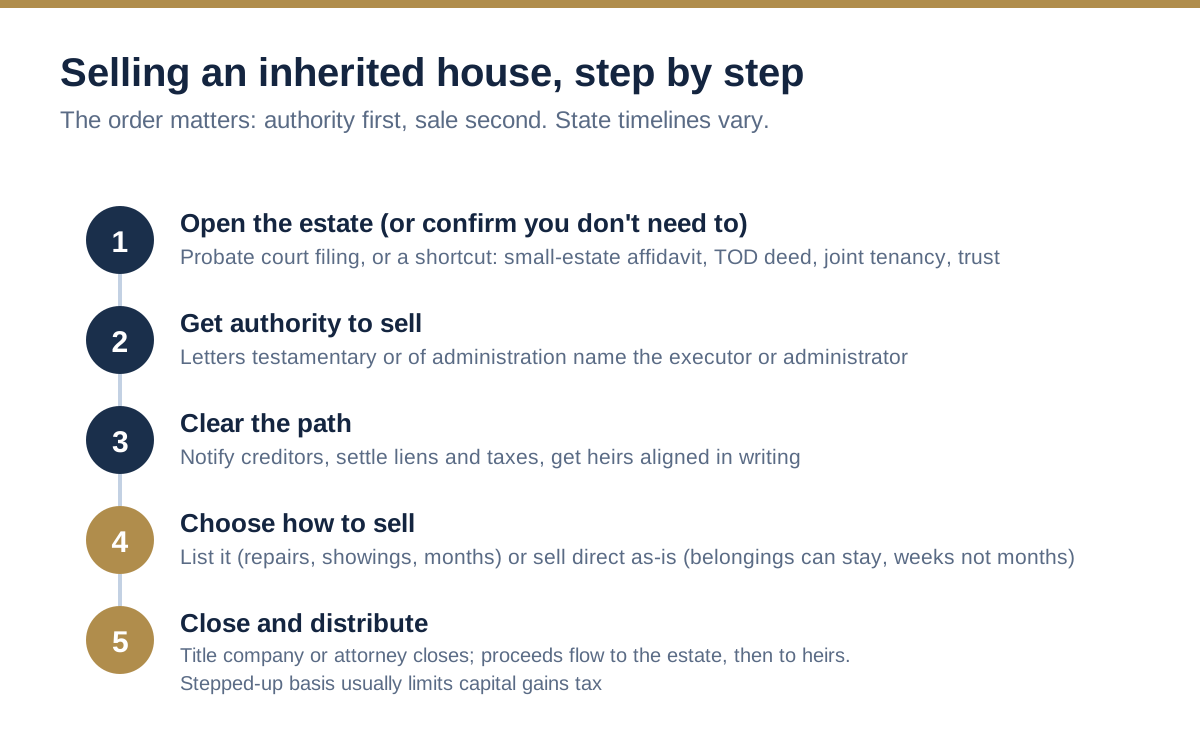
The catch is the creditor window. The house stays subject to the estate's debts, and the personal representative can pull it back into the estate and sell it to pay claims if the personal property isn't enough (N.C.G.S. 28A-15-2, 28A-17-1). Probate runs through the Clerk of Superior Court in the decedent's county, and the published notice to creditors gives claimants at least three months from first publication to come forward (N.C.G.S. 28A-14-1). Sell before that window closes and the closing attorney will want the estate file open, the notice running, and usually the personal representative joining in the deed. It's routine, but it's paperwork, and it's why heirs who call us in week one still typically close in month two or three rather than week three.
A few NC-specific numbers that shape estate sales:
- Spousal year's allowance: a surviving spouse is entitled to $60,000 off the top of the personal property for the first year's support (N.C.G.S. 30-15). It comes out before creditors, which matters when an estate is thin.
- Small estate administration: if the decedent's personal property is worth $20,000 or less ($30,000 when the surviving spouse is the sole heir), the family can collect it by affidavit and skip full administration (N.C.G.S. 28A-25-1). Helpful, but note it covers personal property. The house itself passed at death anyway; the affidavit doesn't clear the creditor window.
- Full administration: commonly nine to eighteen months in NC clerk's offices, though as covered above, the house sale usually doesn't need to wait for the estate to close.
We buy inherited houses across the state, contents included, and we coordinate directly with the estate attorney so the contract is structured around whatever approvals the file needs. The inherited house guide and our national probate walkthrough cover the mechanics; for a number on a specific property, the cash offer calculator is the fastest starting point.
Foreclosure Pressure: The Clerk Hearing and Your Real Timeline
North Carolina foreclosures are usually called non-judicial, but that's only half true. Nearly all NC foreclosures proceed under a power of sale in the deed of trust, yet none can happen without a hearing in front of the Clerk of Superior Court. Lawyers call it quasi-judicial. For a homeowner, it means the timeline has real, countable stages:
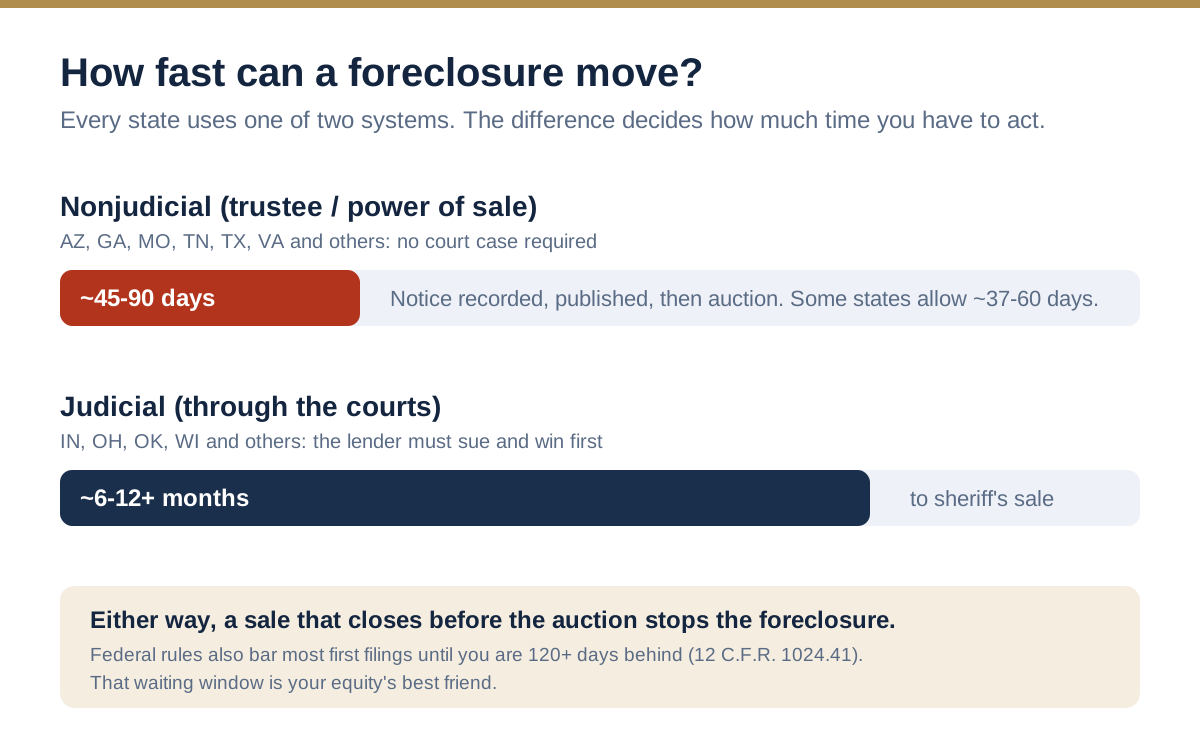
- 45-day notice. For home loans, the servicer must send a written notice at least 45 days before filing the foreclosure hearing, listing the debt and loss-mitigation resources (N.C.G.S. 45-102).
- Notice of hearing. The trustee files with the clerk and must serve you at least 10 days before the hearing date (N.C.G.S. 45-21.16). In practice the hearing lands a month or more out, depending on the county calendar.
- The clerk's hearing. The clerk authorizes the sale only after finding four things: a valid debt, a default, a right to foreclose under the instrument, and proper notice (N.C.G.S. 45-21.16). You can appear, contest the evidence, and appeal an adverse order to a judge.
- Sale and upset bids. After the auction, anyone can file a raised bid with the clerk within 10 days, and each upset bid restarts a fresh 10-day window (N.C.G.S. 45-21.27). Until the last window expires, the sale is not final.
Stacked together, an NC foreclosure typically runs two to four months once initiated, slower than Georgia's, faster than New York's. The strategic point is simpler: you can sell the house at any point before the sale becomes final, and every stage above is time you can use. A cash closing in two to three weeks fits inside almost any spot on that calendar, pays off the loan, and puts the remaining equity in your pocket instead of leaving it to auction dynamics. Our foreclosure options guide maps every alternative, and this walkthrough covers the sell-before-auction path specifically. Charlotte-area filings rose 71% in the first half of 2026 per ATTOM, so if you're getting these notices in Charlotte or anywhere else in the state, you have plenty of company and more runway than the letters make it feel like.
What Selling Costs in North Carolina
Start with the tax everyone asks about. North Carolina's excise tax on conveyances is $1 per $500 of the price, paid by the seller when the deed records (N.C.G.S. 105-228.30). That's 0.2%: a $300,000 sale owes $600. Cheap by national standards. Seven northeastern counties (Camden, Chowan, Currituck, Dare, Pasquotank, Perquimans, and Washington) add a local land transfer tax of 1% under special legislative acts, so a Dare County beach house pays the 0.2% plus 1% on top. Everywhere else in the state, the 0.2% is the whole transfer bill.
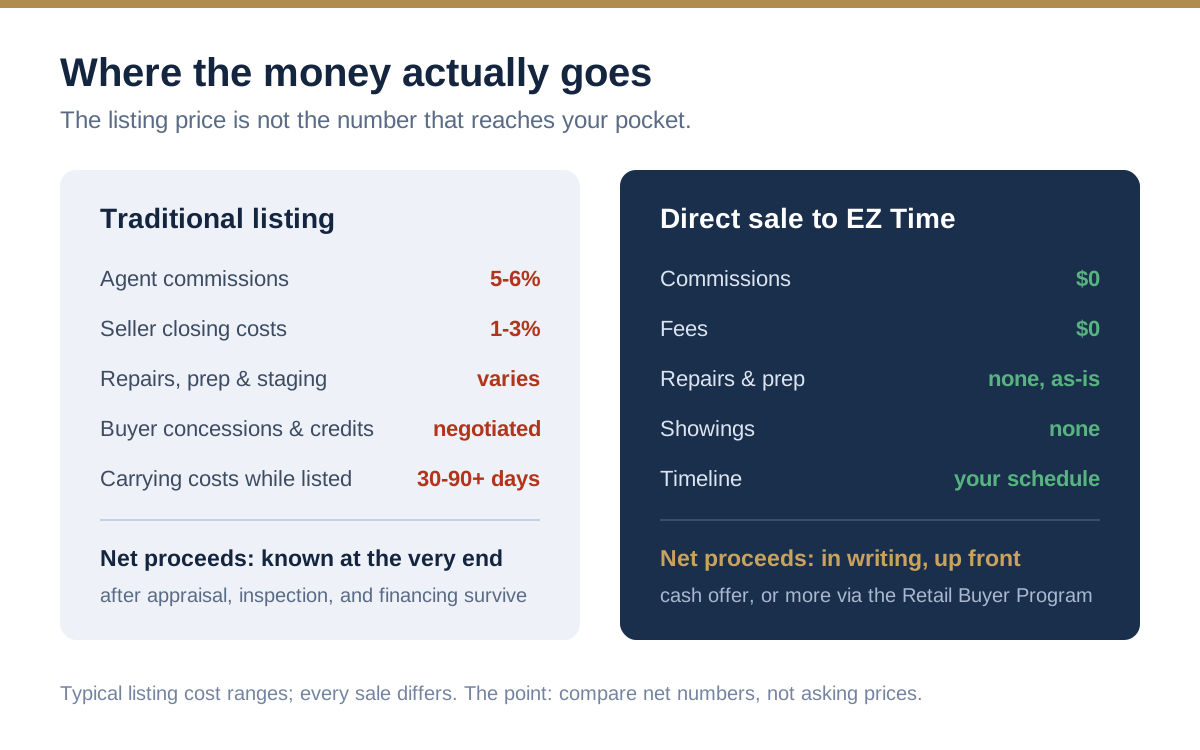
A typical listed sale in NC stacks up like this:
- Agent commissions: commonly 5% to 6% of the price if you list, the single largest line. $15,000 to $18,000 on that $300,000 house.
- Excise tax: 0.2%, seller-paid.
- Deed preparation and seller attorney work: modest by custom, since the buyer pays their own closing attorney and title insurance here.
- Repairs, concessions, and due diligence renegotiation: the unpredictable category. Financed buyers' inspection lists and appraisal gaps routinely cost NC sellers more than the excise tax ever will.
- Carrying costs: taxes, insurance, and utilities for every month on market. NC property taxes are low, roughly 0.63% effective on average, which softens this one.
A direct sale rewrites that list. Selling to us means no commissions, no fees, no repair credits, and standard closing costs on us; you pay the excise tax and your own payoffs, both itemized by the closing attorney. For owners whose houses are dated but livable, our Retail Buyer Program can often do better than a typical cash offer by tapping our network of end buyers, though we'll never promise a magic number, because nobody honest can. Every offer we write in Raleigh, Durham, or anywhere across North Carolina itemizes the after-repair value, the repair budget, and our margin, and the how it works page shows the math before you ever talk to us.
North Carolina Scenarios We See Every Week
The inherited ranch with out-of-state heirs
Three siblings in three states inherit a 1962 brick ranch. Title vested in all three at death, so all three sign, but nobody needs to fly in: NC's pre-signing custom means the closing attorney sends the deed for remote notarization. The estate file stays open through the creditor window, the disclosure form is either exempt or answered "No Representation" throughout, and we buy as-is, contents and all.
The 45-day letter just arrived
The N.C.G.S. 45-102 notice is the starting gun, not the finish line. Between that letter, the hearing notice, the clerk's calendar, and the upset-bid period, most NC homeowners have three months or more of usable time. A signed contract with a cash buyer, shown to the servicer, frequently buys patience too. The equity math almost always favors selling before the auction rather than hoping the upset-bid process runs the price up.
The coastal county surprise
Sellers in the seven land-transfer-tax counties budget 0.2% and discover the bill is six times larger. If you're selling in Currituck or Dare, price that 1.2% combined transfer cost into every net sheet you run, whoever your buyer is.
One necessary note: this guide is general information about North Carolina law, not legal advice, and statutes get amended. For your specific situation, the NC closing attorney handling your file is the right authority, and we'll always encourage you to have one review any contract, including ours.
From the buyers
How EZ Time Home Buyers Can Help in North Carolina
We buy houses across North Carolina, and everything above is the world we work in every week. If the timelines or repair math in this guide are pushing you toward a direct sale, we'll give you a written cash offer with the math shown line by line: after-repair value, repair budget, our margin. And if the cash number doesn't work for you, our Retail Buyer Program is a second path that typically nets more than a typical cash offer while we handle the work, with no commissions or fees on either path.
Frequently Asked Questions
Do I have to use an attorney to sell my house in North Carolina?
For the closing itself, yes in practice: North Carolina treats title examination, deed preparation, and closings as the practice of law, so a licensed NC attorney must conduct or supervise the closing regardless of who your buyer is. The buyer customarily pays the closing attorney in NC, and when you sell to us we cover the standard closing costs, so the attorney requirement is protection for you rather than an expense.
What does "No Representation" on the NC disclosure form actually protect me from?
Under N.C.G.S. 47E-4, checking No Representation means you're making no statement either way about that item, and buyers can't later claim you misrepresented conditions you had no actual knowledge of. It does not protect you if you knowingly concealed a material defect, and any agent involved must still disclose material facts they know. It's designed for honest ignorance, like an inherited house you never lived in, not for hiding problems.
How much is the transfer tax when selling a house in NC?
The state excise tax is $1 per $500 of the sale price, or 0.2%, paid by the seller at recording (N.C.G.S. 105-228.30). On a $250,000 sale that's $500. Seven northeastern counties, including Currituck and Dare, add a 1% local land transfer tax on top under special legislative acts. Everywhere else in North Carolina, the 0.2% is the entire transfer tax.
Can heirs sell an inherited North Carolina house before probate is finished?
Often, yes. NC real estate vests in the heirs at death (N.C.G.S. 28A-15-2), so the ownership exists immediately, but the house remains subject to estate debts during the creditor period, which runs at least three months from the published notice to creditors (N.C.G.S. 28A-14-1). Selling during administration is routine when the closing attorney structures it properly, usually with the personal representative joining the deed. Full estate administration takes longer, but the house sale rarely has to wait for it.
Related Guides
Ready to see both of your numbers?
Tell us about your property once and get a written cash offer, plus what our Retail Buyer Program could net you instead. No repairs, no fees, no pressure to accept.