
The Ohio Foreclosure Process: Timeline, Your Rights, and Ways Out
By Eric Roebuck · Updated August 26, 2026 · 8 min read
Ohio foreclosures run only through the courts: no filing until you're 120 days behind, 28 days to answer the lawsuit once it comes, six to twelve months to a sheriff's sale in a typical case, and a right to redeem the house until the court confirms the sale. Here's the whole clock, stage by stage, and every real exit.
Ohio Forecloses Only Through the Courts
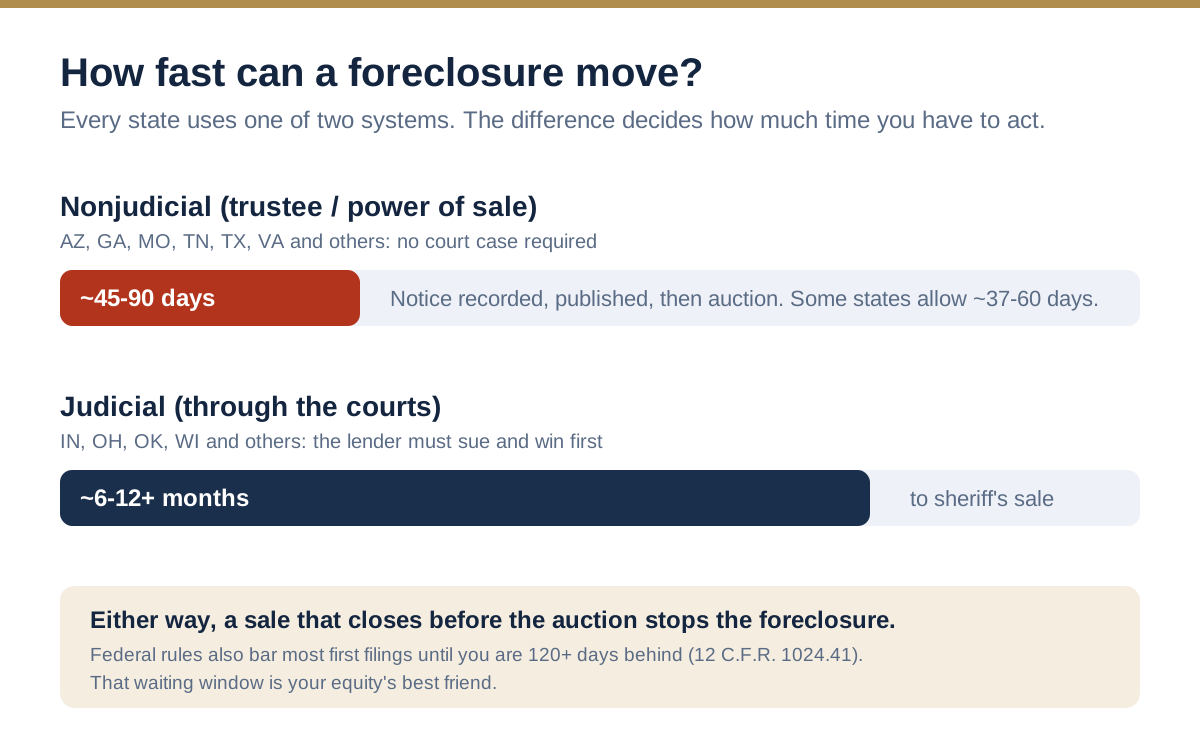
Start with the single most important fact about Ohio foreclosure: there is no power-of-sale shortcut here. A lender who wants your house has to file a civil lawsuit in the county Court of Common Pleas, prove its case, win a judgment, and then sell through the sheriff under court supervision. Every deadline in this guide flows from that one fact, and nearly all of them run in your favor.
We buy houses from Ohio owners in foreclosure every month, and the pattern we see is always the same: the process is slower than people fear and less forgiving than people hope. The owners who come out with money are the ones who use the early months. The ones who lose everything are the ones who waited for a miracle in month nine.
The Timeline, Stage by Stage
A typical Ohio foreclosure runs six to twelve months from first missed payment to sheriff's sale, and often longer in backlogged urban counties like Cuyahoga and Franklin. Here is how those months actually break down.
Months 1 to 4: Missed Payments and the Federal Wall
After a missed payment comes a late fee, then collection calls. Federal rules require your servicer to attempt live contact by around day 36 and send written loss-mitigation information by day 45 (12 C.F.R. 1024.39). More importantly, federal law generally prohibits the servicer from even filing foreclosure until you are more than 120 days delinquent (12 C.F.R. 1024.41(f)). Four months, minimum, before a lawsuit can exist. This is application season for a modification or forbearance, not waiting season.
The default and acceleration letter. Before filing, the lender sends a formal breach letter, typically giving 30 days to cure, then accelerates the loan, declaring the entire balance due. From this point, catching up requires more than mailing the missed payments.
The Complaint and Your 28 Days to Answer
The lender files in the common pleas court of the county where the house sits, along with a preliminary judicial report on the title (Ohio Rev. Code 2329.191), and you get served. You have 28 days to file an answer (Ohio Civ. R. 12). File one. Even a simple answer converts you from a default case into a contested one, adds months to the timeline, and preserves your defenses. Skipping it is the most expensive blank sheet of paper in Ohio.
Judgment and County Mediation Programs
A default case can reach judgment in two or three months; a contested one takes longer. Many Ohio counties, including Cuyahoga, Franklin, and Summit, run foreclosure mediation programs you can request when you answer, which pauses the litigation while you and the lender talk terms with a neutral in the room.
The Sheriff's Sale and the Two-Thirds Rule
After judgment, the court orders the property appraised, and the sale is advertised once a week for three consecutive weeks (Ohio Rev. Code 2329.26). At the auction, the opening bid can't fall below two-thirds of the appraised value (Ohio Rev. Code 2329.20). If the property fails to sell at two auctions, a residential property can then be offered with no minimum bid (Ohio Rev. Code 2329.52).
Confirmation: The Quiet Final Deadline
The auction is not the end. The court must confirm the sale, which typically happens 30 to 60 days later (Ohio Rev. Code 2329.31). Until confirmation, you can still redeem the property by paying the full judgment, costs, and interest at 8 percent on the purchase money (Ohio Rev. Code 2329.33). After confirmation, the deed transfers and a writ of possession follows.
One exception to all this patience: a court that finds a property vacant and abandoned can put it on a much faster track under Ohio Rev. Code Chapter 2308. If you've moved out but still want your equity, keep the house looking and legally occupied, or sell before that finding gets made.
Your Rights at Each Stage
The right to answer and be heard. Foreclosure is a lawsuit, and the lender carries the burden of proof: the note, the mortgage, the default, the amounts. Defenses and paperwork problems surface more often than people assume.
Reinstatement. Ohio statutes don't grant a reinstatement right, but nearly every standard mortgage contract does: pay the arrears, late fees, and the lender's costs, rather than the full accelerated balance, and the loan returns to normal. The contract sets the deadline, and lenders routinely accept reinstatement well into the case because it's cheaper than finishing the lawsuit. Get the reinstatement quote in writing; it grows monthly.
Protection from dual tracking. If you submit a complete loss-mitigation application more than 37 days before the sale, federal rules generally bar the servicer from moving for judgment or conducting the sale while it's under review (12 C.F.R. 1024.41).
Redemption. The right to pay off the judgment survives the auction itself, all the way to confirmation (Ohio Rev. Code 2329.33). Practically, redemption means producing the entire payoff at once, so it works through a refinance, family money, or a sale that closes inside the window.
Deficiency exposure, with a real limit. If the sale brings less than you owe, Ohio allows a deficiency judgment for the gap. But for a dwelling of one or two families that was your home, that judgment becomes unenforceable two years after the sale is confirmed (Ohio Rev. Code 2329.08). Two years of collection risk is not nothing, but it is a fence, and many lenders never pursue the gap at all.
Every Real Way Out
Every exit from an Ohio foreclosure fits on one list, and each works better early than late.
Catch up or reinstate. If the arrears are the whole problem, this is the cheapest fix. Total the quote, then be honest about whether next month looks different from last month.
Loan modification. The servicer reworks the loan, moving arrears to the back, stretching the term, or adjusting the rate. Real, free to apply for, and the application itself triggers the dual-tracking protections above. Beware anyone charging upfront fees to "negotiate" for you; that pitch is a scam with a long Ohio history.
Forbearance. A temporary pause or reduction, built for temporary problems: an illness, a layoff with a rehire date. It postpones the reckoning, it doesn't cancel it.
Bankruptcy. Filing triggers an automatic stay that freezes the foreclosure immediately, and a Chapter 13 plan can spread the arrears over three to five years; it's a serious step that belongs in a conversation with a bankruptcy attorney, not a blog.
Deed in lieu. You hand the lender the keys and the deed, they cancel the debt, ideally with a written waiver of any deficiency. Sensible only when there's no equity left to protect.
Sell before the sale. If the house is worth more than the payoff, selling is the only option on this list that ends the foreclosure and puts money in your pocket. A buyer's funds pay the judgment through the title company at closing, the case gets dismissed, and the remaining equity is yours. Our guide to selling before foreclosure walks the mechanics deadline by deadline.
The Equity Math: Selling vs. Letting It Go
Here's the arithmetic that should drive the decision, using round numbers we see all the time.

Say the house would bring $200,000 on the open market and the judgment is $130,000. At the sheriff's sale, the lender opens with a credit bid of its judgment; third-party bidders are bargain hunters who can't inspect the interior and must post cash deposits. The two-thirds floor protects you only down to two-thirds of the appraised value (Ohio Rev. Code 2329.20), and sheriff's appraisals, done without interior access, routinely land below market. If the house sells for $150,000, the judgment, accrued interest, and costs come out first, and you might see a fraction of your equity months later, if you claim the surplus at all. Many owners never do.
Now run the same house through a sale you control. Even a discounted as-is price of $180,000 pays the $130,000 judgment in full, stops the interest clock, and leaves real money after costs. That's $40,000 to $50,000 of difference for the same house, decided entirely by which door it exits through. The meter matters too: the lender's interest, legal fees, and court costs all pile onto the payoff every month you wait, which means your equity shrinks even while the market holds still.
This is where a direct sale earns its keep against this specific clock. We buy houses in foreclosure across Ohio as-is, no repairs and no showings, and we close on title-company timelines, typically two to three weeks, which fits inside the gap between judgment and sale in most counties, and sometimes inside the redemption window after the auction (Ohio Rev. Code 2329.33). For houses in decent shape, our Retail Buyer Program brings more than a typical cash offer with the same easy process. From Cleveland to Toledo, the sequence is identical: written offer, payoff ordered, judgment paid through title, case dismissed, balance wired to you. Our foreclosure options guide ranks every path side by side, and the Ohio selling guide covers the closing costs.
If You're Behind Today, Work the List in This Order
First week: open every envelope from the lender and the court, and calendar two dates, the 28-day answer deadline if you've been served and any scheduled sale date. Second: call the servicer and request both a reinstatement quote and a loss-mitigation application; free, and it starts federal protections. Third: get an honest number for what the house would bring as-is, because the modification-versus-sale decision is impossible without it. Fourth: if you're served, answer within 28 days and ask about mediation. Fifth: pick the exit that matches your equity, keep the house if the payment is fixable, sell it if the equity is real and the payment isn't. The one move that never works is silence: a default judgment in Akron costs the same equity as one in Cincinnati, and the courts don't chase you down to offer alternatives. Every option on this page is strongest in month two and weakest in month nine.
Foreclosure law is technical and every case differs. This guide is general information, not legal advice; an Ohio foreclosure defense attorney or HUD-approved housing counselor can advise on your specific case, often at no cost.
From the buyers
How EZ Time Home Buyers Can Help Before Foreclosure
A sale that closes before the auction pays off the loan, stops the foreclosure, and puts your remaining equity in your pocket instead of losing it at the courthouse. We close in as little as 2-3 weeks, coordinate payoff directly with your lender through a licensed title company, and show you the math in writing before you commit to anything. No fees, and no pressure: if keeping the house is possible, we'll say so.
Frequently Asked Questions
How long does foreclosure take in Ohio?
Typically six to twelve months from first missed payment to sheriff's sale, and often longer in busy counties like Cuyahoga and Franklin. Federal rules bar the servicer from filing until you're more than 120 days delinquent (12 C.F.R. 1024.41(f)), you then get 28 days to answer the complaint, and after judgment the sale must be appraised and advertised for three consecutive weeks (Ohio Rev. Code 2329.26). Filing an answer or requesting mediation typically extends the timeline further.
Can I still save my house after the sheriff's sale in Ohio?
Yes, until the court confirms the sale. Ohio Rev. Code 2329.33 lets you redeem by paying the full judgment, costs, and 8 percent interest on the purchase money any time before confirmation, which typically comes 30 to 60 days after the auction. Redemption requires the entire payoff at once, so in practice it happens through a refinance, family funds, or a fast sale that closes inside the window. If you intend to try, start the same week as the auction.
Can the lender come after me for the leftover balance after an Ohio foreclosure?
Ohio does allow deficiency judgments when the sale brings less than the debt. But for a one- or two-family dwelling that was your home, the deficiency becomes unenforceable two years after the court confirms the sale (Ohio Rev. Code 2329.08). Many lenders never pursue the gap, and a deed in lieu or negotiated sale can include a written waiver of the deficiency, which is worth asking for in any workout.
What is the minimum bid at an Ohio sheriff's sale?
The property is appraised after judgment, and at the first two auctions it cannot sell for less than two-thirds of that appraised value (Ohio Rev. Code 2329.20). If it goes unsold twice, a residential property can then be offered without the minimum-bid floor (Ohio Rev. Code 2329.52). The catch for owners: sheriff's appraisals are done without interior access and often come in below true market value, so the two-thirds floor protects far less equity than people assume.
Related Guides
Ready to see both of your numbers?
Tell us about your property once and get a written cash offer, plus what our Retail Buyer Program could net you instead. No repairs, no fees, no pressure to accept.