
The Texas Foreclosure Process: Timeline, Your Rights, and Every Way Out
By Carson Whaley · Updated August 27, 2026 · 9 min read
Texas runs the fastest foreclosure clock of any big state: a statutory minimum of about 41 days from the notice of default to the auction, sales on the first Tuesday of every month, and no right of redemption after a mortgage foreclosure sale (Tex. Prop. Code 51.002). Federal rules give most borrowers about 120 days of runway before that clock even starts. Here is every stage, every right you still have, and every real way out.
Why Texas Forecloses So Fast
Texas is a nonjudicial foreclosure state. Your deed of trust contains a power of sale, so the lender never has to file a lawsuit, and no judge reviews the case before the auction. A trustee named in the deed of trust runs the process on a schedule the Property Code sets, and that schedule is short.
There is no court hearing, no mandatory mediation, and no settlement conference like judicial states such as New York require. The practical effect: in a judicial state a homeowner has months of court process as a cushion after the notices start. A Texas homeowner has weeks.
That speed cuts both ways, and this guide is honest about both edges. The machine moves fast, but at every stage until the gavel falls there are still off-ramps, and the earlier you take one, the more of your equity survives.
The Timeline, Stage by Stage
Stack the required notices end to end and Texas law permits an auction roughly 41 days after the first formal notice. Most borrowers get considerably more total time than that because federal servicing rules delay the start. Here is the whole sequence with the citations.
Months 1 to 4: delinquency and the federal floor
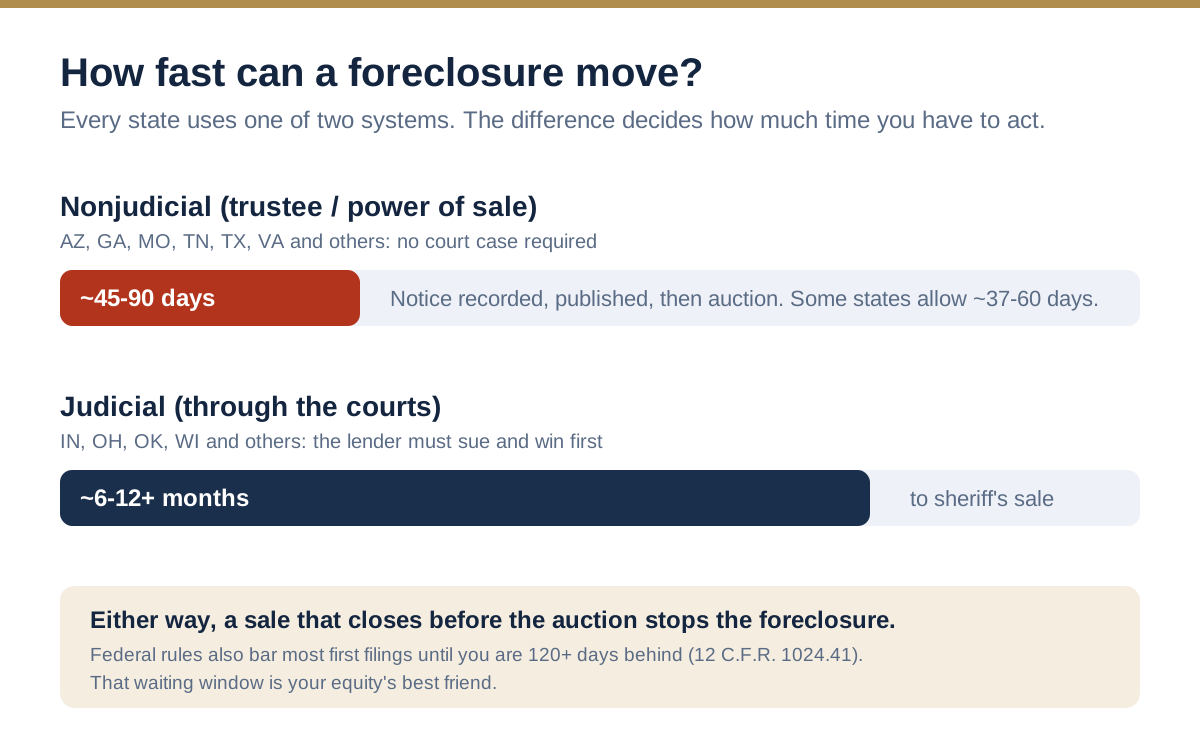
After a missed payment come late fees, calls, and required loss mitigation outreach. Under the federal mortgage servicing rules, the servicer generally may not make the first foreclosure notice or filing until you are more than 120 days delinquent (12 C.F.R. 1024.41(f)). Four months is the floor, not a grace period, and it is the cheapest time you will ever have to fix this: the arrears are smallest, every option is still open, and nothing is on your credit but late payments.
Day 1: the notice of default, with at least 20 days to cure
For property that is your residence, the servicer must send a notice of default by certified mail giving you at least 20 days to cure before any notice of sale can be given (Tex. Prop. Code 51.002(d)). Cure means paying the past-due amount, not the whole loan balance. Most deeds of trust also require their own 30-day breach notice, which can run alongside or before this one.
Acceleration
If the cure window closes unpaid, the lender accelerates: the entire loan balance becomes due, not just the missed payments. From this point, catching up is no longer a statutory right, it is a negotiation, though as we cover below, standard loan paperwork and servicer practice usually still allow reinstatement.
The 21-day notice of sale
At least 21 days before the auction, the trustee must post notice at the courthouse door, file it with the county clerk, and send it to each borrower by certified mail (Tex. Prop. Code 51.002(b)). The notice states the date, time, and place. This is the document that sets the actual deadline, and when it arrives you can count the days to the first Tuesday on one calendar page.
First Tuesday: the auction
Sales happen between 10 a.m. and 4 p.m. on the first Tuesday of the month (first Wednesday when January 1 or July 4 lands on that Tuesday), at the county courthouse or the county's designated area, and the sale must begin within three hours of the time stated in the notice (Tex. Prop. Code 51.002).
The lender opens with a credit bid, essentially bidding the debt it is owed. If nobody outbids it, the lender takes the house. If a third party bids more, the extra matters, and we will get to why in the equity math below.
After the gavel
On a Texas mortgage foreclosure there is no right of redemption. The trustee's deed transfers title the day of the sale, and the former owner cannot buy the house back. Anyone still living there becomes a tenant at sufferance, and the new owner can demand possession and pursue eviction.
Do not confuse this with property tax foreclosure, which is a different animal: a homestead sold for delinquent property taxes carries a two-year redemption right, other property 180 days (Tex. Tax Code 34.21). Mortgage foreclosures, the kind most homeowners face, carry none.
Your Rights at Each Stage
The right to cure, then the practice of reinstatement. The statute guarantees the 20-day cure window before the notice of sale. After acceleration, Texas law does not force the lender to accept a catch-up payment, but the standard Fannie Mae and Freddie Mac deed of trust gives borrowers a contractual reinstatement right, and servicers routinely accept full reinstatement, arrears plus fees, up to shortly before the sale. Ask your servicer for a written reinstatement quote with a good-through date. It is the single most useful document in this entire process.
The right to a loss mitigation review. If you submit a complete loss mitigation application more than 37 days before the sale, the servicer must evaluate it for all available options and generally cannot conduct the sale while a timely first application is pending (12 C.F.R. 1024.41(g)). This federal rule is the strongest brake a Texas borrower can pull, because it can pause the state's fast clock.
Limits on deficiency judgments. If the auction brings less than you owe, the lender can sue for the shortfall, but the suit must be filed within two years of the sale, and you can ask the court to determine the property's fair market value on the sale date and offset the deficiency by any amount the value exceeds the auction price (Tex. Prop. Code 51.003). Auctions routinely clear below market, and this statute exists because of it.
What you do not have. No redemption after a mortgage sale, no automatic court review, and no statutory mediation. Every protection in Texas operates before the first Tuesday. That is the theme of this entire article.
Every Real Way Out
We buy houses from people in foreclosure every month, and we will tell you plainly: selling to us is the right answer for some of them and the wrong answer for others. Here is the full menu, honestly.
- Reinstate. Pay the arrears and fees before the sale. If family help, a 401(k) loan, or a bonus can cover the gap and the payment is affordable going forward, this is the cleanest exit.
- Loan modification. The servicer reworks the loan, often moving the arrears to the end of the term or adjusting the rate. Slow, paperwork-heavy, and it works best when your income has recovered. The 37-day application deadline above is your leverage.
- Forbearance or a repayment plan. Temporary reduced or paused payments, with the arrears spread over future months. Built for short-term setbacks like a job gap or medical event.
- Bankruptcy. Filing triggers an automatic stay that halts the sale immediately, and a Chapter 13 plan can spread the arrears over three to five years; talk to a bankruptcy attorney before the sale date, not after.
- Deed in lieu of foreclosure. You hand the lender the keys, the lender waives the deficiency (get that in writing). It spares you the auction but surrenders every dollar of equity, so it only makes sense when there is none.
- Sell before the sale. A sale that closes before the auction pays the loan off in full, stops the foreclosure, and puts your equity in your pocket instead of the courthouse's. Our guide to selling before foreclosure covers the mechanics, and the section below covers the math.
One warning that earns its own line: anyone who asks you to deed them the house now and trust them to fix the loan later, or who charges upfront fees to negotiate with your lender, is running a foreclosure rescue scheme. Free help exists at HUD-approved housing counselors.
The Equity Math of Selling vs. Letting It Go

Here is the arithmetic the auction hides. Say the house would bring $280,000 on the open market and you owe $200,000 with fees. At auction, the lender's credit bid anchors the price near the debt, and third-party investors bid to leave themselves a profit margin, so sale prices routinely land far below market.
If the hammer falls at $215,000, your equity did not disappear, it transferred: the winning bidder bought your $80,000 of equity for $15,000, and the surplus that reaches you after costs and junior liens is a fraction of what a normal sale would have paid.
If the hammer falls below the debt, you may owe a deficiency instead, subject to the fair-market-value offset in 51.003.
Sell the same house before the first Tuesday, even at a discounted as-is price, and the loan pays off in full, the foreclosure never hits your credit as a completed foreclosure, and the spread above your payoff is yours. This is why we tell people the auction is almost never the best financial outcome for an owner with equity. The lender gets paid either way. The only person the auction reliably shortchanges is you.
What a Fast Sale Looks Like Against a First-Tuesday Clock
The Texas calendar is brutal for a conventional listing. A financed buyer needs 30 to 45 days after contract, plus market time before that, and an option period in the middle where the deal can die. Start that process after the notice of sale arrives and the math usually fails.
A direct cash sale runs on a different clock. When we buy, there is no financing contingency, no option-period renegotiation, and no repairs; title work is the only real gate, and two to three weeks is normal, faster when title is clean.
We have closed ahead of first-Tuesday deadlines across the state, from San Antonio to Killeen to El Paso, and everything about how we operate statewide is on our Texas page. Two things we want every seller to know.
First, a signed contract with an open escrow is also the strongest postponement argument your servicer can hear; servicers postpone sales for pending payoffs regularly, though they never have to.
Second, the offer we make is itemized in writing, comps, repair budget, our margin, and through our Retail Buyer Program we can often deliver more than a typical cash offer with the same easy process.
Run your own numbers first with the cash offer calculator, then compare every option in our foreclosure guide.
If the Sale Is Weeks Away, Work the List in This Order
Call the servicer today and get two documents in writing: a reinstatement quote and a payoff quote, both with good-through dates. Book a free session with a HUD-approved housing counselor, who can file the loss mitigation application correctly and fast.
If you have equity, get a real offer on the house this week so you know what selling actually nets you, because every decision on this list is easier with that number in hand. If you have no equity and no path to the payment, ask an attorney about Chapter 13 and about a deed in lieu with a written deficiency waiver.
Then mark the first Tuesday on the calendar and work backward from it, because in Texas that date, not the lender's patience, is the deadline that matters.
Texas foreclosure law and federal servicing rules change, and every loan has its own documents. This guide is general information, not legal advice; a Texas real estate attorney or HUD-approved counselor is the authority on your specific situation.
From the buyers
How EZ Time Home Buyers Can Help Before Foreclosure
A sale that closes before the auction pays off the loan, stops the foreclosure, and puts your remaining equity in your pocket instead of losing it at the courthouse. We close in as little as 2-3 weeks, coordinate payoff directly with your lender through a licensed title company, and show you the math in writing before you commit to anything. No fees, and no pressure: if keeping the house is possible, we'll say so.
Frequently Asked Questions
How long does the foreclosure process take in Texas?
The statutory minimum is about 41 days from the notice of default to the auction: at least 20 days to cure, then at least 21 days' notice of sale, landing on the first Tuesday of the month (Tex. Prop. Code 51.002). But federal rules generally bar the first foreclosure notice until you are more than 120 days delinquent (12 C.F.R. 1024.41(f)), so the realistic span from first missed payment to auction is usually five to seven months. Once the notices start, Texas moves faster than any other state.
Can I stop a Texas foreclosure after I receive the notice of sale?
Yes, until the auction itself. You can reinstate if your servicer accepts the arrears (most do, get a written quote), submit a complete loss mitigation application, which pauses the sale if filed more than 37 days out under 12 C.F.R. 1024.41(g), file bankruptcy for the automatic stay, or close a sale that pays the loan off before the first Tuesday. A cash closing in two to three weeks can beat a 21-day notice window, and a signed contract with open escrow is the strongest postponement request a servicer hears.
Can I get my house back after a Texas foreclosure auction?
Not after a mortgage foreclosure. Texas provides no right of redemption on a deed of trust sale, so title passes on the trustee's deed the day of the auction. The two-year redemption right people have heard about applies only to property tax foreclosures of a homestead (180 days for most other property) under Tex. Tax Code 34.21. That distinction matters: it means every option on a mortgage foreclosure has to be exercised before the first Tuesday, not after.
Will I still owe money if my Texas house sells at auction for less than I owe?
Possibly. The lender can sue for the deficiency, but only within two years of the sale, and Tex. Prop. Code 51.003 lets you ask the court to determine the home's fair market value on the sale date and offset the deficiency by the amount that value exceeds the auction price. Because auctions routinely clear below market, that offset can shrink or erase the claim. If the auction brings more than the debt, the surplus goes first to junior lienholders, then to you.
Related Guides
Ready to see both of your numbers?
Tell us about your property once and get a written cash offer, plus what our Retail Buyer Program could net you instead. No repairs, no fees, no pressure to accept.