
Selling a House in Texas: Laws, Taxes, and How the Process Actually Works
By Eric Roebuck · Updated August 26, 2026 · 10 min read
Texas charges no transfer tax on your sale and no state income tax on your gain, and it closes through title companies on some of the cleanest timelines in the country. It also runs the fastest foreclosure process in America, a legal minimum of about 41 days from default notice to auction, so some Texas sellers have far less time than they think. Here is the whole picture: the disclosure law, the probate shortcuts, the costs, and the clock.

The Seller's Disclosure Notice, and Who Legally Skips It
Texas requires sellers of residential property with one dwelling unit to hand the buyer a written Seller's Disclosure Notice on or before the contract's effective date (Tex. Prop. Code 5.008). It covers the condition of the roof, foundation, plumbing, past flooding, known defects, the works. Miss the deadline and the buyer can terminate for any reason within 7 days of finally receiving it, which is a hole in your contract you do not want.
Here is the part most Texans have never heard: the statute exempts a long list of sellers entirely (Tex. Prop. Code 5.008(e)). The exemptions that matter most to the people who call us:
- Fiduciaries administering a decedent's estate, guardianship, conservatorship, or trust. If you are the executor or administrator selling an inherited house, no disclosure notice is required.
- Foreclosure-related transfers: sales under court order, sales by a trustee under a deed of trust, and a lender reselling property it took back.
- One co-owner selling to another co-owner, common when siblings consolidate an inherited house.
- Transfers to a spouse or to lineal relatives, and transfers between spouses under a divorce decree.
- Brand-new, never-occupied homes.
Two cautions before you lean on an exemption. First, the exemption removes the form, not the law of fraud; knowingly concealing a defect can still create liability, so tell buyers what you actually know. Second, exempt or not, an ordinary retail buyer will still inspect, negotiate, and sometimes walk. When we buy a house, the disclosure question mostly disappears as a practical matter: we buy as-is, our repair estimate is our problem, and an executor who has never set foot in the attic is a seller we work with every week.
How a Texas Home Sale Works, Start to Finish
Texas is a title company state. There is no attorney-at-the-table requirement like the East Coast, and no lengthy escrow culture like California. The standard sequence:
- Contract. Most listed sales use the TREC One to Four Family Residential Contract, a standardized form promulgated by the Texas Real Estate Commission. Direct sales like ours use a plain purchase agreement with the same essential terms.
- Option period. The TREC contract's option fee buys the buyer a short unrestricted termination window, typically 5 to 10 days, when inspections happen and repair negotiations start. This is where retail deals wobble.
- Title work. The title company pulls the chain of title, finds the liens, and issues a commitment. Texas title insurance rates are promulgated by the state, so the premium is the same at every company; custom in most of Texas has the seller paying for the owner's policy, though it is negotiable.
- Clearing and closing. Payoffs are ordered, property taxes are prorated, documents are signed (often in separate sittings), and the deed records. With a financed buyer, contract to closing typically runs 30 to 45 days. Cash closes as fast as title can be cleared, two to three weeks is normal for us, faster when the title is clean.
No state or local transfer tax applies at any point. Texas is one of about a dozen states that charge nothing to convey real estate beyond flat county recording fees, usually well under $100. Sellers arriving from states that skim 1 to 2 percent at the courthouse are consistently pleased by this line item reading zero.
Selling an Inherited House in Texas
Texas probate is genuinely better than most states' versions, and knowing which lane you are in changes your timeline by months.
Independent administration, the Texas norm
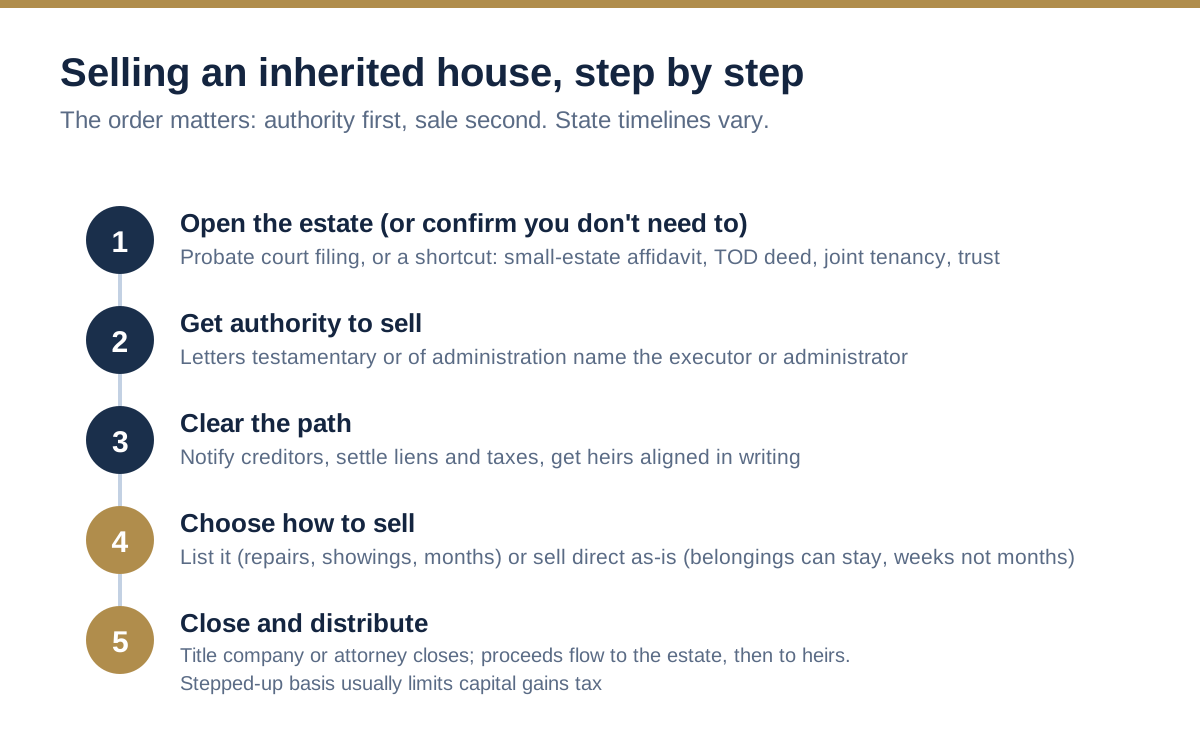
Most Texas estates run as independent administrations (Tex. Estates Code ch. 401), meaning the executor, once appointed, sells the house like a normal owner: no court hearing on the sale, no confirmation, no overbid auction. Roughly four out of five Texas estates use it. If the will requests independent administration, or all the heirs agree to it, the court steps back after appointment. Our general guide to selling a house in probate covers the appointment process; the Texas-specific news is that once you hold letters testamentary, you are usually free to sign a contract that day.
Muniment of title, the Texas specialty
When the estate has a valid will and owes no unpaid debts other than liens on real estate, a Texas court can admit the will as a muniment of title (Tex. Estates Code 257.001). No executor is appointed. No administration is opened. The probated will itself becomes the title document, and the beneficiaries can often sell within weeks. No other state we buy in moves an inherited house to sellable status this fast, and we structure purchase timelines around muniment filings regularly.
Small estate affidavits and transfer on death deeds
Two narrower tools round out the kit. A small estate affidavit (Tex. Estates Code ch. 205) works only when there is no will, the estate's assets excluding the homestead and exempt property total $75,000 or less, and the only real property is a homestead passing to the surviving spouse or minor children. Useful, but narrow. A transfer on death deed (Tex. Estates Code ch. 114) is the plan-ahead option: recorded before death, it passes the house outside probate entirely. The beneficiary takes the property subject to any mortgage and liens, and estate creditors can reach the property for up to two years, so title companies look at recent TOD transfers carefully.
Whichever lane applies, remember the disclosure exemption above and the tax treatment below, both of which favor heirs. And if the house is sitting vacant while the family sorts things out, the carrying costs in a high-property-tax state add up fast; our inherited house guide walks through the sell-now-versus-wait math.
Foreclosure in Texas: the Fastest Clock in the Country
Texas forecloses through the deed of trust, not the courts, and the statutory minimums are short (Tex. Prop. Code 51.002):
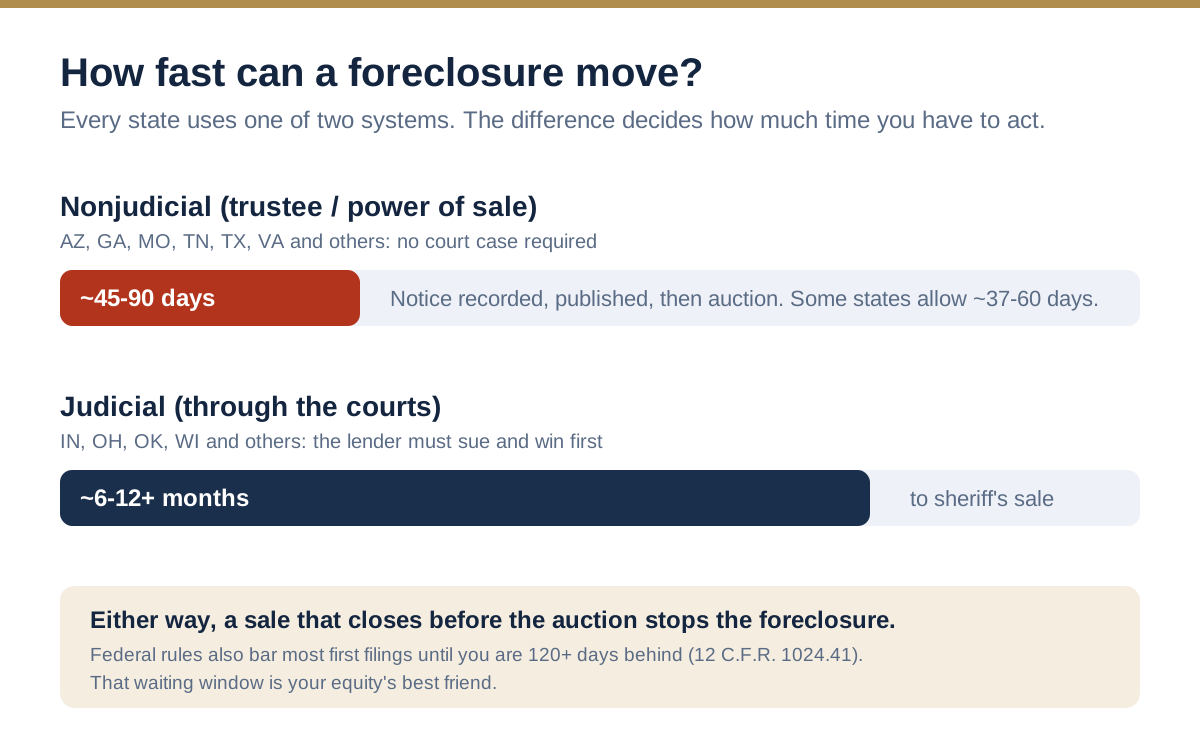
- For a residence homestead, the servicer must send a notice of default with at least 20 days to cure before the notice of sale can even be given.
- The notice of sale needs only 21 days, posted at the courthouse, filed with the county clerk, and mailed to the borrower.
- Sales happen between 10 a.m. and 4 p.m. on the first Tuesday of the month (first Wednesday when January 1 or July 4 lands on that Tuesday).
Stack those and the legal minimum from default notice to the courthouse steps is about 41 days. Federal servicing rules generally keep the process from starting until a loan is over 120 days delinquent, so borrowers usually have more total runway than 41 days, but once the Texas machinery engages, it moves faster than anywhere else in the country. There is no post-sale right of redemption on a standard mortgage foreclosure. The house is gone the day the gavel falls.
What this means practically: in a judicial state, a homeowner who lists the house after a default notice has months of court process as a cushion. A Texas homeowner has weeks. A retail listing with a 45-day financed closing frequently cannot beat the first Tuesday. A cash sale opened early usually can, and a signed contract with open escrow is also the strongest postponement argument your servicer can hear. If you are behind on a Texas mortgage, read our foreclosure options guide today, not this weekend, and note that trustees sell houses in Dallas and Houston on the same first Tuesday they sell them everywhere else in the state.
One asterisk for completeness: property tax foreclosures and HOA foreclosures follow different rules, and a homestead sold for delinquent taxes carries a two-year redemption right. Mortgage foreclosures, the kind most sellers face, carry none.
What Selling Costs in Texas
The good news first, because there is real good news:
- Transfer tax: $0. Only flat county recording fees.
- State income tax on your gain: $0. The Texas Constitution bars an individual income tax (Tex. Const. art. VIII, sec. 24-a). Your gain faces federal capital gains tax only, and if the house was your primary residence for two of the last five years, the federal exclusion shelters up to $250,000 of gain, $500,000 for married couples filing jointly (26 U.S.C. 121). Heirs do even better: the stepped-up basis resets the house's value at the date of death, so an inherited house sold near its inherited value produces little or no taxable gain at all.
Now the actual cost lines on a Texas listing:
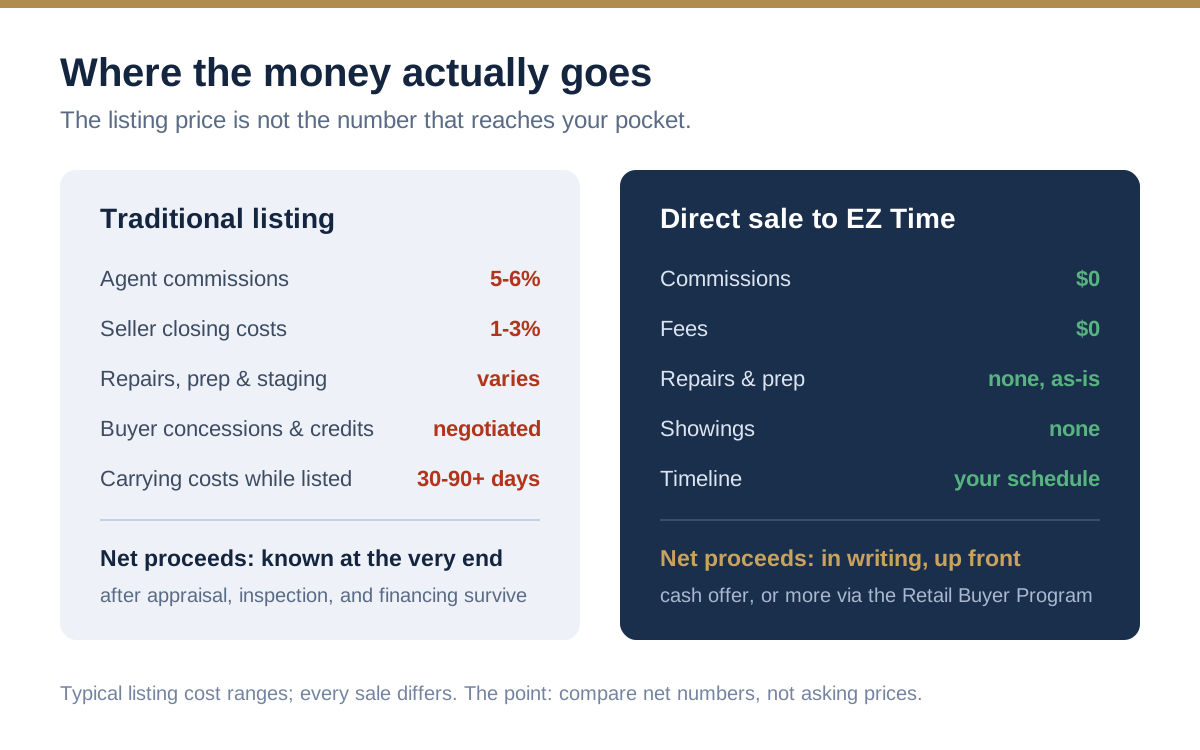
- Agent commissions, historically 5 to 6 percent combined if you list, the largest single line on most settlement statements.
- Owner's title policy, customarily seller-paid in most Texas counties, at the state-promulgated rate: roughly $2,000 on a $300,000 sale.
- Property tax proration. Texas property taxes are among the highest in the nation, around 1.5 percent effective and above 2 percent combined in many cities, and they are paid in arrears. At closing the title company charges you for your share of the current year through the closing date, and settles any delinquent balances out of proceeds. On a $350,000 Dallas-area house, several months of accrued taxes is a four-figure number.
- Repairs and concessions. The option period exists so buyers can renegotiate. Foundation movement in North Texas clay, aging roofs after hail seasons, flood history in Harris County: these are the negotiations that shave thousands off a contract price after you thought you had a deal.
- Carrying costs while you wait. Every month on market in a high-property-tax state is real money, which is the quiet cost nobody puts on a flyer.
A direct sale rewrites that list. When we buy, there is no commission, we cover standard closing costs, there is no option-period renegotiation, and the timeline compresses from months to weeks, which matters most in exactly the situations Texas law creates: a first-Tuesday deadline, an estate paying taxes on an empty house, a tax bill compounding penalties. The offer itself is itemized, comps, repair estimate, our margin, in writing. And through our Retail Buyer Program we can often do better than a typical cash offer by matching the house to an end buyer instead of an investor formula. We will never claim a miracle number, but the result is frequently more than sellers expect from a direct sale, and you can see the ballpark yourself with the cash offer calculator before anyone visits the house. The full picture of how we operate across the state is on our Texas page.
Texas-Specific Scenarios Worth Knowing
Your spouse may have to sign even if the house is in your name alone
Texas is a community property state, and its homestead protection runs deep: neither spouse may convey the homestead without the other's joinder, even when title stands in one spouse's name only (Tex. Fam. Code 5.001). Title companies enforce this without exception. If you are married and selling the home you live in, plan on two signatures, and if a divorce is in progress, the decree or a court order has to sort out who signs what.
Homestead exemptions do not follow you to an inherited or investment property
The $100,000 school-tax homestead exemption and the 10 percent annual appraisal cap soften taxes on a primary residence. An inherited house or a rental gets neither, and appraisal districts reassess, which is why the tax pain in Texas concentrates on exactly the properties people are trying to decide whether to keep. Heirs who occupy an inherited homestead can apply for the exemption as heir property owners, but an empty house you live 200 miles away from is taxed at full freight.
Selling with delinquent property taxes or a tax suit
Delinquent Texas property taxes accrue penalties and interest that can exceed 40 percent in the first year, and taxing units eventually file suit. None of this blocks a sale. The title company obtains the exact payoff from the county and settles it from your proceeds at closing, tax-suit cases included in many situations. The earlier the notices come out of the drawer, the more equity survives.
Military and relocation timelines
With Fort Cavazos, Fort Bliss, and JBSA anchoring whole metro economies, PCS-driven sales are a fixture of the Texas market. Orders do not wait for option periods. A date-certain cash closing is often the difference between selling the San Antonio house and becoming an accidental landlord from another time zone.
Texas statutes change and every sale has its own facts. This guide is general information, not legal or tax advice; a Texas real estate attorney or your title company is the authority on your specific situation.
From the buyers
How EZ Time Home Buyers Can Help in Texas
We buy houses across Texas, and everything above is the world we work in every week. If the timelines or repair math in this guide are pushing you toward a direct sale, we'll give you a written cash offer with the math shown line by line: after-repair value, repair budget, our margin. And if the cash number doesn't work for you, our Retail Buyer Program is a second path that typically nets more than a typical cash offer while we handle the work, with no commissions or fees on either path.
Frequently Asked Questions
Do I have to fill out a Seller's Disclosure Notice if I inherited the house?
Usually no. Texas Property Code 5.008(e) exempts fiduciaries selling in the course of administering a decedent's estate, along with co-owner transfers, foreclosure-related transfers, and transfers to family members. You still should not conceal defects you actually know about, fraud law survives the exemption, but the executor who never lived in the house is not required to complete the notice. Selling to a buyer like us makes the point moot, since we price the repairs ourselves.
How fast can a foreclosure actually happen in Texas?
The statutory minimum is about 41 days from the notice of default to the auction: at least 20 days to cure, then at least 21 days' notice of sale, landing on the first Tuesday of the month (Tex. Prop. Code 51.002). Federal rules generally delay the start until you are over 120 days behind, but once notices begin, Texas moves faster than any other state, and there is no redemption after a mortgage foreclosure sale. If you have received a default notice, the window for a sale to beat the auction is open now and closing.
What taxes do I pay when I sell a house in Texas?
No transfer tax, Texas charges none, and no state income tax on the gain, since the Texas Constitution prohibits one. Federally, a primary residence you owned and occupied for two of the last five years qualifies for the capital gains exclusion of $250,000 single or $500,000 married filing jointly (26 U.S.C. 121). Inherited houses get a stepped-up basis to date-of-death value, so most heirs owe little or nothing. What you will settle at closing is prorated property tax for the current year, which in Texas is a meaningful number.
My house is only in my name. Does my spouse still have to sign at closing?
If the house is your homestead, yes. Texas Family Code 5.001 requires both spouses to join in any conveyance of the homestead regardless of whose name is on the deed, and every Texas title company enforces it. Non-homestead property titled separately can generally be sold alone, though the title company will confirm its character first. Build the second signature into your timeline, especially in a separation or divorce, where a court order may be needed to close.
Related Guides
Ready to see both of your numbers?
Tell us about your property once and get a written cash offer, plus what our Retail Buyer Program could net you instead. No repairs, no fees, no pressure to accept.