
Selling an Inherited House in Texas: Probate Paths, Taxes, and Your Options
By Eric Roebuck · Updated August 26, 2026 · 10 min read
Texas moves inherited houses to sellable status faster than any state we buy in: muniment of title can clear title in roughly 30 to 45 days, an independent executor can sign a contract the day letters issue, and heirs pay no state estate tax, no inheritance tax, and no state income tax on the sale. Here is how the probate paths, the taxes, and the sale itself actually work.

What Legally Happens to the House When the Owner Dies
Texas answers the ownership question faster than most people expect. Under Tex. Estates Code 101.001, a decedent's estate vests in the beneficiaries or heirs immediately at death, subject to administration. In plain terms, the family owns the house from day one. What the family usually cannot do yet is deliver clean, insurable title to a buyer, because a title company needs a court order or a recorded legal shortcut proving who the heirs are and that the estate's debts are handled.
Some houses skip probate entirely:
- A living trust. The successor trustee can sell once a death certificate is in hand. Fastest lane there is.
- A survivorship agreement. Texas is unusual here: co-owners, spouses included, do not get automatic survivorship rights just from being on the deed together. Joint owners need a signed survivorship agreement, and spouses need a community property survivorship agreement, for the survivor to take full title without probate.
- A transfer on death deed (Tex. Estates Code ch. 114), recorded before death. The beneficiary takes title outside probate, though subject to the mortgage and any liens, and estate creditors can reach the property for up to two years, so title companies examine recent TOD transfers carefully.
If none of those apply and the house was titled in the decedent's name alone, you are in probate territory. One wrinkle worth knowing in a community property state: when someone dies without a will, the surviving spouse keeps their own half of the community estate, and the decedent's half passes to the spouse only if all of the decedent's children are also the spouse's children (Tex. Estates Code 201.003). Blended families routinely discover that children from a first marriage now co-own the homestead with the widow. Not a crisis, but it means more signatures at closing, and month one is the time to learn it.
The Texas Probate Paths, Fastest to Slowest
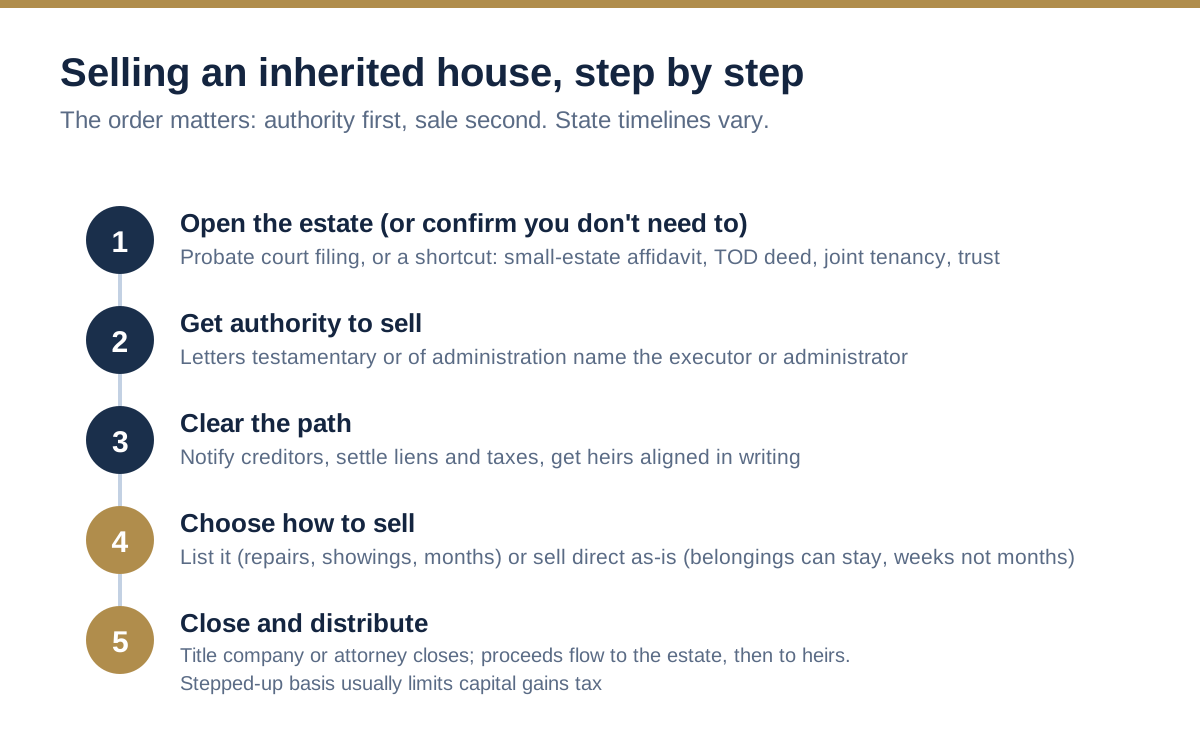
Texas probate has a reputation it does not deserve. Used correctly, it is one of the quickest systems in the country, and choosing the right lane is the biggest timeline decision the family will make. You file in the county where the decedent lived: statutory probate courts handle estates in the big metro counties (Harris, Dallas, Tarrant, Bexar, Travis, and a handful of others), county courts at law or the constitutional county court everywhere else. And note the master deadline before anything sits in a drawer: a will generally cannot be admitted to probate more than four years after death (Tex. Estates Code 256.003), and after that mark you must convince the court you were not in default for waiting. Files that nobody dealt with in year one become genuine legal problems in year five.
Muniment of title, the Texas specialty
When there is a valid will and the estate owes no debts other than liens against real estate, the court can admit the will as a muniment of title (Tex. Estates Code 257.001). No executor is appointed and no administration is opened. The court's order plus the recorded will becomes the title document itself, and the beneficiaries named in the will can sell. From filing to a sellable house often takes 30 to 45 days. No other state we work in converts an inherited house to cash-ready this fast, and we routinely build purchase timelines around a pending muniment filing.
Independent administration, the Texas norm
Most Texas estates that need a full administration run as independent administrations (Tex. Estates Code ch. 401). Once the court appoints the executor and issues letters testamentary, the executor sells the house like an ordinary owner: no court hearing on the sale, no confirmation, no overbid auction. Roughly four out of five Texas estates use this route, either because the will requests it or because all the heirs agree to it. Appointment typically takes a few weeks to two months depending on the county docket, and our general guide to selling a house in probate walks through that appointment process. The Texas-specific good news: the day the letters issue, the executor can sign a contract.
Small estate affidavit, narrow but free of court time
A small estate affidavit (Tex. Estates Code ch. 205) works only when there is no will, the estate's assets excluding the homestead and exempt property total $75,000 or less, and the only real property is a homestead passing to the surviving spouse or minor children. When it fits, it moves homestead title without an administration. It fits less often than families hope.
No will and no administration: the affidavit of heirship
When someone dies without a will and the family just needs title cleared on a house, Texas practice leans on the affidavit of heirship (Tex. Estates Code ch. 203): a sworn, recorded statement of the family history, signed by people who knew the decedent but do not inherit. By statute it becomes prima facie evidence of heirship after five years on record (Tex. Estates Code 203.001), but many title companies will insure a sale much sooner when the affidavit is clean and every heir signs the deed. It is the cheapest path on this list, and for modest estates where the heirs agree, it is often all the probate a sale requires. The title company has the final word, so ask before you count on it.
Taxes: Mostly Good News for Texas Heirs
Three layers of tax could theoretically touch an inherited house sale, and Texas zeroes out two of them.
- No state estate or inheritance tax, verified. Texas repealed its inheritance tax effective September 1, 2015 (SB 752, repealing Tax Code ch. 211), and voters have since amended the constitution to bar new taxes on estates and inheritances. You owe the State of Texas nothing for inheriting.
- Federal estate tax is irrelevant for almost everyone. The federal exemption is $15 million per person in 2026. If an estate is anywhere near that line, it has attorneys already; for everyone else this tax simply does not apply, and when it does apply the estate pays it before distribution, not the heirs.
- Stepped-up basis is the quiet windfall. Your cost basis resets to the house's fair market value at the date of death (26 U.S.C. 1014). Sell for close to that value and there is little or no capital gain to tax. A house bought in 1985 for $60,000 and worth $320,000 at death can sell for $320,000 with roughly zero taxable gain. Get a date-of-death appraisal or broker opinion and keep it forever; it is the single most valuable piece of paper in the file.
- No state income tax on whatever gain does exist. The federal return is the only one that matters.
The tax that does bite is property tax. The homestead exemption and the 10 percent appraisal cap do not follow the house to heirs who live elsewhere, so the appraisal district reassesses and the bill jumps, at effective rates that run 1.5 to 2 percent and higher in much of the state. An heir who actually occupies the house can apply for the exemption as an heir property owner, but an empty house you visit monthly from two hours away is taxed at full freight. On a $300,000 house that is $400 to $500 a month burning while the family deliberates, before insurance, utilities, and the lawn.
When Several Heirs Own One House
Money rarely splits a family. Process does. A few patterns we see weekly across Dallas, Houston, and everywhere between:
Sell from the estate when you can. An independent executor selling from the estate means one signer and one clean transaction. Distribute the house into four heirs' names first and you now need four signatures, four notaries, and four spouses' cooperation where homestead or community property rules reach. Most estates that intend to sell, sell from the estate.
Buyouts work when the number is neutral. One sibling keeps the house and pays the others their shares, priced off an independent appraisal, usually funded by a refinance. The deals that close are the ones where nobody argues about the value because a third party set it.
Disagreements are usually information problems. The heir who objects is often the one who heard about the offer secondhand. Share every offer and every document with every heir at the same time. We present offers on group calls for exactly this reason, and it settles more standoffs than any legal tool.
Partition is the last resort, and Texas rebuilt it for families. Any co-owner can force a sale through a partition suit, but for inherited property Texas adopted the Uniform Partition of Heirs' Property Act (Tex. Prop. Code ch. 23A): the court orders an appraisal, the heirs who want to keep the house get about 45 days to buy out the ones who want to sell at the appraised share price, and if the property still must sell, the court prefers a fair-market listing over a courthouse auction. It protects families from lowball forced sales, but it is still litigation: slow, expensive, and hard on Thanksgiving. Nearly every family does better settling one step before the courthouse.
The House Itself: Belongings, Insurance, and the Empty Months

Three practical jobs come before any sale. First, the belongings: do not clear out or renovate before someone has legal authority, because improvements and disposals made without it create reimbursement fights between heirs. Sort the irreplaceable things, photograph the rest, and know that you do not have to empty the house at all to sell it; we buy houses with the contents in place, and for an out-of-town executor that alone can save a month of weekends.
Second, insurance. Homeowner's policies can restrict or void coverage when the insured dies or the house sits vacant, sometimes after as little as 30 to 60 days empty. Call the insurer early, tell them the truth, and ask for a vacant or estate endorsement. An uninsured empty house is the estate's single biggest risk.
Third, secure it. Change the locks, keep the yard cut, stop the mail, put a lamp on a timer. A house that looks abandoned in a Texas summer invites break-ins, scrappers, squatters, and slab-cracking irrigation neglect, and every one of those costs more than the prevention did.
Your Selling Options, Compared Honestly
Start with a Texas-only advantage: if you are the executor or administrator selling in the course of administering the estate, you are exempt from the Seller's Disclosure Notice (Tex. Prop. Code 5.008(e)). The exemption removes the form, not fraud law, so never conceal a defect you actually know about. But the executor who never lived in the house is not required to guess at the roof's history on a state form.
Listing the house works best when the property is updated, the family is patient, and somebody local can manage showings, negotiations, and repairs. Plan for the whole listing machinery: an option period where the buyer inspects and renegotiates, financed timelines of 30 to 45 days after contract, and carrying costs running the whole time. On a dated house, inspection-driven repair credits routinely take a second bite after you thought the price was set.
A direct as-is sale trades some headline price for certainty and speed: no repairs, no showings, contents handled, a closing date the estate picks, and cash timelines of two to three weeks once title is clear. When we make an offer it is itemized in writing, comps, repair budget, our margin, so the family can compare it against a realistic net from listing rather than against a wish. Through our Retail Buyer Program we can often deliver more than a typical cash offer with the same easy process, and the cash offer calculator will show you the ballpark before anyone visits the house. How we operate statewide, from Fort Worth to the border, is on our Texas page, and the broader legal context lives in our guide to selling a house in Texas.
Three Moves That Protect the Estate No Matter How You Sell
First, start the authority clock now: file for probate, the muniment, or the heirship affidavit this month, because every path takes weeks and the four-year will deadline is real. Second, document the date-of-death value with an appraisal or broker opinion; it sets the stepped-up basis and defuses heir arguments about price. Third, put everything in writing to every heir simultaneously, offers, expenses, timelines, because estates rarely fracture over money and often fracture over silence. Do those three things and almost any selling path you choose, as-is to a buyer like us or polished and listed, will close without drama.
Texas probate and tax law changes, and every estate has its own facts. This guide is general information, not legal or tax advice; the estate's attorney and CPA are the authorities on your specific situation.
From the buyers
How EZ Time Home Buyers Can Help With an Inherited House
We work with executors, heirs, and families in probate all the time, including houses full of belongings and houses three states away from everyone who inherited them. We buy as-is, work around court timelines, and put every offer in writing with the math shown. If the family wants more than a cash number, the Retail Buyer Program handles the work while typically netting more than a typical cash offer, with no commissions or fees.
Frequently Asked Questions
Can I sell an inherited house in Texas without going through full probate?
Often, yes. If the house was in a living trust, held under a survivorship agreement, or covered by a transfer on death deed, it skips probate entirely. With a valid will and no unpaid debts besides real estate liens, muniment of title (Tex. Estates Code 257.001) clears title in roughly 30 to 45 days with no executor appointed. Without a will, a recorded affidavit of heirship plus every heir signing the deed satisfies many title companies. Full administration is the fallback, not the default.
How long does it take to sell an inherited house in Texas?
Faster than almost anywhere. Muniment of title runs about 30 to 45 days from filing to a sellable house. Independent administration takes a few weeks to two months to get letters issued, and the executor can sign a contract the same day they arrive, with a cash closing two to three weeks after that. A realistic start-to-finish range for most families is two to four months, and trust or TOD-deed properties can close in under a month.
What taxes do I pay on an inherited house in Texas?
Texas charges no inheritance tax and no estate tax (the inheritance tax was repealed effective September 1, 2015) and has no state income tax on your gain. Federally, the stepped-up basis resets your cost to the home's date-of-death value under 26 U.S.C. 1014, so selling near that value produces little or no taxable gain, and the federal estate tax only touches estates above $15 million per person in 2026. The real bill is property tax: the homestead exemption does not follow to non-occupant heirs, so expect reassessment.
Do all the heirs have to agree before we can sell?
Not always. An independent executor selling from the estate generally has authority to sell without unanimous consent, though good ones keep every heir informed anyway. Once the house is distributed into the heirs' names, every owner on the deed must sign, plus spouses where community property or homestead rules reach. If co-owning heirs truly deadlock, the Uniform Partition of Heirs' Property Act (Tex. Prop. Code ch. 23A) lets a court order an appraisal, give keeping heirs about 45 days to buy out selling heirs, and force a fair-market sale as the last resort.
Related Guides
Ready to see both of your numbers?
Tell us about your property once and get a written cash offer, plus what our Retail Buyer Program could net you instead. No repairs, no fees, no pressure to accept.