
Selling a House in Oklahoma: Laws, Taxes, and How the Process Actually Works
By Eric Roebuck · Updated August 26, 2026 · 10 min read
Oklahoma sellers pick between two disclosure forms (a full disclosure statement or, for never-occupants, a short disclaimer, 60 O.S. 833), pay a modest transfer tax of $0.75 per $500 (68 O.S. 3201), and close through a title system almost no other state uses: the abstract. Here's the whole process, law by law, cost by cost.
First Decision: Disclosure Statement or Disclaimer Statement
Most states hand sellers one disclosure form. Oklahoma's Residential Property Condition Disclosure Act (60 O.S. 831 et seq.) hands you a choice, and picking the right document is the first legal decision of your sale.
The disclosure statement is the long form. You identify the items and improvements included in the sale, state whether they work, and disclose every defect you have actual knowledge of (60 O.S. 833). It covers the roof, the foundation, the systems, flood history, the works.
The disclaimer statement is one page. If you have never occupied the property and have no actual knowledge of any defects, you can sign a disclaimer saying exactly that instead of completing the full form (60 O.S. 833). Out-of-state heirs and hands-off landlords use it constantly. Two catches. First, it has to be true: a disclaimer is not a place to hide the roof leak your tenant reported. Anything you actually know, you disclose, on either form. Second, timing matters either way: the statement must reach the buyer before you accept a written offer.
Some transfers skip the Act entirely (60 O.S. 838): court-ordered transfers, foreclosure-related transfers to or by a lender, sales by a fiduciary who never occupied the property while administering an estate or trust, transfers between co-owners or to a spouse or lineal relatives, and previously unoccupied new construction. If you are selling a parent's house as personal representative and never lived there, Oklahoma's paperwork burden is about as light as residential real estate law gets.
One caution the statute's case law has made expensive for sellers: if you are exempt but fill out the disclosure form anyway, you have volunteered representations a buyer can later sue on. When an exemption or the disclaimer fits, use it.
The Abstract: Why an Oklahoma Closing Is Unlike Anywhere Else
Ask a title company in Dallas or Denver for your "abstract" and you'll get a puzzled look. In Oklahoma it's the centerpiece of the closing. The abstract of title is a bound, certified compilation of every recorded instrument affecting your property, deeds, mortgages, releases, judgments, probates, running back to the original land patent. Abstracting is a licensed profession here, regulated by the Oklahoma Abstractors Board under Title 1 of the Oklahoma Statutes, and each abstract company files its rates with the Board (1 O.S. 41).
When you sell, three things happen in sequence. The abstract gets updated, or "extended," through the current date by a licensed abstractor in your county. An attorney then examines it and issues a title opinion listing any requirements to cure. Then the title insurance policy is written on the strength of that examination. In most other states, a title plant search replaces all of this; in Oklahoma, the abstract tradition survives, and it affects both your costs and your calendar.
What it costs depends on the county and, mostly, on how long it has been since the abstract was last certified. A routine update after a recent sale commonly runs a few hundred dollars; cost surveys put typical updates in the $250 to $500 range, while an abstract that hasn't been extended in decades, or has gone missing entirely, costs substantially more to bring current or rebuild and can add weeks to closing. Who pays is not fixed by law: it is set by the purchase contract, and customs vary by market, so it's a negotiation point worth attention.
The practical takeaway costs you nothing: find your abstract now. It's often in a safe deposit box, with the lender, or with the title company from your purchase. Walking into a sale with the abstract in hand is the single easiest way to keep an Oklahoma closing on schedule. When we buy a house and the abstract is lost, we simply build the re-certification into the timeline and our standard closing costs, but a found abstract closes faster.
The Standard Process, Start to Finish
Here's the sequence for a conventional Oklahoma sale, whichever route you take to a buyer.
Prep and pricing. Oklahoma is an affordable, steady market; Oklahoma City's median hovers around $270,000. Overpricing costs more here than in boom markets because buyers have plenty of comparable inventory.
Disclosure delivery. Complete the disclosure or disclaimer statement and deliver it before accepting any written offer (60 O.S. 833). If you're listing with an agent, the agent is obligated to obtain it from you.
Contract. Most sales use the Oklahoma Real Estate Commission's standard forms. The contract sets the earnest money, the title deadline, who orders and pays for the abstract update, and the closing date.
Title work. The abstract extension and attorney's title opinion run during the contract period. Requirements in the opinion, an unreleased old mortgage, a probate never filed, a misspelled name in a 1974 deed, must be cured before closing. This is where Oklahoma timelines stretch.
Buyer's diligence. Inspections, then the lender's appraisal if the buyer is financing. Roughly 30 to 45 days from contract to closing is normal for a financed purchase when title is clean.
Closing. Title companies close most Oklahoma sales. You'll sign the deed, the county clerk collects documentary stamps when it's recorded, and proceeds wire the same day or the next business day.
A direct sale compresses this. When we buy, there's no financing appraisal and no loan underwriting; the timeline is basically title work plus scheduling. Two to three weeks is typical once the abstract clears, and our cash offer calculator shows how we get to a number before you ever talk to us.
Selling an Inherited House in Oklahoma
Oklahoma is genuinely one of the better states to inherit a house in, because it built shortcuts into both ends of the process.
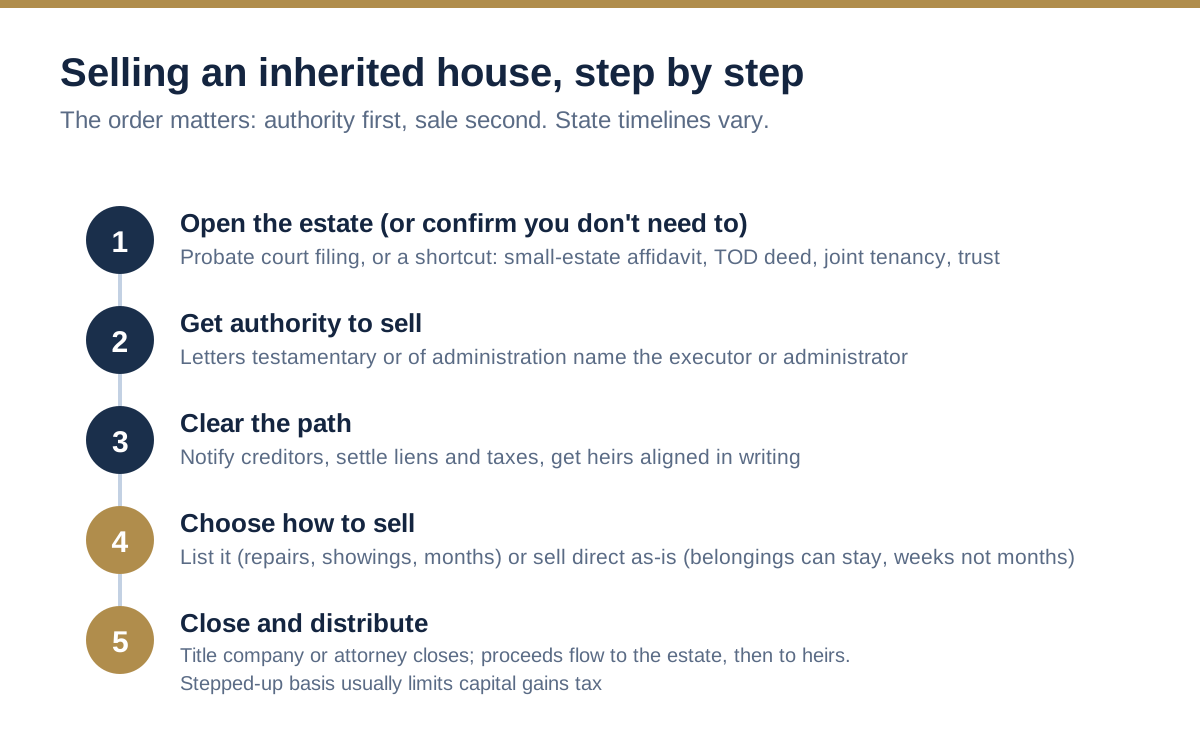
Before death: three probate bypasses. Property held in joint tenancy passes to the survivor outside probate; recording a death certificate and survivorship affidavit clears title. A living trust does the same through the trustee. And since 2008, Oklahoma's Nontestamentary Transfer of Property Act (58 O.S. 1251-1258) allows transfer-on-death deeds: the owner records a TOD deed naming a beneficiary, keeps full control while living, and the beneficiary takes title at death without probate. One hard deadline hides in that statute: the beneficiary must record an acceptance affidavit with the death certificate within nine months of the owner's death, or the property falls back into the estate and probate is required after all (58 O.S. 1252). We see missed nine-month windows more often than you'd think.
After death: summary administration. When the house was titled solely in the decedent's name, probate is required, but Oklahoma's summary administration (58 O.S. 245) is available when the estate's value is $200,000 or less, the decedent has been dead more than five years, or the decedent lived out of state. It typically resolves in 60 to 90 days with a single hearing, against 6 to 12 months for regular probate. Given Oklahoma home values, the $200,000 threshold covers a large share of inherited houses in the state.
The sale itself is easier than most heirs expect. A personal representative who never occupied the house sells exempt from the disclosure form (60 O.S. 838), and an executor's deed made under the terms of a will is exempt from documentary stamps (68 O.S. 3201 et seq.). Our inherited house guide covers the tax side, including the stepped-up basis that makes most inherited-home sales nearly income-tax-free, and the probate walkthrough covers authority and court sequence in detail. We hold firm written offers open while letters issue, so estates can sign the day the judge does.
Foreclosure in Oklahoma: Judicial by Default, Judicial by Demand
If you're selling under mortgage pressure, Oklahoma law is on your side in a way few states match.
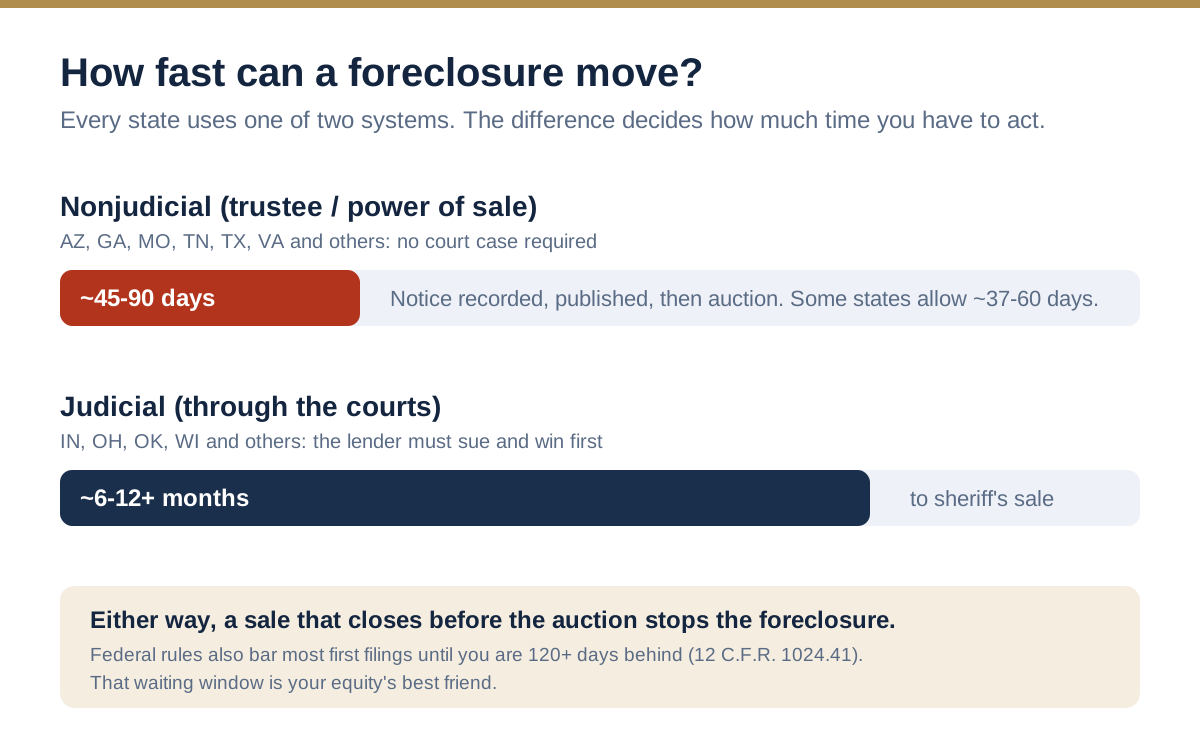
Most Oklahoma foreclosures already run through the courts: the lender files a lawsuit, gets a judgment, and the sheriff sells the property at auction. The mechanics carry built-in time. Three appraisers value the property, the sale can't bring less than two-thirds of that appraised value, notice runs in the newspaper at least 30 days before the sale, and the court must confirm the sale afterward at a hearing set on at least ten days' notice (46 O.S. 43 and Title 12 procedures). If the mortgage waived appraisement, the sale waits six months after judgment instead. Oklahoma practitioners put the typical case at 4 to 12 months from filing to confirmed sale.
And if your lender tries the faster non-judicial power-of-sale route, Oklahoma gives homestead owners a trump card: send the lender written notice by certified mail at least ten days before the scheduled sale stating the property is your homestead and that you elect judicial foreclosure, record a copy with the county clerk, and the lender must start over in court (46 O.S. 43). You can also redeem the property up until the court confirms the sale.
All of that is runway, not rescue. Interest, attorney fees, and court costs pile onto your payoff every month, quietly consuming the equity you'd otherwise walk away with. The homeowners who come out with money in hand are the ones who act during the lawsuit, not the week before the sheriff's sale. Our guide to selling before foreclosure runs the math, and the stop-foreclosure page compares every option honestly, including the ones that keep your house. When a sale is the right answer, we've closed ahead of sheriff's sale dates across Oklahoma, payoff ordered day one, no financing contingency to fail late.
What Selling Costs in Oklahoma
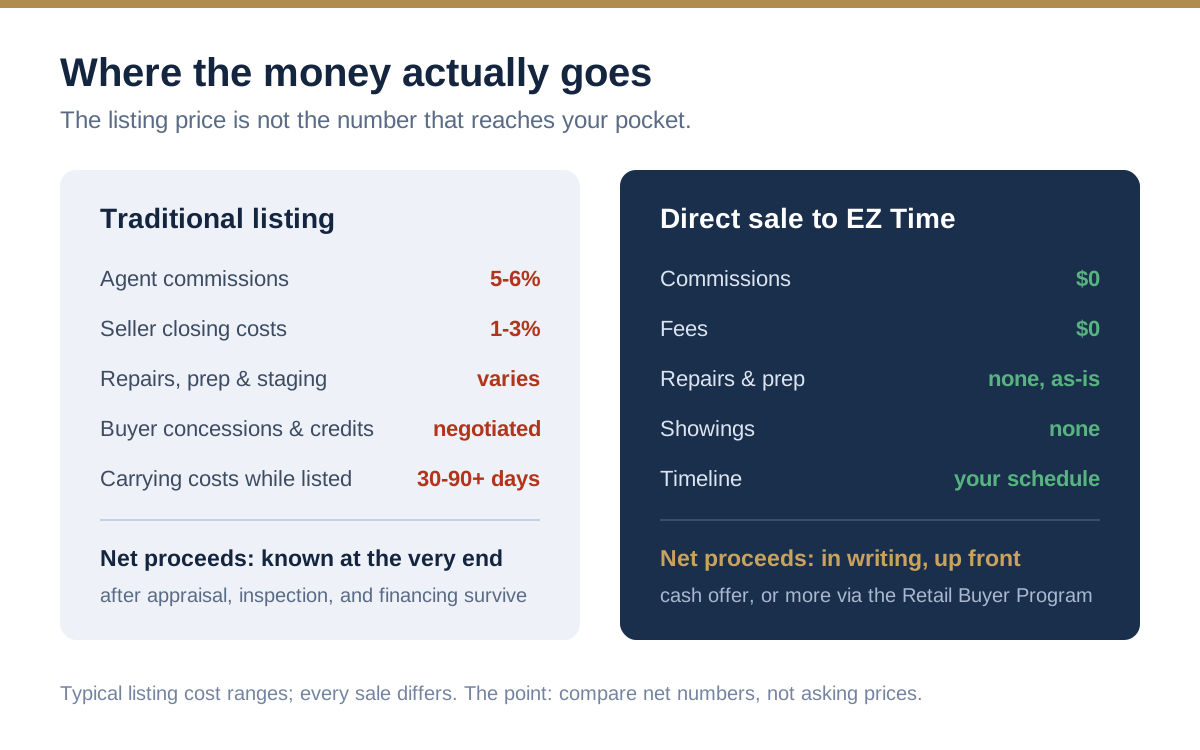
Here's the realistic cost stack on a listed sale of a $250,000 Oklahoma house:
| Cost | Typical range |
|---|---|
| Agent commissions (if listing) | 5-6% ($12,500-$15,000) |
| Abstract update | $250-$500 typical, more if stale or lost |
| Title opinion and insurance (seller's negotiated share) | Several hundred to $1,000+ |
| Documentary stamps (68 O.S. 3201) | $0.75 per $500 of price, 0.15% ($375) |
| Prorated property taxes | Varies; ~0.84% effective annually |
| Repairs, concessions, buyer-requested fixes | Wildly variable, often the biggest surprise |
The documentary stamp tax is the pleasant line: at 0.15% of the sale price, Oklahoma's transfer tax is among the country's lowest, collected by the county clerk when the deed records, customarily paid by the seller. Consideration of $100 or less, gifts, and certain estate deeds are exempt (68 O.S. 3201 et seq.).
A direct sale rewrites the list. No commissions, no repairs, no concessions, and we pay standard closing costs including the title work. The trade is a price below what a fully renovated house lists for, which is why we put the whole calculation in writing: after-repair value from your market's comps, the repair budget, our margin, line by line. And for houses that don't need us, our Retail Buyer Program often fits better: we prepare and market the house to retail buyers ourselves, which typically nets more than a typical cash offer while still keeping the process off your plate. Details on both are on our Oklahoma page.
Oklahoma Situations With Their Own Playbook
The abstract is missing
Happens constantly with inherited and long-held properties. A licensed abstractor re-certifies the history, it just adds cost and a couple of weeks. Start the search early (safe deposit box, prior lender, the title company from your purchase), and tell your buyer immediately if it's gone. We price and schedule around a lost abstract as a routine matter.
The TOD beneficiary missed the nine-month affidavit
The property reverted to the estate (58 O.S. 1252), so probate is required despite the deed. The silver lining: if the estate is $200,000 or under, summary administration gets authority to sell in roughly 60 to 90 days (58 O.S. 245).
The roof has an open hail claim
Hail is Oklahoma's weather tax. An open, paid, or unfiled claim each sequences differently against a sale, and insurance proceeds rights can transfer with the right contract language. Raise it before signing anything; we walk sellers through the order of operations on storm-damaged houses weekly.
The house is in a small town
The process is identical statewide, but rural counties can have one abstract company and slower turn times, so build in margin. We buy across all 77 counties, leaning on regional comps where local sales are thin, from Oklahoma City and Tulsa to Lawton and everywhere between.
The Short Version
Deliver the right disclosure document before accepting an offer, hunt down your abstract the day you decide to sell, budget 0.15% for doc stamps, and know your rights if probate or foreclosure is in the picture, because Oklahoma's are stronger than most. List it, sell it to us as-is, or let our Retail Buyer Program chase the retail price for you: the law is the same either way, and now you know it.
This guide is general information about Oklahoma law, not legal or tax advice. For your specific situation, talk to an Oklahoma attorney; statutes cited are current as of publication.
From the buyers
How EZ Time Home Buyers Can Help in Oklahoma
We buy houses across Oklahoma, and everything above is the world we work in every week. If the timelines or repair math in this guide are pushing you toward a direct sale, we'll give you a written cash offer with the math shown line by line: after-repair value, repair budget, our margin. And if the cash number doesn't work for you, our Retail Buyer Program is a second path that typically nets more than a typical cash offer while we handle the work, with no commissions or fees on either path.
Frequently Asked Questions
Do I have to fill out Oklahoma's property disclosure form if I never lived in the house?
Usually not the full form. Oklahoma lets a seller who has never occupied the property and has no actual knowledge of defects sign a short disclaimer statement instead (60 O.S. 833), and some sellers are exempt entirely, including non-occupant fiduciaries selling for an estate and foreclosure-related transfers (60 O.S. 838). The constant: any defect you actually know about must be disclosed no matter which document you use.
Who pays for the abstract update in an Oklahoma home sale?
Whoever the purchase contract says. Oklahoma law doesn't assign it, and customs vary by market, so it's a live negotiation point. Budget $250 to $500 for a routine update, more if the abstract hasn't been certified in decades or is lost. When we buy directly, we pay the standard closing costs including title work, so the question disappears from your side of the ledger.
How much is the transfer tax when you sell a house in Oklahoma?
Documentary stamps run $0.75 per $500 of the sale price, which works out to 0.15% (68 O.S. 3201): $375 on a $250,000 sale, customarily paid by the seller and collected by the county clerk when the deed records. Gifts, sales of $100 or less, and executor's deeds made under a will are exempt. It's one of the lowest transfer taxes in the country.
Can I still sell my Oklahoma house after the foreclosure lawsuit is filed?
Yes, right up until the sheriff's sale is confirmed by the court, and Oklahoma's mostly judicial process typically gives you 4 to 12 months from filing to that point. Homestead owners facing a faster power-of-sale foreclosure can even force the case into court with a recorded election at least ten days before the sale (46 O.S. 43). The catch is that interest and legal fees grow your payoff monthly, so the earlier you sell, the more equity you keep.
Related Guides
Ready to see both of your numbers?
Tell us about your property once and get a written cash offer, plus what our Retail Buyer Program could net you instead. No repairs, no fees, no pressure to accept.