
Selling a House in Tennessee: Laws, Taxes, and How the Process Actually Works
By Carson Whaley · Updated August 26, 2026 · 10 min read
Tennessee is one of the easiest states in the country to sell a house in: the disclosure law includes a built-in as-is disclaimer option (Tenn. Code Ann. 66-5-202), the transfer tax is a modest $0.37 per $100 that the buyer customarily pays, and there's no state income tax on your sale proceeds. The flip side is speed working against you too, because a Tennessee foreclosure can go from first notice to auction in roughly 45 to 60 days. Here's the whole picture, statute by statute.

Tennessee Gives Sellers Three Ways to Handle Disclosure
Most states hand you one mandatory disclosure form and call it a day. Tennessee's Residential Property Disclosure Act (Tenn. Code Ann. 66-5-201 et seq.) actually builds three doors into the statute, and which one you walk through shapes your whole sale.
Door one: the full disclosure statement. The default. You complete the Tennessee Residential Property Condition Disclosure form, listing every material defect you actually know about (Tenn. Code Ann. 66-5-202). It covers roof, systems, water intrusion, the usual inventory. The statute is careful to say the form is not a warranty and not a substitute for the buyer's own inspection. You disclose what you know; you don't guarantee what you don't.
Door two: the disclaimer statement. This is the one most sellers have never heard of. Tennessee law expressly permits a disclaimer in which the owner makes no representations about condition and the buyer takes the property as-is, provided the buyer agrees to waive the disclosure (Tenn. Code Ann. 66-5-202). Retail buyers financing their first home almost never agree to that. Professional buyers agree to it routinely, because we price condition at the walkthrough instead of relying on your paperwork. When we buy a house, the disclaimer statement is standard in our contract, which is exactly the transaction the legislature wrote it for.
Door three: the exemption notification. Tenn. Code Ann. 66-5-209 exempts whole categories of transfers from the disclosure requirement: sales by a fiduciary administering a decedent's estate, foreclosure-related transfers, court-ordered sales, public auctions, new construction with a written warranty, and, the sleeper provision, any owner who has not resided on the property at any time within the three years before closing. That last clause quietly covers nearly every landlord and every out-of-state heir in Tennessee. Exempt sellers typically furnish a short exemption notification instead of the form.
One guardrail applies to all three doors: none of them licenses concealment. Actively hiding a known defect or lying when asked directly is still misrepresentation under Tennessee law, disclaimer or not. The statute lowers the paperwork, not the honesty bar.
The Standard Tennessee Sale, Start to Finish
Tennessee is a title company state. There's no requirement that an attorney conduct your closing, so the typical sale runs through a title or escrow company that searches the title, holds the earnest money, prepares the settlement statement, and records the deed. Here's the sequence in a conventional listed sale:
- Prep and pricing. Repairs, cleanout, photos, and a listing price argued about with an agent. This front-end stage routinely eats four to eight weeks before a sign goes in the yard.
- Contract. Offer, counteroffers, and a binding purchase agreement, usually on Tennessee REALTORS forms with inspection and financing contingencies attached.
- The contingency gauntlet. The buyer's inspector produces a repair list, the lender orders an appraisal, and the deal gets renegotiated or dies. Nationally roughly one in twenty pending sales falls through; houses with condition issues fail at far higher rates.
- Title and closing. The title company clears liens, everyone signs, and the deed goes to the county register. At recording, Tennessee collects its realty transfer tax of $0.37 per $100 of consideration (Tenn. Code Ann. 67-4-409). By custom the buyer pays it, though the statute lets parties negotiate.
A financed retail sale typically runs 30 to 45 days from contract to closing, on top of the marketing time. A cash sale collapses steps one and three entirely. When you sell to us, there's no prep stage, one walkthrough replaces the inspection circus, and the title company can usually close in two to three weeks. If the house is in decent shape and you have time, our Retail Buyer Program is worth asking about: we market the house to our retail buyer network and you net more than a typical cash offer, without living through a conventional listing.
Selling an Inherited House in Tennessee
Tennessee handles inherited real estate differently than most sellers expect, and mostly in your favor.
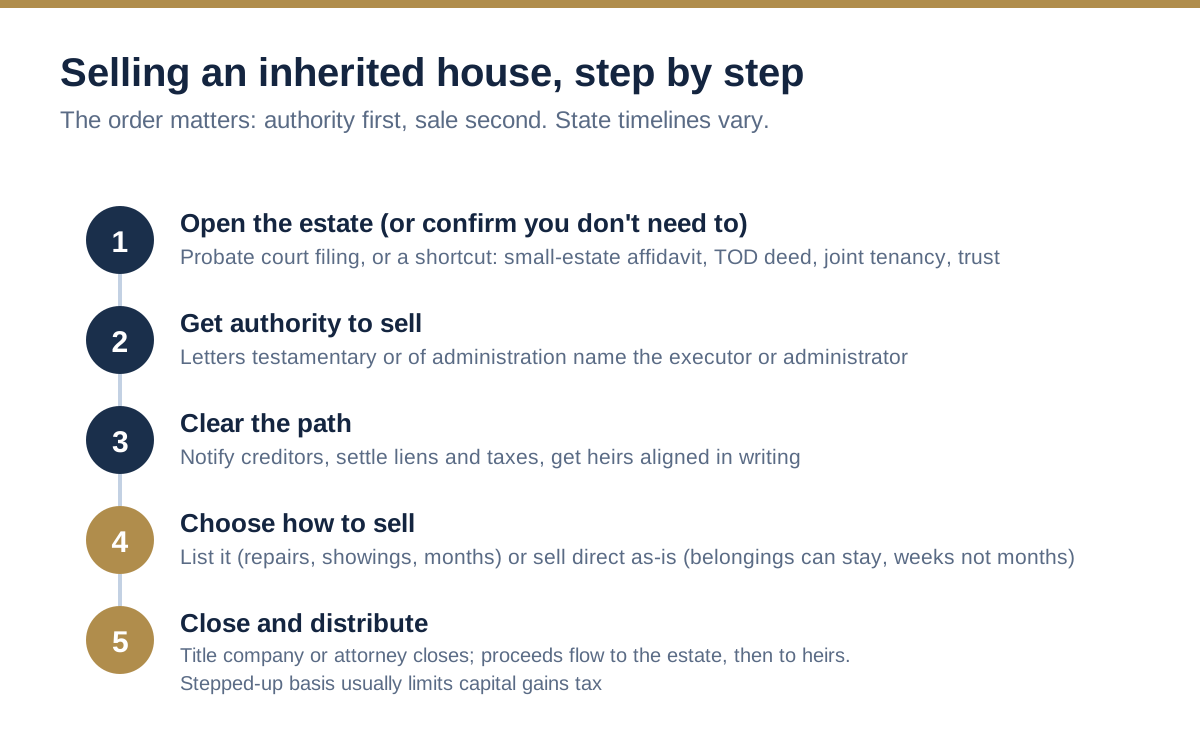
Start with the big one: real property in Tennessee vests in the heirs or devisees immediately at death (Tenn. Code Ann. 31-2-103). The house never becomes estate property the way the bank accounts do; title passes to the people who inherit it at the moment of death, subject to the personal representative's right to reach the property if the estate's debts require it. That structure is why many Tennessee estates never formally probate the house at all.
What trips people up is the Small Estates Act. Tennessee's small estate procedure covers estates where the property involved is worth $50,000 or less, but "property" there means personal property only (Tenn. Code Ann. 30-4-102). It moves bank accounts and vehicles. It does not transfer real estate at any value. So the shortcut you may have heard about does not apply to the house; the house relies instead on the vesting rule above, plus whatever paperwork the title company needs to insure the chain of title.
In practice, that paperwork usually takes one of three forms: the probated will (if there is one), an affidavit of heirship sworn by someone who knew the family and can recite the heirs (common when the owner died without a will), or a full administration when debts or disputes demand it. A good title company will tell you within a day which route your file needs.
Two more Tennessee-specific breaks for heirs. First, an estate fiduciary's sale is exempt from the disclosure form under Tenn. Code Ann. 66-5-209, and an heir who never lived in the house within the last three years is exempt on separate grounds, so inherited sales here are nearly always disclaimer or exemption sales. Second, federal tax law gives inherited property a stepped-up basis to date-of-death value, which is why most inherited houses sell with little or no capital gains tax owed. We wrote a full walkthrough of the court side in our probate sale guide, and our inherited house page covers how we structure these purchases, including buying with contents in place so nobody spends a summer of weekends emptying a childhood home.
Foreclosure in Tennessee: One of the Fastest Clocks in America
Here's where Tennessee's efficiency cuts against the homeowner. Tennessee is a nonjudicial foreclosure state: nearly every home loan here is secured by a deed of trust with a power-of-sale clause, which means the lender forecloses through a trustee, not a courtroom. No lawsuit, no judge, no built-in months of docket delay.
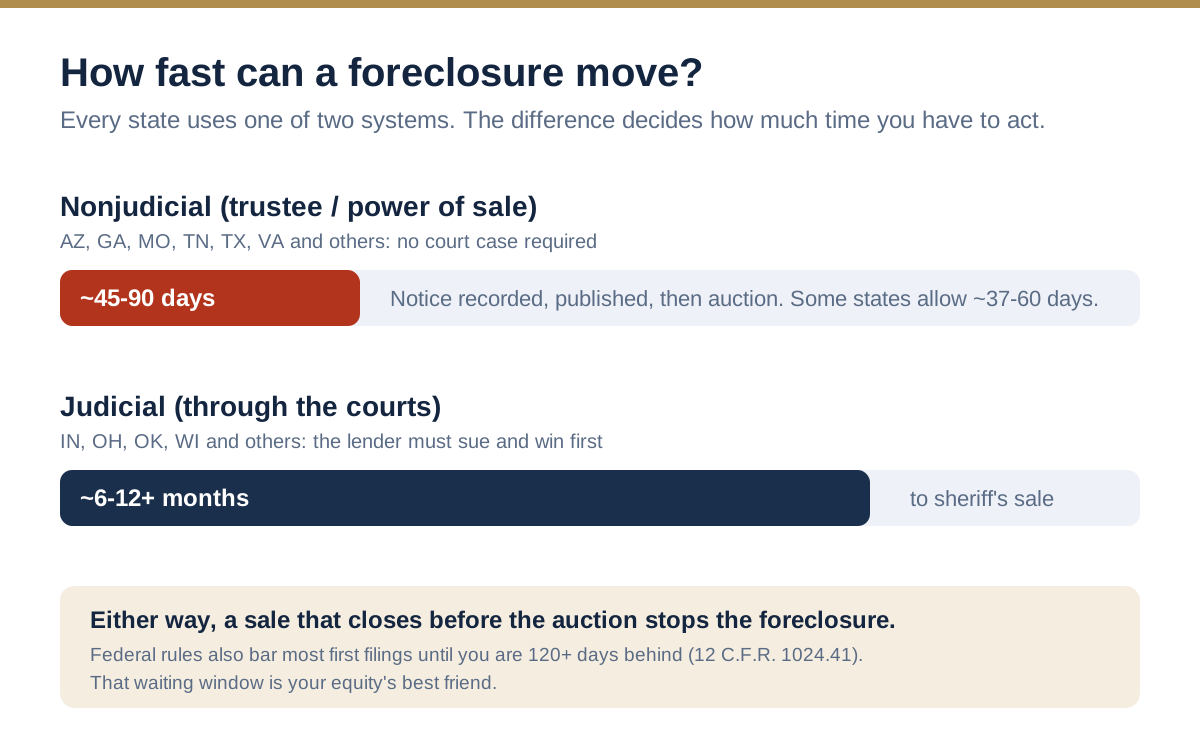
The statutory minimums are thin. The trustee must publish notice of the sale three times in a county newspaper, with the first publication at least 20 days before the sale date, and mail the borrower a copy on or before that first publication (Tenn. Code Ann. 35-5-101). That's the core of it. Once a lender initiates, a Tennessee foreclosure commonly reaches the auction block in roughly 45 to 60 days.
Your real runway is longer than that, but only on the front end. Federal servicing rules bar the first official foreclosure filing until you're more than 120 days delinquent (12 C.F.R. 1024.41), so from the first missed payment you generally have four months before the state clock can even start. Add the state process and you're looking at roughly five to six months, total, from first missed payment to a stranger owning your house.
And in Tennessee, the auction is effectively final. State law provides a two-year right of redemption after the sale, but it applies only if the deed of trust didn't waive it, and virtually every institutional deed of trust waives it. Assume yours did.
The workable move is selling before the auction, because a sale at any point before the gavel pays off the loan, stops the foreclosure, and puts your remaining equity in your pocket instead of surrendering it at a courthouse-steps auction. A listed sale rarely fits inside a 45 to 60 day window once notices have started; a cash sale fits comfortably, and lenders will postpone a sale for a signed contract with a real closing date far more readily than for a promise. Start with our foreclosure options guide, and if you're weighing whether a pre-auction sale is even allowed (it is), the answer's laid out in Can I Sell My House Before Foreclosure?
What Selling Costs in Tennessee, and How a Direct Sale Changes the List
The good news first: Tennessee's government takes one of the smallest bites in the country.
- Transfer tax: $0.37 per $100 of price, so $740 on a $200,000 sale (Tenn. Code Ann. 67-4-409), and custom puts it on the buyer's side of the ledger anyway. In our purchases we follow that custom.
- State income tax: none. Tennessee's last income tax, the Hall tax on interest and dividends, was fully repealed effective January 1, 2021 (Tennessee Department of Revenue), so the state taxes zero of your sale profit. Federal capital gains rules still apply, but the home sale exclusion shelters up to $250,000 of gain ($500,000 married filing jointly) on a primary residence you owned and occupied for two of the last five years (26 U.S.C. 121), and inherited houses get the stepped-up basis noted above. Most Tennessee sellers owe nothing to anyone.
- Property tax proration: gentle, because Tennessee's effective property tax rate of roughly 0.46% sits among the lowest three or four states in the nation.
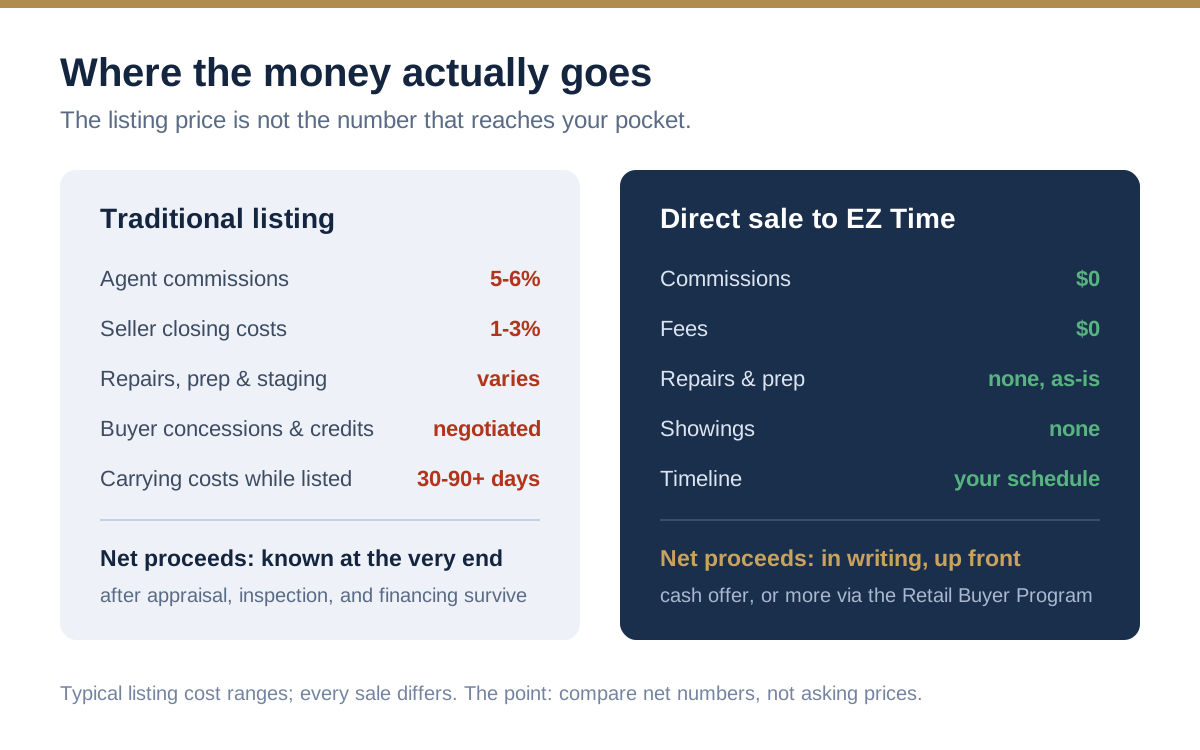
The expensive part of a Tennessee sale is never the government. It's the transaction itself: agent commissions around 5 to 6 percent, the repair list from prep and inspection (routinely $10,000 to $50,000 on an older house), buyer concessions, and two to four months of mortgage payments, insurance, and utilities while you wait. On a $250,000 house needing work, those line items swallow $40,000 to $70,000 without anyone acting in bad faith.
A direct sale rewrites that list rather than trimming it. No commission, because there's no agent. No repairs, because the offer already prices the condition, with the ARV, repair estimate, and our margin itemized in writing. No months of holding costs, because closing lands in two to three weeks. We also cover standard closing costs, so the settlement statement shows your payoffs, prorated (low) taxes, and the wire. Run your own numbers in the cash offer calculator before you talk to anyone, including us.
Tennessee Scenarios We See Every Week
The Nashville house that hasn't been touched since 1995
Middle Tennessee's price growth means a dated Madison or Antioch ranch can carry serious equity and still be unsellable to a retail buyer whose lender balks at the roof. The disclaimer statement plus a cash close converts that equity without a renovation loan. Our Nashville page covers the neighborhoods we buy in most.
The Memphis rental you're done with
Memphis is one of the most investor-owned big-city markets in America, and we buy there with tenants in place, deposits transferring at closing. If you haven't lived in the property within three years, Tenn. Code Ann. 66-5-209 exempts you from the disclosure form entirely. Details on our Memphis page.
The Clarksville PCS orders
Fort Campbell families get orders, not timelines. A listed Clarksville sale averages out near the 74-day mark; PCS windows are often shorter than that. A two-to-three-week cash closing, or a Retail Buyer Program sale started the week orders drop, keeps the move and the sale on the same calendar. See our Clarksville page.
The inherited house three states away
An out-of-state heir with a vested interest under Tenn. Code Ann. 31-2-103, an exemption from the disclosure form, and no desire to fly back monthly is the single most common Tennessee call we get. Everything signs remotely through the title company.
The Short Version
Tennessee's rules reward sellers who know them: pick the right disclosure door, let the buyer carry the transfer tax per custom, keep the state's hands off your gain, and respect the foreclosure clock if one is ticking. Whether that points you toward a listing, our as-is cash offer, or the Retail Buyer Program's higher-net path, start from the Tennessee hub and the numbers, not from anyone's script.
This guide is general information about Tennessee law, not legal or tax advice. Statutes change and facts matter; for your specific situation, a Tennessee real estate attorney or CPA is the authority.
From the buyers
How EZ Time Home Buyers Can Help in Tennessee
We buy houses across Tennessee, and everything above is the world we work in every week. If the timelines or repair math in this guide are pushing you toward a direct sale, we'll give you a written cash offer with the math shown line by line: after-repair value, repair budget, our margin. And if the cash number doesn't work for you, our Retail Buyer Program is a second path that typically nets more than a typical cash offer while we handle the work, with no commissions or fees on either path.
Frequently Asked Questions
Do I have to fill out a disclosure form to sell my house in Tennessee?
Not always. Tennessee law gives you three options: the standard disclosure form, a disclaimer statement selling as-is if the buyer agrees to waive disclosure (Tenn. Code Ann. 66-5-202), or an exemption notification if you qualify under Tenn. Code Ann. 66-5-209, which covers estate sales, foreclosure-related transfers, auctions, and any seller who hasn't lived in the property during the three years before closing. None of the three permits actively concealing a known defect.
How fast can a foreclosure actually happen in Tennessee?
Fast. Tennessee foreclosures are nonjudicial: the trustee publishes notice three times in a county newspaper, with the first publication at least 20 days before the sale (Tenn. Code Ann. 35-5-101), and the process commonly finishes in 45 to 60 days once initiated. Federal rules do bar starting until you're more than 120 days delinquent (12 C.F.R. 1024.41), so your total runway from the first missed payment is usually five to six months. The two-year redemption right is almost always waived in the deed of trust, so the auction is effectively final.
What taxes do I pay when I sell a house in Tennessee?
At the state level, almost nothing. Tennessee has no income tax (the Hall tax was fully repealed January 1, 2021), so the state taxes none of your gain. The realty transfer tax is $0.37 per $100 (Tenn. Code Ann. 67-4-409) and the buyer customarily pays it. Federally, the Section 121 exclusion shelters up to $250,000 of gain, or $500,000 for married joint filers, on a primary residence you owned and lived in for two of the last five years, and inherited houses get a stepped-up basis that usually wipes out most of the gain.
Can I sell an inherited house in Tennessee without going through full probate?
Often, yes. Tennessee real estate vests in the heirs or devisees immediately at death (Tenn. Code Ann. 31-2-103), subject to the personal representative's right to reach it for estate debts. Note that Tennessee's small estate procedure covers personal property only, up to $50,000 (Tenn. Code Ann. 30-4-102), so it never transfers the house itself. Title companies typically insure heir sales through the probated will, an affidavit of heirship when there's no will, or a formal administration when debts or disputes require one.
Related Guides
Ready to see both of your numbers?
Tell us about your property once and get a written cash offer, plus what our Retail Buyer Program could net you instead. No repairs, no fees, no pressure to accept.