
Selling a House in Missouri: Laws, Taxes, and How the Process Actually Works
By Carson Whaley · Updated August 26, 2026 · 10 min read
Missouri sells houses on unusually seller-friendly terms: no state or local transfer tax (constitutionally banned since 2010), no mandatory disclosure form, and cheap title-company closings. The same light-touch tradition cuts the other way when you're behind on the mortgage, because Missouri's nonjudicial foreclosure can finish roughly 60 days after it starts. Here's the whole picture, from disclosure duties to probate deadlines to the city inspection rules that catch sellers off guard.
What Missouri Actually Requires You to Disclose
Missouri sits closer to the old caveat emptor tradition than almost any state. There is no general statutory disclosure form. The legislature has mandated exactly one property-condition disclosure: if the home was ever used as a site for methamphetamine production, you must tell the buyer in writing before closing (Mo. Rev. Stat. 442.606). Federal law adds the lead-based paint disclosure for homes built before 1978 (42 U.S.C. 4852d). That is the entire statutory list.
The common law fills the gap, and it has teeth. Missouri courts have long held that a seller cannot actively conceal a known latent defect, meaning a hidden problem the buyer couldn't reasonably discover, and cannot answer a buyer's direct question with a lie. Panel over the foundation crack, or say the basement is dry when you bail it out every April, and you can be sued for fraudulent misrepresentation after closing. Fraud is a recognized exception to the general rule that the contract merges into the deed once the sale closes, so "we already closed" is not a defense. Neither is an as-is clause. As-is allocates the risk of unknown problems to the buyer; it has never been a license to hide known ones.
In practice, most listed Missouri homes still come with a seller's disclosure statement, because the Missouri Realtors form is baked into standard listing paperwork and buyers expect it. Understand what that form is: not a legal requirement, but a set of written representations you can be held to later. Accuracy beats optimism on every line.
Here's how disclosure works when you sell to us instead. We buy as-is, and we still ask you to tell us everything, because in a direct sale a disclosed defect isn't a lawsuit risk or a renegotiation trigger. It's a line item in a repair estimate we've already priced. Sellers holding a scary inspection report usually find the honest version costs less than they feared.
The Standard Missouri Sale, Start to Finish
Missouri is a title company state. No attorney is required at the closing table, the title company runs escrow, and both sides typically sign at its office or by mail-out. If you list with an agent, the arc looks like this:
- Prep and list. Cleaning, repairs, photos, and a listing agreement, typically at 5 to 6 percent total commission.
- Contract. Most deals are written on Missouri Realtors forms with inspection, financing, and appraisal contingencies attached.
- The inspection round. The buyer inspects within about 10 days, then sends a repair or credit request. This is a second price negotiation, and it's where as-is listings that attracted a retail buyer often shrink.
- Title and lender work. The title company searches the chain, clears liens, and orders the payoff on your deed of trust. Missouri secures home loans with deeds of trust rather than true mortgages, a detail that matters enormously in the foreclosure section below.
- Closing. Usually 30 to 45 days after contract for a financed buyer. Property taxes get prorated (Missouri bills in arrears, due December 31, so you credit the buyer for your share of the current year), the loan is paid off, the deed records, and the balance wires to you.
Realistic total: two to four months from the decision to sell until the wire lands, longer if an appraisal comes in low or financing falls through and the house goes back on market.
Our process compresses those five steps into two. One walkthrough produces a written offer that shows the after-repair value, the itemized repair estimate, and our margin. No financing contingency, no appraisal, no inspection renegotiation, and a title-company closing in two to three weeks once title is clear. You can pressure-test the math yourself with our cash offer calculator before anyone visits.
Selling an Inherited House: Missouri's One-Year Deadline
Start with whether the house needs probate at all. If it was held in a living trust, titled jointly with right of survivorship, or covered by a recorded beneficiary deed, it passes outside probate, and the survivor or beneficiary can sell after recording a death certificate. Missouri pioneered the beneficiary deed (Mo. Rev. Stat. 461.025), so check the deed records before assuming the worst.
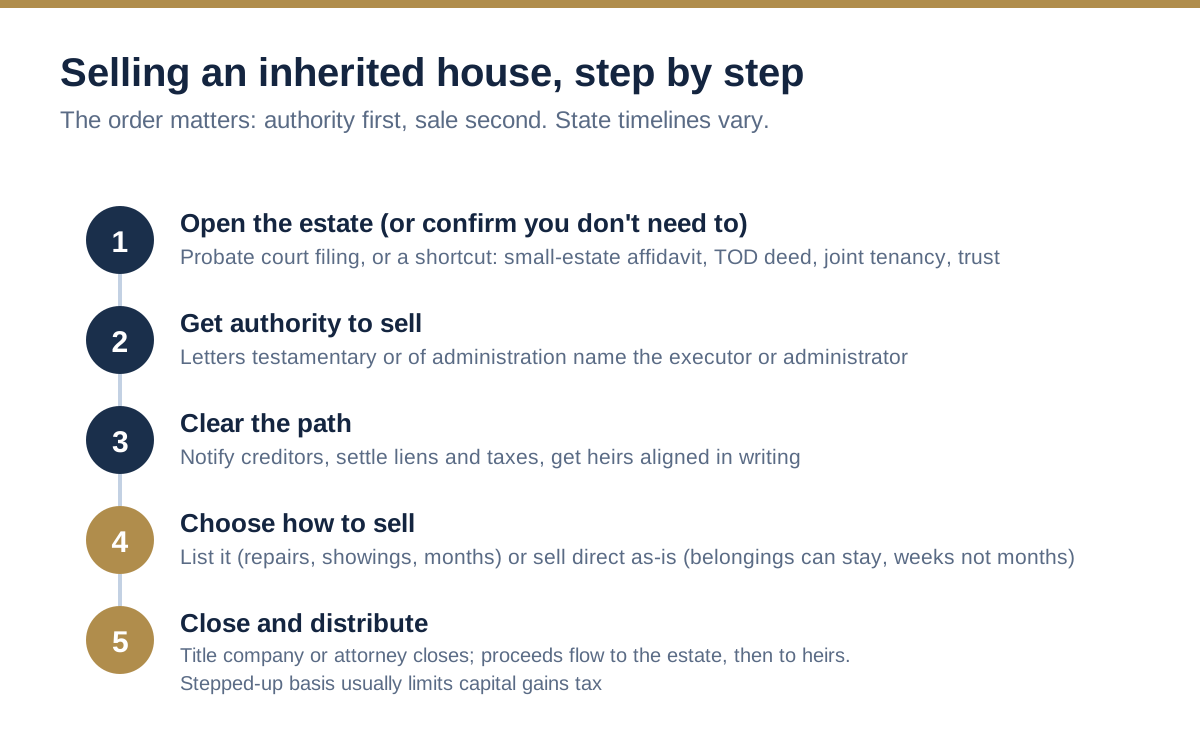
If the house was titled solely in the deceased's name, Missouri has a rule that surprises out-of-state heirs: probate must be opened within one year of death (Mo. Rev. Stat. 473.050). Miss that window and the court can no longer issue letters at all. The fallback is a determination of heirship proceeding (Mo. Rev. Stat. 473.663), which requires published notice and runs slower, while the house sits in title limbo the whole time. Our advice to every Missouri heir is the same: file first, decide later. Opening the estate costs little and preserves every option.
Once probate is open, the process is friendlier than its reputation. Independent administration, with minimal court supervision, is the Missouri norm, and an independently administered personal representative can usually contract and sell the house much like a normal owner. Creditors have six months from the first published notice of letters to bring claims (Mo. Rev. Stat. 473.360), and the sale generally doesn't have to wait for the estate to close. Small estates worth $40,000 or less can skip letters entirely with a small estate affidavit filed 30 days or more after death (Mo. Rev. Stat. 473.097), a threshold that rarely covers a house but occasionally fits a modest rural property.
We buy inherited houses across the state, contents included, and we routinely issue firm written offers while an estate is still opening so the representative can act the day authority exists. The mechanics are covered in our probate sale guide and our inherited house page.
Foreclosure in Missouri: One of the Fastest Clocks in the Country
That deed of trust you signed contains a power of sale, which lets a trustee foreclose without ever filing a lawsuit. Federal mortgage-servicing rules stop the process from starting until you're more than 120 days delinquent (12 C.F.R. 1024.41). After that, Missouri moves fast:
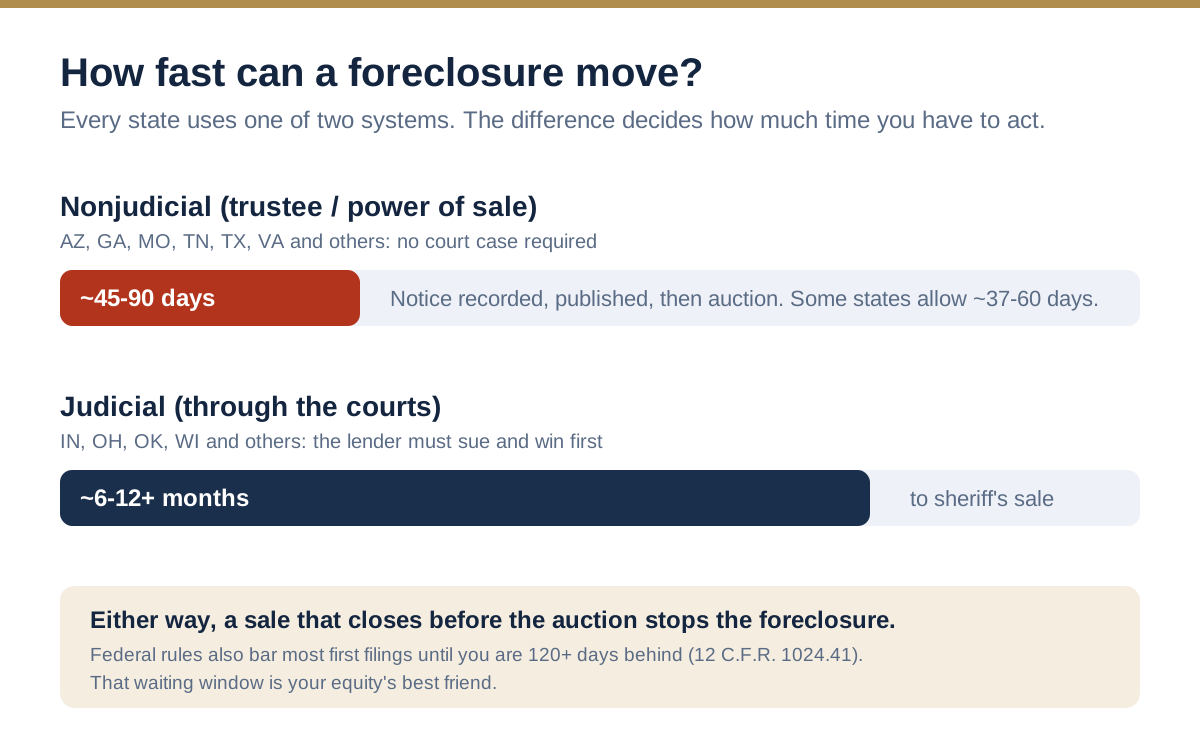
- The trustee mails you notice of the sale at least 20 days before the sale date (Mo. Rev. Stat. 443.325).
- Notice runs in the newspaper: in counties containing a city of 50,000 or more, a daily paper for at least 20 insertions continuing to the day of sale; elsewhere, a weekly paper for four successive issues (Mo. Rev. Stat. 443.320).
- The house sells at public auction, usually on the courthouse steps.
Start to finish, the trustee's process commonly completes in about 45 to 60 days, which puts Missouri among the fastest foreclosure states in the nation. And the auction is effectively final. Missouri's only redemption right applies when the lender itself is the winning bidder, and it requires the borrower to give notice and post a bond covering the debt, interest, and costs (Mo. Rev. Stat. 443.410). Almost no homeowner can use it in practice.
The practical lesson is to measure your runway from today forward, not from the auction backward. From the first missed payment you have several months of federal cushion. From the trustee's first notice you have weeks. A sale to us can close in two to three weeks, fast enough to beat a Missouri auction and walk away with your equity instead of surrendering it, but only if the title work starts while there's still room on the calendar. Our guides on selling before foreclosure and every foreclosure alternative walk through the full option set, including the workouts that don't involve selling at all.
What Selling Costs in Missouri, Line by Line
Missouri closings are famously cheap, and one line explains most of it: the transfer tax line reads zero. In 2010, voters passed Amendment 3, adding Article X, Section 25 to the Missouri Constitution, which forbids the state, counties, and every other political subdivision from imposing any tax on the sale or transfer of real estate. Sellers crossing from Illinois, which taxes transfers at the state, county, and often municipal level, tend to read their Missouri settlement statement twice.
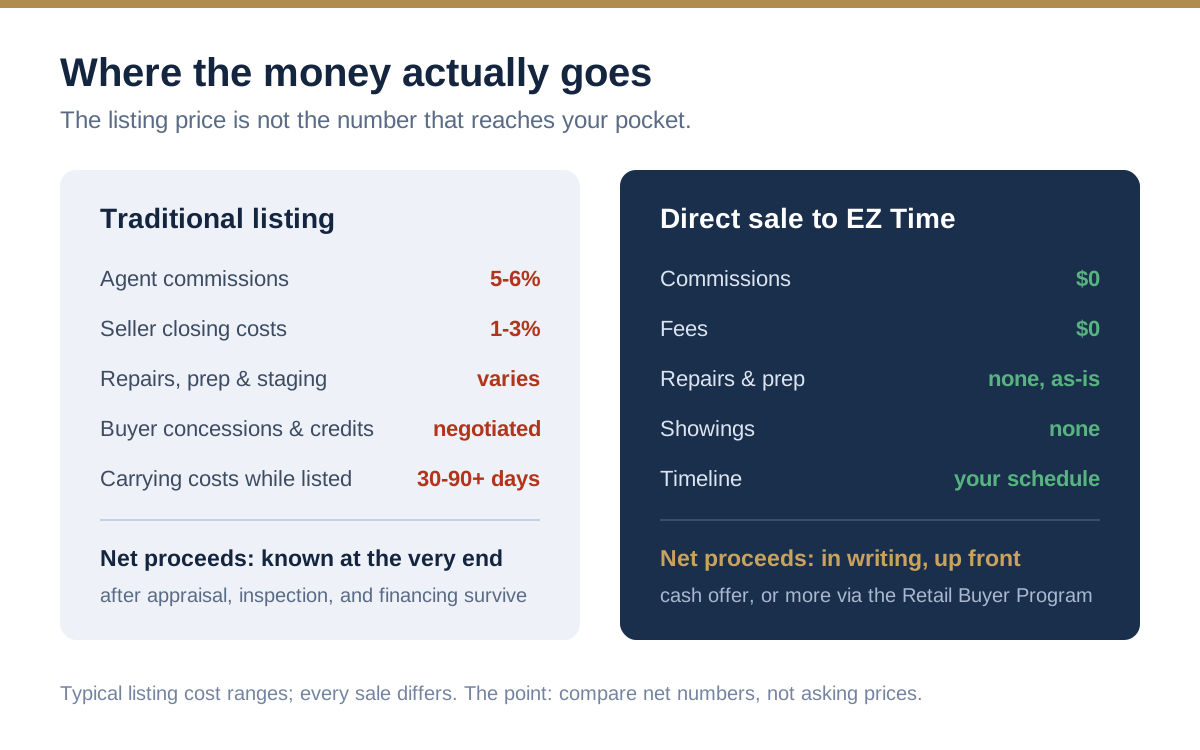
What a listed sale still costs:
- Commission: typically 5 to 6 percent of the price, the biggest line by far.
- Title and closing fees: a title search, an owner's policy (who pays is negotiated in the contract), and escrow fees, collectively among the lowest in the country.
- Recording fees: flat, measured in tens of dollars.
- Property tax proration: your share of the current year's bill, at a statewide effective rate around 0.82 percent, credited to the buyer because Missouri taxes are paid in arrears.
- Repairs and concessions: whatever the inspection round extracts, often thousands.
A direct sale rewrites that list. With us there's no commission, no repair credits, no buyer concessions, and we cover the standard closing costs, so the settlement statement typically shows just your payoff, the tax proration, and the wire to you. And for Missouri sellers who have some time and a house in decent shape, our Retail Buyer Program is worth asking about: we prepare and market the property to retail buyers ourselves, which lands more than a typical cash offer while keeping the certainty of working with one accountable buyer. Details for every market we serve are on our Missouri page.
City Rules That Surprise Missouri Sellers
State law is only half the story. Missouri's two big metros regulate occupancy at the local level, and the rules differ sharply by city.
St. Louis City: the occupancy inspection
Every residential property in the City of St. Louis sits inside a Housing Conservation District, and city Ordinance 71835 requires a Housing Conservation District inspection when a home changes ownership or occupancy. The buyer can't lawfully occupy until the property passes and a Certificate of Inspection issues, and a certificate more than a year old doesn't count. For the city's older brick stock, that inspection list can run long. Unincorporated St. Louis County has its own occupancy-permit inspection at each occupant change, applied to home sales since 2007, and dozens of county municipalities layer on their own versions. Investors like us buy through these programs constantly; on a St. Louis as-is sale, the inspection findings become our repair list, not your closing obstacle.
Kansas City: rentals, not owner-occupied sales
Kansas City has no citywide point-of-sale inspection for a typical owner-occupied home sale. The local wrinkle is rental property: KCMO's Healthy Homes Rental Inspection Program (Ordinance 180248) requires rental registration that renews annually and does not transfer with the deed, so a buyer of a tenant-occupied house must register it fresh. If you're selling a Kansas City rental, tenants, deposits, and the registration handoff all resolve at closing when the buyer is set up for it.
Everywhere else
Outstate Missouri mostly has no occupancy regime at all, but always confirm with your city hall before setting a closing date. Springfield and Independence each have rental inspection programs of their own, covered on those city pages.
Three Missouri Situations We See Every Week
The inherited house nobody filed probate on
Mom passed ten months ago, the will is in a drawer, and the family planned to "deal with it after the holidays." In Missouri that plan has a hard expiration date (Mo. Rev. Stat. 473.050). The fix is mechanical: a probate attorney files the petition this week, independent administration issues letters, and the house can be under contract before the estate is a month old.
The homeowner three payments behind with equity left
The 120-day federal cushion is still running, which means the Missouri clock hasn't started, which means every option is still open. This is the moment a two-week cash closing is genuinely worth more than a higher price that takes 90 days, because the trustee's 20-day notice (Mo. Rev. Stat. 443.325) doesn't pause for a buyer's lender.
The vacant fixer that can't pass an occupancy inspection
A St. Louis or inner-suburb house that needs a roof, systems, and everything cosmetic will fail its conservation inspection as-is, and financing it is nearly impossible anyway. Cash is how these houses trade. The offer math is transparent: after-repair value, minus real repair numbers, minus our margin, in writing.
One note before you act on any of this: laws change and facts differ, and this guide is general information, not legal or tax advice. For probate filings, foreclosure defense, or a disclosure dispute, a Missouri attorney is the right call, and we'll happily work alongside yours.
From the buyers
How EZ Time Home Buyers Can Help in Missouri
We buy houses across Missouri, and everything above is the world we work in every week. If the timelines or repair math in this guide are pushing you toward a direct sale, we'll give you a written cash offer with the math shown line by line: after-repair value, repair budget, our margin. And if the cash number doesn't work for you, our Retail Buyer Program is a second path that typically nets more than a typical cash offer while we handle the work, with no commissions or fees on either path.
Frequently Asked Questions
Do I have to fill out a disclosure form to sell a house in Missouri?
No statute requires a general disclosure form. Missouri law mandates only the written methamphetamine-production disclosure (Mo. Rev. Stat. 442.606), plus the federal lead-paint disclosure on pre-1978 homes. What you can never do is actively conceal a known hidden defect or lie in answer to a direct question; Missouri's common law lets defrauded buyers sue even after closing, and an as-is clause won't shield concealment.
Does Missouri charge a transfer tax when you sell a house?
No, and it can't. Missouri voters amended the constitution in 2010 (Article X, Section 25) to prohibit the state, counties, and all other political subdivisions from taxing the sale or transfer of real estate. You'll pay flat recording fees measured in tens of dollars, prorated property taxes, and your payoff, which is why Missouri settlement statements are among the shortest in the country.
How fast can a foreclosure actually take my Missouri house?
Once the trustee begins, roughly 45 to 60 days: a mailed sale notice at least 20 days out (Mo. Rev. Stat. 443.325), newspaper publication (Mo. Rev. Stat. 443.320), then the auction, with no practical right of redemption afterward for most borrowers (Mo. Rev. Stat. 443.410). Federal rules delay the start until you're 120-plus days delinquent, so the real runway is measured from your first missed payment, and every option works better the earlier you use it.
Can I sell an inherited Missouri house without going through probate?
Only if the house already passes outside probate: a living trust, joint title with survivorship, or a recorded Missouri beneficiary deed (Mo. Rev. Stat. 461.025). Estates worth $40,000 or less have a small estate affidavit shortcut (Mo. Rev. Stat. 473.097). Otherwise probate is required, and it must be opened within one year of death (Mo. Rev. Stat. 473.050) or you're left with the slower determination-of-heirship route to clear title.
Related Guides
Ready to see both of your numbers?
Tell us about your property once and get a written cash offer, plus what our Retail Buyer Program could net you instead. No repairs, no fees, no pressure to accept.