
Selling an Inherited House in Missouri: Probate, Taxes, and Your Options
By Carson Whaley · Updated August 26, 2026 · 9 min read
Missouri gives heirs one hard deadline and a lot of good news. The deadline: probate must be opened within one year of death (Mo. Rev. Stat. 473.050), or the court can never issue letters at all. The good news: no state estate tax, no inheritance tax, no transfer tax, a $40,000 small-estate shortcut, and independent administration that lets most estates sell a house about as easily as any other owner would.

What Happens to the House the Moment the Owner Dies
Missouri law answers the first question families ask, who owns the house now, more precisely than most people expect. Under Mo. Rev. Stat. 473.260, a decedent's real estate passes at death directly to the people named in the will, or to the legal heirs if there is no will. Title doesn't float in limbo. But that same statute attaches strings: the property stays subject to the personal representative's possession and to administration, meaning debts, claims, and family allowances get paid before anyone truly owns it free and clear. In practice, no title company will insure a sale by heirs until probate has sorted out who can sign the deed.
Unless, that is, the house never needed probate in the first place. Three arrangements move a Missouri house outside probate entirely:
- A recorded beneficiary deed. Missouri invented this tool (Mo. Rev. Stat. 461.025), and it's common here. If the owner recorded one before death, the named beneficiary takes title by recording a death certificate and an affidavit. No court.
- Joint ownership with right of survivorship. A surviving spouse or joint tenant takes the whole title automatically.
- A living trust. The successor trustee can sell under the trust's terms.
Before you assume you're headed to court, pull the deed from the county recorder. We've watched families brace for probate only to find a beneficiary deed Mom recorded in 2011 that solves everything.
The Probate Paths, and Missouri's One-Year Deadline
File Within One Year or Lose the Option
If the house was titled solely in the deceased's name, probate it is, and Missouri's clock is unforgiving in a way that catches out-of-state heirs constantly. An application for letters testamentary or of administration must be filed within one year of the date of death (Mo. Rev. Stat. 473.050). Miss that window and the probate division cannot appoint a personal representative at all. The fallback is a determination of heirship proceeding (Mo. Rev. Stat. 473.663), which requires published notice, moves slower, and leaves the house in title limbo while it runs. Our standing advice to every Missouri heir: file first, decide later. Opening an estate costs little and preserves every option.
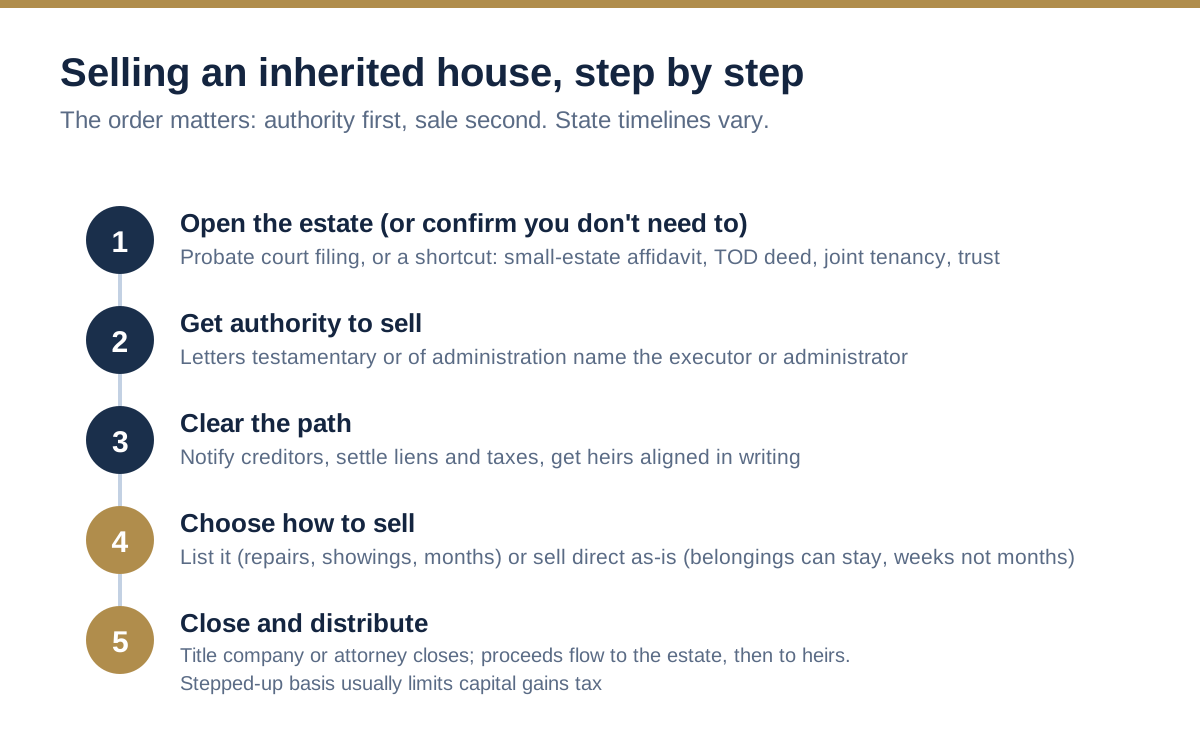
From Petition to Distribution
Here's what the process actually looks like once you file in the probate division of the circuit court, which sits in the county where the deceased lived (Mo. Rev. Stat. 473.010):
- Petition and appointment. The court issues letters testamentary (with a will) or letters of administration (without one), usually within a few weeks. That document is what a title company needs to see.
- Independent administration. This is the Missouri norm, and it's the friendly version: minimal court supervision, and a personal representative who can generally contract and sell the house much like a normal owner, without a hearing on the sale itself.
- Creditor claims. Creditors get six months from the first published notice of letters to bring claims (Mo. Rev. Stat. 473.360). The house sale usually doesn't have to wait for this window to close; proceeds simply flow into the estate account.
- Distribution. After debts and expenses, heirs get paid. Full estate closure commonly takes six months to a year and a half, but the house typically sells long before the estate closes.
The $40,000 Affidavit and Other Shortcuts
Two shortcuts are worth knowing. Estates worth $40,000 or less can skip letters entirely with a small estate affidavit filed 30 days or more after death (Mo. Rev. Stat. 473.097). That ceiling rarely covers a house, but it occasionally fits a modest rural property or a fractional interest. And when the only real task is proving who inherited, the heirship route exists, it's just the slow lane, not the shortcut.
Taxes: Mostly Good News for Missouri Heirs
Start with the fear most heirs carry into our first conversation: the tax bill. For nearly every Missouri family, it barely exists.
No Missouri estate tax, no inheritance tax. Missouri's estate tax was tied to a federal credit that Congress phased out; for deaths on or after January 1, 2005, the Missouri Department of Revenue requires no estate tax filing and collects nothing (Mo. Rev. Stat. 145.011 sits dormant on the books). There is no separate inheritance tax on what you receive, no matter how distant a relative you are.
Federal estate tax irrelevance. The federal exemption is $15 million per person in 2026. Unless the estate is genuinely enormous, it owes nothing.
The stepped-up basis, the quiet gift. Under federal law (26 U.S.C. 1014), your tax basis in the house resets to its fair market value on the date of death. If Dad paid $52,000 in 1989 and the house was worth $210,000 when he passed, your basis is $210,000. Sell near that number within a reasonable time and the taxable gain rounds to zero. Only appreciation after the date of death is taxed, which is why heirs who sell within the first year so rarely owe capital gains at all. Get a date-of-death appraisal or a broker's valuation and keep it; that document sets the basis.
What you'll still pay. Prorated property taxes (Missouri bills in arrears, due December 31), ordinary recording fees, and, thanks to Missouri's constitutional ban on transfer taxes, a transfer tax line that reads zero. The broader cost picture is covered in our full guide to selling a house in Missouri.
When Several Heirs Own One House
Money rarely stalls an estate sale. Siblings do. Once a house passes to three heirs in three states with three opinions, every decision needs a majority that doesn't exist. The workable resolutions, in the order we'd try them:
One heir buys the others out. Get one appraisal everyone accepts, subtract selling costs the estate would have paid, and split the difference. The buyout heir refinances or pays cash, and the deed gets clean.
Sell and split. The default answer, and usually the right one when nobody wants to live there. Selling from the estate, with the personal representative as the single signer, is cleaner than distributing the deed to all the heirs first and collecting signatures later.
Partition, the last resort. Any co-owner can file a partition action (Mo. Rev. Stat. Chapter 528) asking the court to order a sale and divide proceeds. It works, but it converts family friction into litigation, with attorney fees paid out of everyone's share. In fifteen years of buying inherited houses we've seen partition genuinely necessary only a handful of times. Most standoffs are information problems: share every offer and document with every heir at the same time. We routinely present written offers on group calls for exactly this reason.
The House Itself: Belongings, Insurance, and an Empty Building
While the legal process runs, the physical house needs three things.

Insurance, immediately. Homeowner's policies can lapse or restrict coverage when the named insured dies or the house goes vacant, sometimes after just 30 to 60 days empty. Call the insurer, tell them the truth, and ask for a vacant or estate endorsement. An uninsured vacant house is the single biggest risk an estate carries.
Security and upkeep. Change the locks (keys multiply over decades), stop the mail, keep the yard cut so the house doesn't advertise its vacancy, and winterize the plumbing if it will sit through a Missouri winter.
A sane plan for forty years of belongings. Clearing a full house takes most families two to six months of weekends and no small amount of grief. Do the triage that matters, documents, photos, the genuinely valuable, and give yourself permission to leave the rest. We buy houses contents included, and for long-distance heirs that single fact often matters more than the price.
Your Selling Options, Compared Honestly
Missouri hands estates one quiet advantage: there is no statutory seller disclosure form to fill out in the first place. State law mandates only the methamphetamine-production disclosure (Mo. Rev. Stat. 442.606) plus the federal lead-paint disclosure on pre-1978 homes. So the awkward problem executors face elsewhere, filling out condition forms about a house they never lived in, mostly doesn't exist here. What remains is the common-law rule that binds every seller: never conceal a known hidden defect, never answer a direct question with a lie.
Listing With a Real Estate Agent
Listing the house makes sense when it's in genuinely good condition and the estate can afford time. Expect commissions of 5 to 6 percent, an inspection round where the buyer renegotiates price, and two to four months from listing to wire. A dated house, and most inherited houses are dated, invites lowball offers after inspection or demands renovation money the estate doesn't have sitting in its account.
Selling As-Is to a Direct Buyer
A direct as-is sale trades some price for certainty and speed. We make written offers that show the after-repair value, the itemized repair estimate, and our margin, and we can issue a firm offer while the estate is still opening so the representative can act the day letters issue. No repairs, no cleanout, no financing contingency, and a title-company closing in two to three weeks once authority exists. One St. Louis wrinkle worth knowing: the City of St. Louis requires a Housing Conservation District inspection before a buyer can occupy, and an older estate house can fail it as-is. On a direct sale to us in St. Louis, those findings become our repair list rather than the estate's obstacle. The same as-is math applies from Kansas City to Springfield, and every market we serve is listed on our Missouri page.
The Middle Path: Our Retail Buyer Program
In between the two sits our Retail Buyer Program, for estates with a house in decent shape and some patience: we prepare and market the property ourselves, which lands more than a typical cash offer with the same easy, single-buyer process. The full mechanics of court authority and closing are in our probate sale guide and on our inherited house page.
A Simple Order of Operations for Missouri Heirs
When families ask us where to start, we give them the same six steps: pull the deed to check for a beneficiary deed or joint title; if probate is needed, file well inside the one-year window (Mo. Rev. Stat. 473.050); get the insurance converted to a vacant or estate policy the same week; order a date-of-death valuation and file it away for the tax basis; keep every heir on every email; and only then decide how to sell, with real numbers for each path side by side. Estates that follow that order rarely hit a crisis. Estates that start with the belongings and leave the filing "for after the holidays" are the ones calling us in month eleven.
Laws change and every estate differs. This guide is general information, not legal or tax advice; for filings, deadlines, and distributions, a Missouri probate attorney is the right call, and we work alongside estate attorneys every week.
From the buyers
How EZ Time Home Buyers Can Help With an Inherited House
We work with executors, heirs, and families in probate all the time, including houses full of belongings and houses three states away from everyone who inherited them. We buy as-is, work around court timelines, and put every offer in writing with the math shown. If the family wants more than a cash number, the Retail Buyer Program handles the work while typically netting more than a typical cash offer, with no commissions or fees.
Frequently Asked Questions
Is there a deadline to open probate on an inherited house in Missouri?
Yes, and it's a hard one: an application for letters must be filed within one year of the date of death (Mo. Rev. Stat. 473.050). After that, the court can no longer appoint a personal representative, and the family is left with a slower determination of heirship proceeding (Mo. Rev. Stat. 473.663) to clear title. Filing is cheap and preserves every option, so file first and decide what to do with the house later.
Do I pay inheritance tax on a house I inherit in Missouri?
No. Missouri has no inheritance tax, and its estate tax has collected nothing for deaths on or after January 1, 2005, because it was tied to a federal credit Congress eliminated. The federal estate tax only touches estates above $15 million (2026). Your real tax question is capital gains, and the stepped-up basis (26 U.S.C. 1014) resets your basis to date-of-death value, so heirs who sell reasonably soon typically owe little or nothing.
Can the personal representative sell the house before Missouri probate closes?
Usually, yes. Independent administration is the Missouri norm, and an independently administered personal representative can generally contract and sell the house much like a normal owner once letters issue, without a court hearing on the sale itself. Creditors have six months from first published notice to bring claims (Mo. Rev. Stat. 473.360), but the sale ordinarily doesn't wait for that window; proceeds go into the estate account and heirs are paid at distribution.
Can we skip probate entirely on a small Missouri estate?
Only in narrow cases. Estates worth $40,000 or less can use a small estate affidavit filed 30 days or more after death (Mo. Rev. Stat. 473.097), a ceiling that rarely covers a house. The realistic probate-free paths are a recorded beneficiary deed (Mo. Rev. Stat. 461.025), joint title with right of survivorship, or a living trust. Check the deed records before assuming you need court; Missouri pioneered the beneficiary deed and they're common here.
Related Guides
Ready to see both of your numbers?
Tell us about your property once and get a written cash offer, plus what our Retail Buyer Program could net you instead. No repairs, no fees, no pressure to accept.