
Selling a House in Wisconsin: Laws, Taxes, and How the Process Actually Works
By Eric Roebuck · Updated August 26, 2026 · 11 min read
Wisconsin gives sellers a short, knowable rulebook: one disclosure form due within 10 days of acceptance (with a 2-business-day rescission right attached), a $3 per $1,000 transfer fee, and a courts-only foreclosure system whose redemption period keeps you in possession, with the right to sell, until the sheriff's sale. Here's the whole thing, statute by statute, including the parts that only bite in a state where pipes freeze.

The Real Estate Condition Report and the Buyer's Walk-Away Right
Wisconsin's one mandatory seller form is the Real Estate Condition Report. If you're selling a one-to-four-unit residential property, you must furnish it to the buyer within 10 days after accepting an offer (Wis. Stat. 709.02(1)). Miss that deadline and the buyer can rescind the contract within 2 business days after the 10-day period ends and take their deposit back. Deliver a report that discloses a defect, and the buyer gets 2 business days after receiving it to rescind in writing (Wis. Stat. 709.05), unless they already had written notice of that defect when they made the offer.
Read those timing rules again, because they contain the strategy. A report delivered on day 9 hands the buyer a fresh escape hatch a week and a half into your contract. A report delivered with the counteroffer, before acceptance, means the buyer signs knowing everything, and the rescission window never becomes a live threat. We tell every Wisconsin seller the same thing: fill it out early, fill it out honestly, attach it up front.
The form itself is a known-defects checklist covering the roof, foundation, plumbing, electrical, wells and septic, flooding, and so on. It asks what you actually know. It does not require inspections, testing, or archaeology. Vague optimism is the dangerous answer; the basement that seeps every April goes on the form, and the buyer who learns about it from a neighbor after closing sues on the form.
Now the exemptions, which matter enormously for the sellers we meet. Personal representatives, trustees, conservators, and court-appointed fiduciaries who never occupied the property are exempt (Wis. Stat. 709.01(2)). So are transfers that are exempt from the transfer fee, which sweeps in foreclosure-related and court-ordered conveyances. The executor selling a late parent's house generally does not complete the report at all, though nobody in Wisconsin is ever allowed to actively conceal a defect they know about.
When the buyer is us, the report changes character anyway. We buy as-is, so your disclosures feed our repair math instead of arming a renegotiation after an inspection. Tell us about the dead boiler on the first call and it becomes a line item in a written offer, not a landmine in week three.
The Standard Wisconsin Sale, Start to Finish
Wisconsin is a title-company state. Attorneys are optional (plenty of sellers hire one anyway, and we never discourage it), closings happen at title companies statewide, and the state's standardized offer forms keep the paperwork consistent from Superior to Kenosha. A conventional sale runs like this:
- Prep and pricing. For a listed sale, this is where the weeks and dollars go: repairs, cleanout, photos, and a listing agreement that will cost 5-6% in commission at the end.
- Offer and acceptance. Most Wisconsin deals ride on the state-approved WB-11 Residential Offer to Purchase. Cash buyers like us use shorter contracts; either way, earnest money sits with the title company or broker trust account.
- The condition report clock starts. Ten days from acceptance (Wis. Stat. 709.02), with the rescission rights described above.
- Both spouses sign. Wisconsin is a marital property state (Wis. Stat. ch. 766), and no conveyance of a homestead is valid unless both spouses sign, even when only one is on the deed (Wis. Stat. 706.02(1)(f)). Title companies catch this every day; married sellers should just plan on two signatures.
- Inspection, appraisal, underwriting. The failure points for financed buyers. Inspection amendments reopen the price, and the lender's appraisal has to support whatever survives.
- Title work and the eRETR. The title company searches title, clears liens, and prepares Wisconsin's electronic real estate transfer return through the Department of Revenue's eRETR system. Since July 2009, that return must be filed electronically before the county will record your deed (Wis. Stat. 77.22). It reports the sale price, calculates the transfer fee, and gets signed off by both sides. You'll never touch the software; you'll just see the fee on your settlement statement.
- Closing. Deed signed, transfer fee paid, taxes prorated, proceeds wired.
Financed retail sales typically run 30 to 45 days from contract to closing when nothing breaks. A cash sale runs the same rails minus the appraisal, the loan file, and the inspection volley, which is how our process closes in two to three weeks once title is clear.
Selling an Inherited House in Wisconsin
Who can sign the deed depends on how the house was titled the day the owner died:
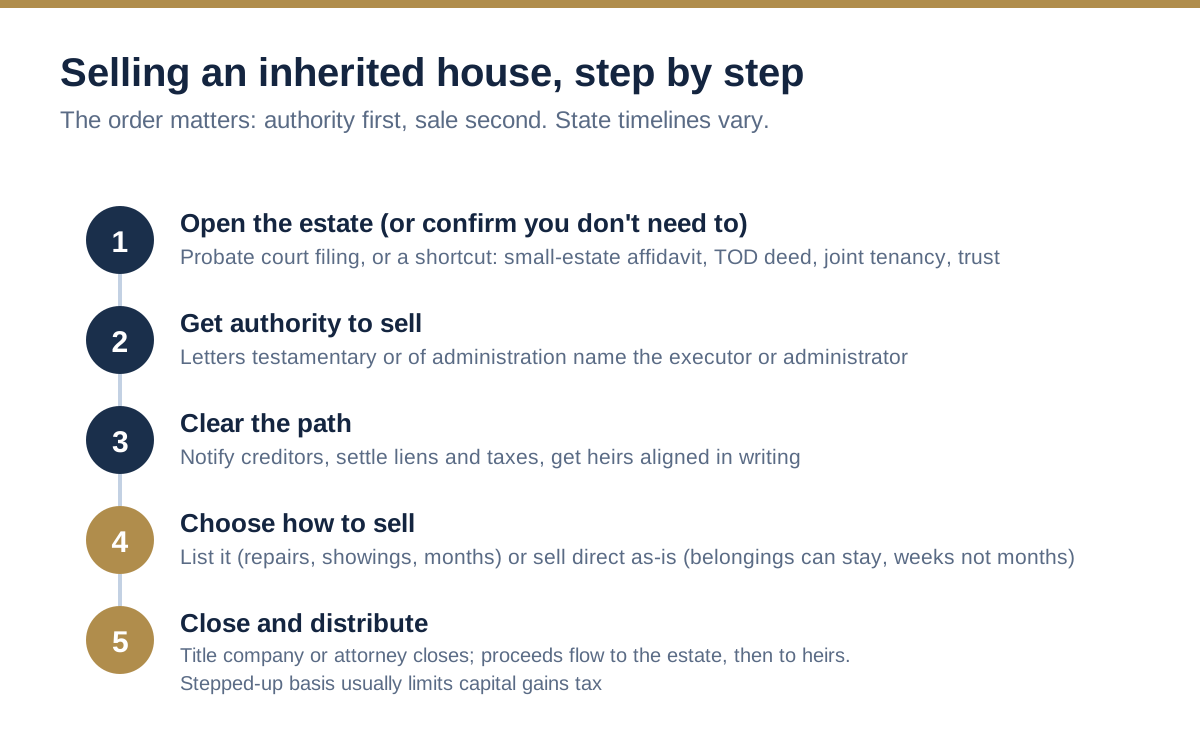
- Held in a trust, owned as survivorship marital property or joint tenancy, or covered by a transfer-on-death designation (Wisconsin authorizes TOD deeds under Wis. Stat. 705.15): the house skips probate. The survivor or named beneficiary records the death certificate and related paperwork, then sells like any owner.
- Titled solely in the deceased's name: probate, will or no will.
Wisconsin then offers a genuine shortcut and a friendly main road.
The shortcut: Transfer by Affidavit. If the decedent's entire Wisconsin estate subject to administration is $50,000 or less in gross value, an heir can transfer property, real estate included, by affidavit (Wis. Stat. 867.03, form PR-1831), recorded with the register of deeds, no court file opened. Most houses blow past $50,000 on their own, so this mostly rescues cottages, hunting land, and fractional interests. Worth checking, cheap to use when it fits.
The main road: informal administration. Most Wisconsin probates run informally through the county's register in probate (Wis. Stat. ch. 865), without court hearings on routine steps. Once the personal representative is appointed, they can generally market and sell the house during administration, close through a normal title company, and deposit proceeds into the estate account. Add the condition-report exemption for never-occupant fiduciaries (Wis. Stat. 709.01(2)) and an estate sale involves less paperwork than a regular one.
One Wisconsin-only wrinkle: because this is a marital property state, a surviving spouse frequently already owns the house outright through survivorship marital property, no probate needed for the real estate at all. A probate attorney or the title company can confirm which category your deed falls in from the recorded documents.
We buy inherited houses across Wisconsin contents-included, coordinate directly with the estate's attorney, and can hold a firm written offer while the appointment finalizes, so the estate can act the day the domiciliary letters issue. The inherited house guide covers the tax side (the stepped-up basis usually makes these sales nearly tax-free), and the probate walkthrough maps the court sequence step by step.
Facing Foreclosure? Wisconsin's Redemption Period Is a Selling Window
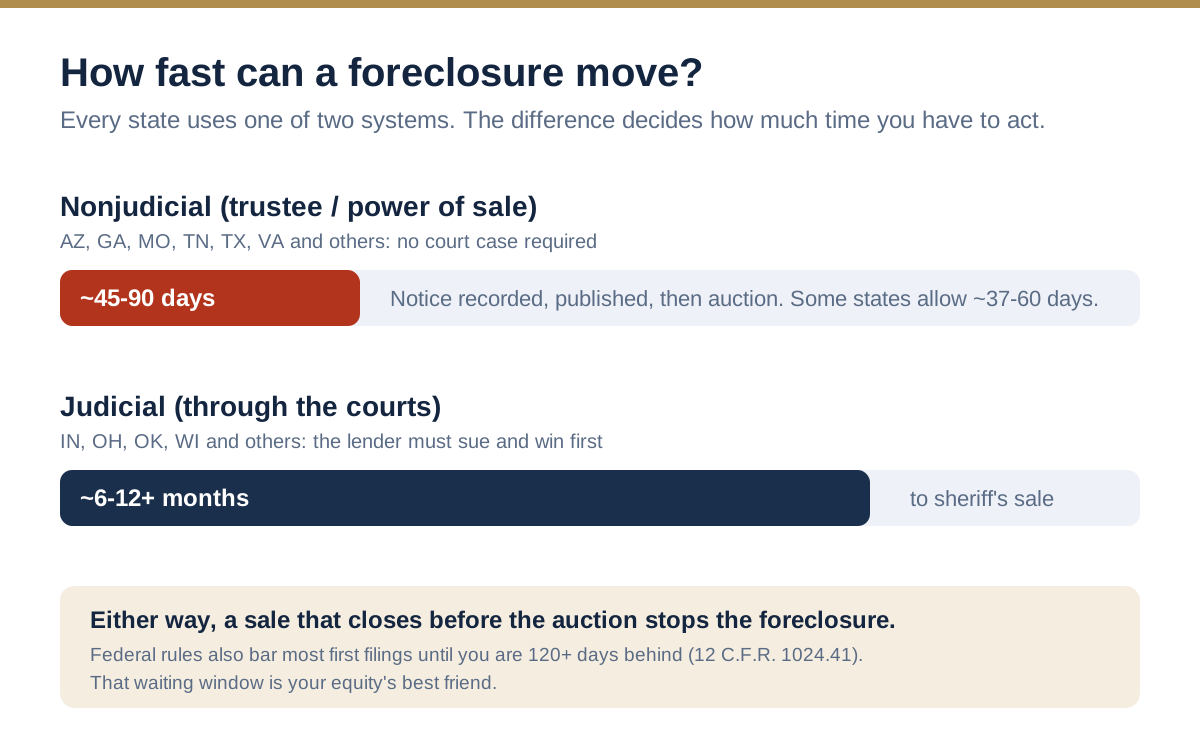
Wisconsin forecloses only through the courts (Wis. Stat. ch. 846), and its calendar has a shape most homeowners don't expect: the redemption period runs after the judge enters judgment but before the sheriff's sale. The judgment is not the end. It starts a clock during which you keep the house, and the clock is long.
For a mortgage signed on or after April 27, 2016, on an owner-occupied one-to-four-family home of 20 acres or less:
- Lender pursues a deficiency: no sale until 6 months after judgment (Wis. Stat. 846.10(2)).
- Lender waives the deficiency, which most residential lenders do: no sale until 3 months after judgment (Wis. Stat. 846.101).
- Mortgage predates April 27, 2016: the older, longer periods apply, up to 12 months under Wis. Stat. 846.10(2).
The one trapdoor: if the court makes an affirmative finding that the property is abandoned, the sale can happen just 5 weeks after judgment (Wis. Stat. 846.102). Moving out early, killing the utilities, and letting mail pile up can convert your 6-month window into 5 weeks. Whatever else you do, keep the house looking and legally occupied.
During redemption you remain in possession and keep the rents and profits until the court confirms the sale (Wis. Stat. 846.101). And nothing in the statute takes away your right to sell. Run the math on what that means: lender files suit, months of litigation follow, judgment enters, then 3 to 6 more months tick by before a sheriff's sale that still needs court confirmation. The realistic arc from default to confirmed sale runs 9 to 12 months or more, and every day of it is a day you can close a sale, pay the judgment from proceeds, and keep the equity that remains. Interest, attorney fees, and costs compound against that equity the whole time, so the math rewards starting early, not starting eventually.
Our foreclosure options guide lays out every path, reinstatement through short sale, and this guide answers the question directly: yes, you can sell after judgment, right up to the sale, and we've closed Wisconsin redemption-period purchases where the seller walked away with five figures the sheriff's sale would have erased.
What Selling Costs in Wisconsin
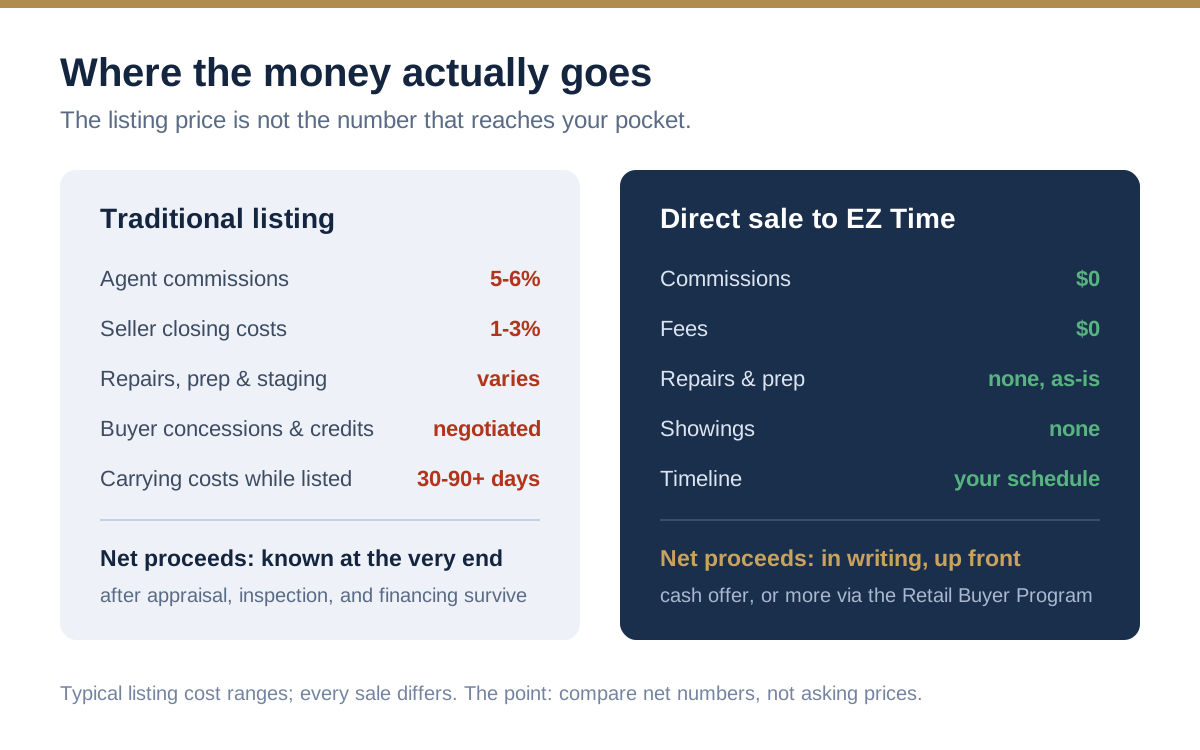
The state's own take is modest: a real estate transfer fee of 30 cents per $100 of value, which works out to $3 per $1,000, imposed on the seller by statute though negotiable in the contract (Wis. Stat. 77.22). That's $600 on a $200,000 sale, reported and calculated through the eRETR return the title company files. The rest of the list is where listed sales get expensive:
| Cost | Typical range on a listed Wisconsin sale |
|---|---|
| Agent commissions | 5-6% of sale price |
| Transfer fee | $3 per $1,000 (Wis. Stat. 77.22) |
| Owner's title insurance | Wisconsin custom puts this on the seller; several hundred to $1,500+ |
| Title/closing and recording fees | $300-$800 |
| Property tax proration | Varies (see below) |
| Repairs, concessions, carrying costs | The wildcard: often thousands |
The tax proration works backward from what people expect. Wisconsin property taxes are billed in December for the current year, so at a mid-year closing you haven't yet paid the taxes accruing during your months of ownership. The standard offer prorates them: you credit the buyer for your share through closing day, calculated to the day by the title company. It looks like a new charge on the settlement statement. It's just your own taxes catching up with you.
A direct sale rewrites the list. When we buy, there's no commission, we pay standard closing costs, and there are no post-inspection repair credits because the offer already priced the repairs in writing, with the after-repair value and our margin shown. Your statement shrinks to payoffs, the proration, the transfer fee, and the wire. Sellers with more time and a house worth prepping should ask about our Retail Buyer Program: we do the work and market the house to retail buyers, and you collect more than a typical cash offer in exchange for a longer timeline. More dollars than the cash number, with both side by side before you choose. The cash offer calculator shows how we build the math before you ever talk to us.
Wisconsin Situations With Their Own Rules
The winter-vacant house
This is the most Wisconsin problem there is. An empty house in January is a plumbing system one furnace failure away from bursting, and a February freeze-out can turn a $180,000 house into a $110,000 house in a single weekend. Insurers know it: homeowner's policies commonly restrict or void coverage after extended vacancy, so the empty inherited ranch or the house you moved out of is carrying its biggest risk exactly when it's least watched. Milwaukee adds registration fees on vacant buildings, and winterization (drained lines, antifreeze in traps, heat at 55) only buys time. We buy vacant houses year-round, frozen-pipe casualties included; if yours is empty and it's October, the cheapest month to sell it is this one.
The Milwaukee duplex, tenants and all
Duplexes and flats are the signature Milwaukee housing stock, and leases survive a sale, which locks out most retail buyers who want to occupy. Investors close around tenants routinely: we buy occupied, deposits transfer at closing, and nobody marches showings through your tenant's kitchen. Milwaukee also runs its own in rem tax foreclosure on properties a year or more delinquent (Wis. Stat. ch. 75), so a landlord behind on taxes has a real clock; until that judgment lands, the house is still yours to sell, with back taxes cleared from proceeds.
The Madison house that needs work in a hot market
Madison is Wisconsin's most competitive market, which cuts both ways: clean houses draw multiple offers, while a dated one gets ground down through inspection amendments by buyers who suddenly remember their leverage. In a strong market, a rising after-repair value flows straight into a rising as-is offer, so run both numbers before assuming you must renovate to sell.
The up-north place nobody drives to anymore
Cottages and inherited land are where the $50,000 Transfer by Affidavit (Wis. Stat. 867.03) actually earns its keep, and where out-of-state heirs discover that a Green Bay title company can close the whole thing by mail and mobile notary. We buy across the state, not just the five big metros, and remote closings are routine.
This guide is general information about Wisconsin law, not legal advice. Statutes get amended and facts differ; for a specific estate, foreclosure, or title question, a licensed Wisconsin attorney is the authority.
Selling a house in Wisconsin comes down to one disclosure form with a short fuse, a small transfer fee, and a foreclosure system that hands you time if you'll use it. Get the condition report out early, keep the house looking lived-in, and get every number in writing, ours included, before you pick a path.
From the buyers
How EZ Time Home Buyers Can Help in Wisconsin
We buy houses across Wisconsin, and everything above is the world we work in every week. If the timelines or repair math in this guide are pushing you toward a direct sale, we'll give you a written cash offer with the math shown line by line: after-repair value, repair budget, our margin. And if the cash number doesn't work for you, our Retail Buyer Program is a second path that typically nets more than a typical cash offer while we handle the work, with no commissions or fees on either path.
Frequently Asked Questions
Do I have to fill out the Real Estate Condition Report to sell my house in Wisconsin?
For most one-to-four-unit residential sales, yes: Wisconsin requires the report within 10 days after accepting an offer (Wis. Stat. 709.02). If you skip it, the buyer can rescind within 2 business days after the deadline passes, and if it discloses a defect, the buyer gets 2 business days after receipt to rescind (Wis. Stat. 709.05). Personal representatives, trustees, and conservators who never occupied the property are exempt (Wis. Stat. 709.01(2)), which covers most estate sales. Nobody is ever allowed to actively conceal a known defect.
How much is the Wisconsin real estate transfer fee, and what is the eRETR?
The transfer fee is 30 cents per $100 of value, $3 per $1,000, so $600 on a $200,000 sale, imposed on the seller by statute though negotiable in the contract (Wis. Stat. 77.22). The eRETR is the Department of Revenue's electronic real estate transfer return; it has been mandatory since July 2009, reports the sale and calculates the fee, and the county won't record your deed without it. The title company prepares it, and you just see the fee as one line on your settlement statement.
A Wisconsin court entered a foreclosure judgment against me. How long until the sheriff's sale, and can I still sell?
For a mortgage signed on or after April 27, 2016, on an owner-occupied home, the sale can't happen until 6 months after judgment if the lender pursues a deficiency (Wis. Stat. 846.10(2)) or 3 months if it waives one (Wis. Stat. 846.101); older mortgages carry periods up to 12 months. You keep possession until the court confirms the sale, and you can sell the entire time, paying the judgment from proceeds and keeping the remaining equity. The one trap: a property the court finds abandoned can be sold just 5 weeks after judgment (Wis. Stat. 846.102), so never let the house sit looking empty.
My spouse isn't on the deed. Do they still have to sign when we sell our Wisconsin house?
If the property is your homestead, yes. Wisconsin is a marital property state (Wis. Stat. ch. 766), and a conveyance of a homestead isn't valid unless both spouses sign, regardless of whose name is on the deed (Wis. Stat. 706.02(1)(f)). Title companies check for this on every married seller's file, so plan on two signatures from the start; it's a five-minute fix up front and a closing-killer discovered late.
Related Guides
Ready to see both of your numbers?
Tell us about your property once and get a written cash offer, plus what our Retail Buyer Program could net you instead. No repairs, no fees, no pressure to accept.